|
American Civil War Timeline 1864
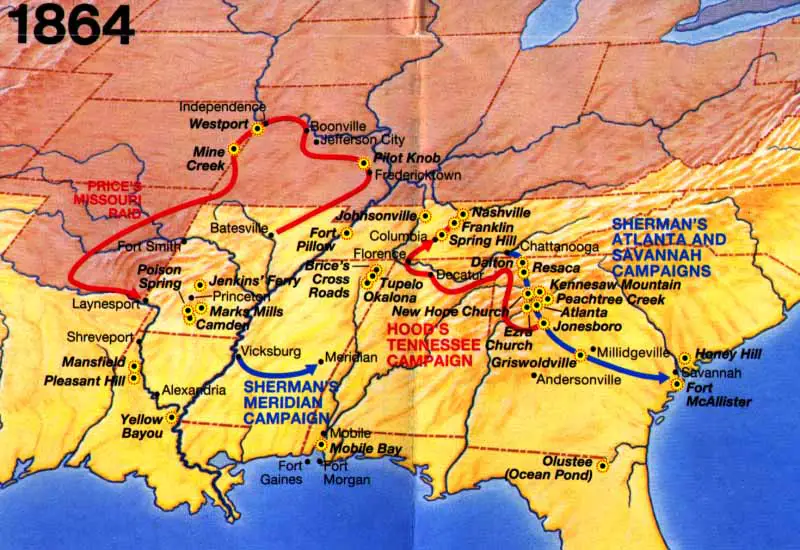
Western Theater - click to enlarge
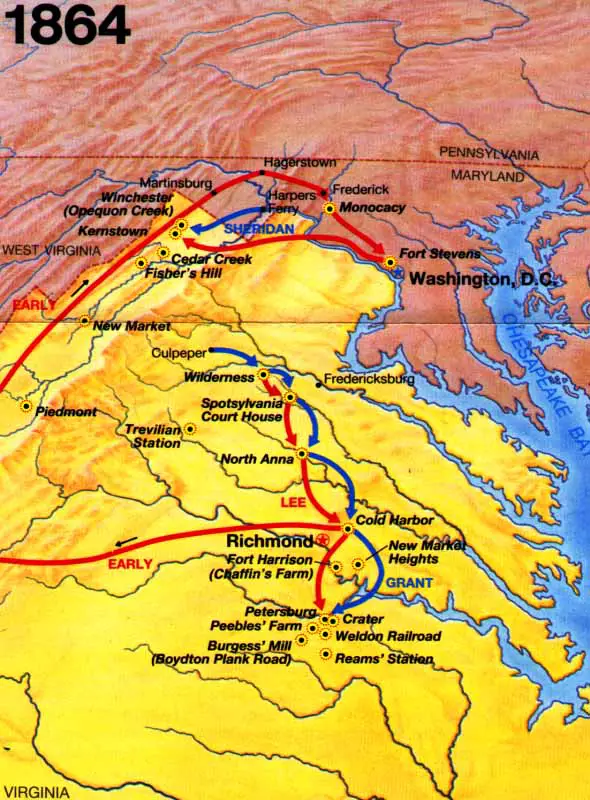
Eastern Theater - click to enlarge
The Shenandoah Valley Campaign of 1864
Shenandoah Valley of Virginia Campaign of 1864 lasted more than four months and claimed more than 25,000 casualties. The armies of Philip H. Sheridan and Jubal A. Early contended for immense stakes
1864 General Ulysses S. Grant is named as the overall commander of all federal armies. Union General William Tecumseh Sherman, with an army of 60,000, leaves Atlanta in flames and begins a march through Georgia on a 60-mile front, destroying everything that might be of use to the Confederacy.
January 17, 1864 Dandridge January 26, 1864 Athens /
Alabama January 27, 1864 Fair Garden
January 26 Confederate force fails in its attempt to take Athens, Alabama. Confederate cavalry, numbering about 600 men, attacked Athens, held by about 100 Union troops, around 4:00 am on the morning of January 26, 1864. After a two-hour battle, the Confederates retreated. Union forces, although greatly
outnumbered and without fortifications, repulsed the attackers. February 6-7 Morton's Ford / Rapidan River February 13, 1864 Middle Boggy Depot February 14-20, 1864 Meridian February 17 Confederate Submarine Hunley sinks the USS Housatonic February 20, 1864 Olustee / Ocean Pond February 22, 1864 Okolona
February 20 Olustee Florida In February, the commander of the Department of the South, Major General Quincy A. Gillmore, launched an expedition into Florida to secure Union enclaves, sever Rebel supply routes, and recruit black soldiers. Brig.
General Truman Seymour moved deep into the state, occupying, destroying, and liberating, meeting little resistance on February 20, he approached Brig. General Joseph Finegan's 5,000 Confederates entrenched near Olustee. One infantry brigade pushed out to meet Seymour's advance units. The Union forces attacked but were repulsed. The battle raged, and as Finegan committed the last of his reserves,
the Union line broke and began to retreat. Finegan did not exploit the retreat, allowing most of the fleeing Union forces to reach Jacksonville. February 22-27, 1864 Dalton I
March 2 Walkerton / Mantapike Hill March 14, 1864 Fort DeRussy March 25, 1864 Paducah April 3-4, 1864 Elkin's Ferry Okolona April 8, 1864 Mansfield
/ Sabine Cross-Roads / Pleasant Grove April 9, 1864 Pleasant Hill April 9-13, 1864 Prairie D'Ane / Gum Grove / Moscow
April 12, 1864 Fort Pillow April 12-13, 1864 Blair's Landing / Pleasant Hill Landing
April 17-20, 1864 Plymouth April 18, 1864 Poison Spring April 23, 1864 Monett's Ferry / Cane River Crossing April 25, 1864 Marks' Mills April 30, 1864 Jenkins' Ferry
May Grant's Wilderness Campaign General Grant, promoted to commander of the Union armies, planned to engage Lee's
forces in Virginia until they were destroyed. North and South met and fought in an inconclusive three- day battle in the Wilderness. Lee inflicted more casualties on the Union forces than his own army incurred, but unlike Grant, he had no replacements.
May The Battle of Spotsylvania. General Grant continued to attack Lee. At Spotsylvania Court House, he fought for five days, vowing to fight all summer if necessary. May 4, 1864 Day's Gap / Sand Mountain / Alabama May 5, 1864 Albemarle Sound May 5-7 Wilderness / Furnaces / Todd's Tavern May 6-7 Port Walthall Junction May
7-13, 1864 Rocky Face Ridge / Mill Creek / Dug Gap May 8-21 Spotsylvania Court House / Corbin's Bridge May 9 Cloyd's Mountain
May 9 Swift Creek / Arrowfield Church May 10 Chester Station May 10 Cove Mountain May 11 Yellow Tavern May 12-16 Proctor's Creek / Drewry's
Bluff, / Fort Darling May 13-15, 1864 Resaca May 15 New Market May 16, 1864 Mansura / Smith's Place / Marksville May 17, 1864 Adairsville May 18,
1864 Yellow Bayou / Norwood's Plantation May 20 Ware Bottom Church
May 20 Ware Bottom Church Confederate forces under General P.G.T. Beauregard attacked Butler's Bermuda Hundred line near Ware Bottom Church. About 10,000 troops were involved in this action. After driving back Butler's advanced pickets, the
Confederates constructed the Howlett Line, effectively bottling up the Federals at Bermuda Hundred. Confederate victories at Proctor's Creek and Ware Bottom Church enabled Beauregard to detach strong reinforcements for Lee's army in time for the fighting at Cold Harbor. May 23-26 North Anna / Jericho Mill / Hanover Junction May 24 Wilson's Wharf / Fort Pocahontas May 25-26, 1864 New Hope Church May 26-June 1, 1864 Dallas / Pumpkinvine Creek May
27, 1864 Pickett's Mills / New Hope May 28 Haw's Shop / Enon Church May 28-30 Totopotomoy Creek / Shady Grove Road
May 30 Old Church / Matadequin Creek May 31-June 12 Second Cold Harbor
June The Battle of Cold Harbor. Grant again attacked Confederate forces at Cold Harbor, losing over 7,000 men in twenty minutes. Although Lee suffered fewer casualties, his army never recovered from Grant's continual attacks. This was Lee's last
clear victory of the war.
June 1864 -- The Siege of Petersburg. Grant hoped to take Petersburg, below Richmond, and then approach the Confederate capital from the south. The attempt failed, resulting in a ten month siege and the loss of thousands of lives on both sides,
Grant won by steadily extending his lines westward.
June 5-6 Piedmont June 6, 1864 Old River Lake / Ditch Bayou / Lake Chicot June 9-July 3, 1864 Marietta / Pine Hill / Ruff's Mill June 9 Petersburg June 10,
1864 Brices Cross Roads / Tishomingo Creek June 11-12 Trevilian Station June 11-12, 1864 Cynthiana / Kellar's Bridge
June 15-18 Assault on Petersburg June 17-18 Lynchburg June 21-24 Jerusalem Plank Road / First Battle of Weldon June 22, 1864 Kolb's Farm June 24 Saint Mary's Church / Nance's Shop June 25 Staunton River / Blacks and Whites June 27, 1864 Kennesaw Mountain June 28 Sappony Church / Stony Creek Depot June 29
Ream's Station
July -- Confederate Troops Approach Washington, D.C. Confederate General Jubal Early led his forces into Maryland to relieve the pressure on Lee's army. Early got within five miles of Washington, D.C., but on July 13, he was driven back to
Virginia. July 9, 1864 Monocacy July 14-15, 1864 Tupelo / Harrisburg July 17-18 Cool Spring / Island Ford / Parkers Ford July 20, 1864 Peachtree Creek July 20 Rutherford's Farm July 22, 1864 Atlanta July 24 Kernstown Second
July 27-29 Deep Bottom I / Strawberry Plains / Gravel Hill July 28, 1864 Ezra Church / Battle of the Poor House
July 28-29, 1864 Killdeer Mountain / Tahkahokuty Mountain July 30 Crater / The Mine
August 1, 1864 Folck's Mill / Cumberland
August 2-23 -- Mobile Bay / Fort Morgan / Fort Gaines Alabama. A combined Union force initiated operations to close Mobile Bay to blockade running. Some Union forces landed on
Dauphin Island and laid siege to Fort Gaines. On August 5, Farragut's Union fleet of eighteen ships entered Mobile Bay and received devastating a fire from Forts Gaines and Morgan and other points. After passing the forts, Farragut forced the Confederate naval forces, under Adm. Franklin Buchanan, to surrender, which effectively closed Mobile Bay. By August 23, Fort Morgan, the last big holdout,
fell, shutting down the port. The city, however, remained uncaptured.
August 1864 -- General Sherman's Atlanta Campaign. Union General William T. Sherman departed Chattanooga, and was soon met by Confederate General Joseph Johnston. Skillful strategy enabled Johnston to hold off Sherman's force -- almost twice the
size of Johnston's. However, Johnston's tactics caused his superiors to replace him with General John Bell Hood, who was soon defeated. Hood surrendered Atlanta, Georgia, on September 1; Sherman occupied the city the next day. The fall of Atlanta greatly boosted Northern morale.
August 5-7, 1864 Utoy Creek August 7, 1864 Moorefield / Oldfields August 13-20 Deep Bottom II / Fussell's Mill / Bailey's Creek August 14-15, 1864 Dalton II August 16 Guard Hill / Front Royal / Cedarville August 18-21 Globe Tavern / Yellow Tavern / Blick's Station August 20, 1864 Lovejoy's Station August 21, 1864 Summit Point / Flowing Springs / Cameron's Depot August 21, 1864 Memphis August 25 Ream's Station August 25-29, 1864 Smithfield
Crossing August 31–September 1, 1864 Jonesborough
September-November -- Sherman in Atlanta After three and a half months of incessant maneuvering and much hard fighting, Sherman forced Hood to abandon Atlanta, the munitions center of the Confederacy. Sherman remained there, resting his war-worn
men and accumulating supplies, for nearly two-and-a-half months. September 3-4 Berryville September 10-11, 1864 Davis' Cross Roads / Dug Gap September 19 Opequon / Third Winchester September 21-22 Fisher's Hill September 27,
1864 Fort Davidson / Pilot Knob September 29-30 Chaffin's Farm / New Market Heights September 30 Peebles' Farm / Poplar Springs
Church
October 2 Saltville October 5, 1864 Allatoona October 7 Darbytown / New Market Roads / Fourmile Creek October 9 Tom's Brook / Woodstock Races October 13 Darbytown Road / Alms House October 15, 1864 Glasgow October 19, 1864
Lexington October 19 Cedar Creek October 21, 1864 Little Blue River / Westport
October 22, 1864 Independence October 22-23, 1864 Byram's Ford / Big Blue River October 23, 1864 Westport October 25, 1864 Marmiton River / Shiloh Creek / Charlot's Farm October 25, 1864 Mine Creek / Battle of the Osage October 25, 1864 Marais des Cygnes / Battle of Trading Post October 26-29, 1864 Decatur Alabama October 28, 1864 Newtonia
October 26-29-- Franklin-Nashville Campaign General John B. Hood's Army of Tennessee, in an attempt to cross the Tennessee River at Decatur, Alabama encountered Union forces under the command of Brig. General Robert S. Granger for most of the battle, numbered only about 5,000 men, but successfully
prevented the much larger Confederate force from crossing the river.
October 27-28 Fair Oaks / Darbytown Road / Second Fair Oaks
October 27-28-- Boydton Plank Road aka Hatcher's Run, Burgess' Mill. Directed by Major General Winfield Scott Hancock, divisions from three Union corps (II, V, and IX) and Gregg's cavalry division, numbering more than 30,000 men, withdrew from the Petersburg lines and marched west to operate against the
Boydton Plank Road and Southside Railroad. The initial Union advance on October 27 gained the Boydton Plank Road, a major campaign objective. But that afternoon, a counterattack near Burgess' Mill spearheaded by Major General Henry Heth's division and Wade Hampton's cavalry isolated the II Corps and forced a retreat. The Confederates retained control of the Boydton Plank Road for the rest of the
winter. November 4-5, 1864 Johnsonville November 11-13, 1864 Bull's Gap November 24-29, 1864 Columbia November 29, 1864 Spring Hill November 30, 1864
Franklin
November 1864 -- Sherman's March to the Sea. General Sherman continued his march through Georgia to the sea. In the course of the march, he cut himself off from his source of supplies, planning for his troops to live off the land. His men cut a
path 300 miles in length and 60 miles wide as they passed through Georgia, destroying factories, bridges, railroads, and public buildings. November 22, 1864 Griswoldville November 28, 1864 Buck Head Creek
November 30, 1864 Honey Hill
November 30 -- Honey Hill South Carolina. Leaving Hilton Head on November 28, a Union expeditionary force under Major General John P. Hatch, steamed up the Broad River in transports to cut the Charleston & Savannah Railroad near Pocotaligo.
Hatch disembarked at Boyd's Landing and marched inland. On November 30, Hatch encountered a Confederate force of regulars and militia under Col. Charles J. Colcock at Honey Hill. Determined attacks by U.S. Colored Troops (including the 54th Massachusetts) failed to capture the Confederate entrenchments or cut the railroad. Hatch retired after dark, withdrawing to his transports at Boyd's
Neck November 1864 -- Abraham Lincoln Is Re-Elected. The Republican party nominated President Abraham Lincoln as its presidential candidate, and Andrew Johnson for vice-president. The Democratic party chose General George B. McClellan for president,
and George Pendleton for vice-president. At one point, widespread war-weariness in the North made a victory for Lincoln seem doubtful. In addition, Lincoln's veto of the Wade-Davis Bill -- requiring the majority of the electorate in each Confederate state to swear past and future loyalty to the Union before the state could officially be restored -- lost him the support of Radical Republicans who
thought Lincoln too lenient. However, Sherman's victory in Atlanta boosted Lincoln's popularity and helped him win re-election by a wide margin. November 29-30, 1864 Sand Creek / Chivington Massacre
December 4, 1864 Waynesborough December 5-7, 1864 Murfreesboro / Wilkinson Pike / Cedars December 7-27, 1864 Fort Fisher December 13, 1864 Fort McAllister II
December 1864 -- Sherman at the Sea After marching through Georgia for a month, Sherman stormed Fort McAllister on December 13, 1864, and captured Savannah itself eight days later. December -- Hood before Nashville Continuing his policy of taking the offensive at any cost, General John B. Hood brought his reduced army before the defenses of Nashville, where it was repulsed by General George H. Thomas on December 15-16, in
the most complete victory of the war. December 15-16, 1864 Nashville December 17-18 Marion December 20-21 Saltville
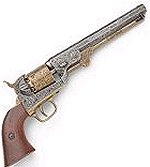
Civil War Model 1851 Naval Pistol Engraved Silver
Tone / Gold Tone Finish and Wooden Grips - Replica of Revolver Used by Both USA / Union and CSA / Confederate Forces
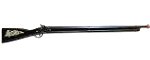
Civil War Musket Wood & Steel Frontier Rifle Designed After The
Original Rifle, This Civil War Musket replica has been designed after the original rifle of its era. Measures approximately 37 inches long. Each is constructed with a solid one-piece wood stock, painted steel barrel and die-cast parts.
Shiloh and Corinth: Sentinels of Stone The brave deeds performed
by soldiers of the North and South. Approximately 93 striking photographs and accompanying histories bring the battlefields to life, from Shiloh and Savannah, Tennessee, to Iuka and Corinth, Mississippi
Bloody Roads South: The Wilderness to Cold Harbor, May-June 1864 This
chronicles the great 1864 Overland Campaign, forty days that marked the end of the Civil War. In detail the battles in Virginia's Wilderness to the combat at Spotsylvania the trap laid by Lee at the North Anna River, to the killing ground of Cold Harbor
The Battle of the Wilderness May 5-6, 1864 Fought in a tangled forest fringing
the south bank of the Rapidan River, the Battle of the Wilderness marked the initial engagement in the climactic months of the Civil War in Virginia, and the first encounter between Ulysses S. Grant and Robert E. Lee
The Civil War Day By Day An Almanac, 1861-1865
The most exhaustively detailed and fascinating book on the American Civil War of its kind. Not only does it provide a day-by-day look at the major events of the war, but lists so many of the small skirmishes and actions as well. Accurate and enjoyable
Kindle Available Civil War Medicine The staggering challenge of treating wounds and disease on both sides of the conflict. Written for general
readers and scholars alike, this first-of-its kind encyclopedia will help all Civil War enthusiasts to better understand this amazing medical saga. Clearly organized, authoritative, and readable
Kindle Available Grant Wins the War Decision at Vicksburg
A brilliantly constructed new account,A penetrating analysis of Grant's strategies and actions leading to the Union victory at Vicksburg. Approaching these epic events from a unique and well-rounded perspective, and based on careful research
Ulysses S. Grant Memoirs and Selected Letters
Grant wrote his "Personal Memoirs" to secure his family's future. In doing so, the Civil War's greatest general won himself a unique place in American letters. His character, sense of purpose, and simple compassion are evident throughout this deeply moving account, as well as in the letters to his wife, Julia
Grant Takes Command: 1863 - 1865 The enigmatic commander in chief of the
Union forces through the last year and a half of the Civil War. It is both a revelatory portrait of Ulysses S. Grant and the dramatic story of how the war was won.
Ulysses S. Grant: Triumph Over Adversity, 1822-1865 Even as he waged
war, he realized the broader political implications of the struggle; he came to believe that the preservation of the Union depended upon the destruction of slavery. Equally compelling is Grant's personal story--one of a man who struggled against great odds
Lee The Last Years After his surrender at Appomattox, Robert E. Lee lived only
another five years - the forgotten chapter of an extraordinary life. These were his finest hours, when he did more than any other American to heal the wounds between North and South
Kindle Available Robert E. Lee This book not
only offers concise detail but also gives terrific insight into the state of the Union and Confederacy during Lee's life. Lee was truly a one of kind gentleman and American, and had Virginia not been in the south or neutral, he ultimately would have led the Union forces.
Four Years With General Lee Walter Taylor was staff officer to General
Robert E. Lee. His book first appeared in 1877. For many years a standard authority on Confederate history, it is the source for dozens of incidents that have now become a part of every biography of Lee.
 Bad Blood: The Border War That Triggered the Civil War In the years
leading up to the Civil War, a bloody conflict between slaveholders and abolitionists focused the nation's eyes on the state of Missouri and the territory of Kansas. Told through the actual words of slave owners, free-staters, border ruffians, and politicians, Bad Blood presents the complex morality, differing values, and life-and-death decisions faced by those who lived on the Missouri-Kansas
border
Blue Vs. Gray - Killing Fields Relive the most vicious fighting of the Civil
War, in which General Ulysses S. Grant forcibly reversed the tide of the conflict by paying with the blood of thousands. It was a desperate time for the Union
Civil War Combat: America's Bloodiest Battles The violent mayhem of the
hornet's nest at Shiloh, the valiant charge on the sunken road at Antietam, the carnage in the wheat field at Gettysburg, and the brutal fighting at Cold Harbor
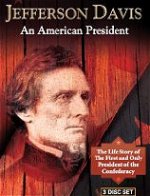
Jefferson Davis An American
President One of the most outstanding statesmen of the United States during the first 60 years of the 19th century, he sacrificed everything to defend the South's position regarding the rights of the states and conservative constitutional interpretation. Against staggering odds he led the South and held it together in the bloody Civil
War or War Between the States
Civil War Musket Wood & Steel Frontier Rifle Designed After The
Original Rifle, This Civil War Musket replica has been designed after the original rifle of its era. Measures approximately 37 inches long. Each is constructed with a solid one-piece wood stock, painted steel barrel and die-cast parts.
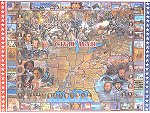
Civil War Historic 1000-piece Puzzle The famous faces and fearsome
facts of the Civil War are captured in this 1,000-piece cardboard puzzle for Civil War buffs and serious puzzle fans.
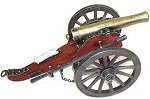
Civil War Cannon Collectible Models and childrens
playsets Miniature Collectible Civil War Cannon12 pound Civil War field cannon replica weapon collectible is a detailed 1/12th scale military caisson replica weapon collectible as used throughout the Civil War Childrens Cannon Set. Includes 6 gray cannon with black wheels that
measure 4.5 inches long  Civil War Soldier 102 Piece Playset
- 25 Union and 25 Confederate Soldier Figures, 18 Horses, 10 Cannon
- 2 Covered Wagons, 2 Tents, 2 Canoes, 2 Flags, 16 Fences
- Size: Figures Stand up to 2-1/8 inches tall
- Scale: 1/32nd, Wagons and Horses slightly smaller
Enter the keywords you are looking for and the site will be searched and all occurrences of your request will be displayed. You can also enter a date format, April 19,1862 or September 1864.
More To Explore
|
|