
Honey Hill
Civil War
South Carolina
American Civil War
November 30, 1864
|
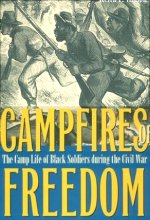 Campfires of Freedom: The Camp Life of Black Soldiers During the Civil War African-Americans - both freemen and ex-slaves - enlisted for a variety of reasons, from patriotism to sheer poverty. Like many of their white counterparts, they attributed theological significance to the war |
Kindle Available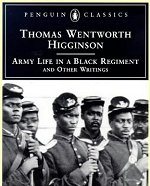 Army Life in a Black Regiment: and Other Writings In 1862, Thomas Wentworth Higginson was commissioned as a colonel to head the first regiment of emancipated slaves. A Civil War memoir written by an abolitionist, this text is the stirring history of the first regiment of emancipated slaves formed to fight in the Civil War |
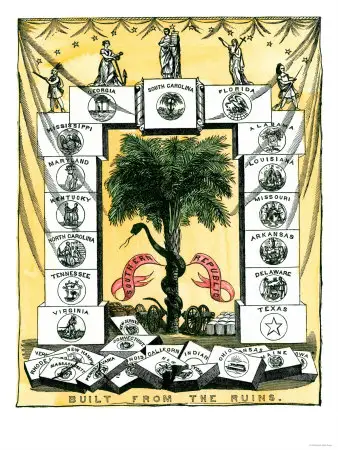 Banner of the Secession Convention Charleston, South Carolina, c.1860 18 in. x 24 in. Buy at AllPosters.com Framed Mounted |
 Civil War Musket Wood & Steel Frontier Rifle Designed After The Original Rifle 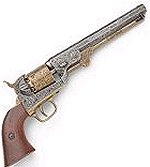 Civil War Model 1851 Naval Pistol |
History of Colored Troops South Carolina State Battle Map State Battle Maps American Civil War Exhibits Confederate General Jefferson Davis Civil War Submarines Confederate Naval History Civil War Summary General Ulysses S. Grant Civil War Timeline Women in the War |  Civil War Soldier 102 Piece Playset
|
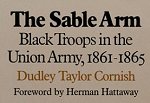 The Sable Arm: Black Troops in the Union Army, 1861-1865 The first work to fully chronicle the remarkable story of the nearly 180,000 black troops who served in the Union army. This work paved the way for the exploration of the black military experience in other wars. This edition, with a new foreword by Herman Hattaway and bibliographical essay by the author, makes available once again a pioneering work that will be especially useful for scholars and students |
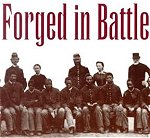 Forged in Battle: The Civil War Alliance of Black Soldiers and White Officers This historical exploration denotes the uneasy alliance between black soldiers and white officers who, divided by racial tension and ideology, were united by the trials and bonds of the war they fought side by side |
Kindle Available Freedom for Themselves: North Carolina's Black Soldiers in the Civil War Era The processes by which black men enlisted and were trained, the history of each regiment, the lives of the soldiers' families during the war, and the experiences of the colored veterans and their families living in an ex-Confederate state |
 Honor in Command: Lt. Freeman S. Bowley's Civil War Service in the 30th United States Colored Infantry A young white officer who served as a lieutenant in a regiment of U.S. Colored Troops in the Union Army, is the work of a superb storyteller who describes how his Civil War experiences transformed him from a callow youth into an honorable man. Describing in detail his relationship with the men in his company, Bowley extols the role of black soldiers and their officers in the Union victory. |
 The Black Civil War Soldiers of Illinois: The Story of the Twenty-Ninth U.S. Colored Infantry Study in the lives of black recruits in the Civil War era, and a journey into the hinterlands of an American racial pathos. Throughout this study, Miller explores in detail the biographies of individual soldiers, revealing their often convoluted histories |
 Standing Soldiers, Kneeling Slaves The United States of America originated as a slave society, holding millions of Africans and their descendants in bondage, and remained so until a civil war took the lives of a half million soldiers, some once slaves themselves. |
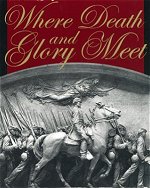 Where Death and Glory Meet: Colonel Robert Gould Shaw and the 54th Massachusetts Infantry July 18, 1863, the African American soldiers of the Fifty-Fourth Massachusetts Infantry led a courageous but ill-fated charge on Fort Wagner, a key bastion guarding Charleston harbor. Confederate defenders killed, wounded, or made prisoners of half the regiment. Only hours later, the body of Colonel Robert Gould Shaw, the regiment's white commander, was thrown into a mass grave with those of twenty of his men. |
Kindle Available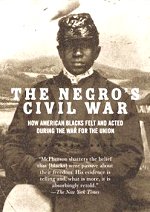 The Negro's Civil War: How American Blacks Felt and Acted During the War for the Union In this classic study, Pulitzer Prize-winning author James M. McPherson deftly narrates the experience of blacks--former slaves and soldiers, preachers, visionaries, doctors, intellectuals, and common people--during the Civil War |
Current Weather and Information for Charleston Harbor South Carolina
U.S. National Park Service
U.S. Library of Congress.
