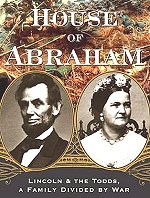
 House of Abraham: Lincoln and the Todds, A Family Divided by War Mary Todd Lincoln one of fourteen siblings who were split between the Confederacy and the Union. Three of her brothers fought, and two died, for the South. Several Todds bedeviled Lincolns administration with their scandalous behavior |
Mary Todd Lincoln
|
|
|
|
|
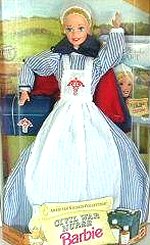 Civil War Nurse Barbie Part of the American Stories Collection. |
Civil War Women Women Civil War Soldiers Womens Sufferage Civil War Music History Colored Troop Pictures Civil War Picture Album Documents of the War Kids Zone Causes of the War Kids Zone Underground Railroad Civil War Exhibits Civil War Timeline State Battle Maps |
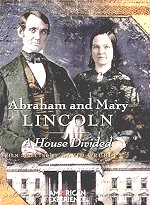 American Experience - Abraham and Mary Lincoln: A House Divided Abraham Lincoln's legacy as the Great Emancipator reshaped the nation while his tragic death left Mary reclusive and forgotten. DVD |
Kindle Available The Gettysburg Gospel: The Lincoln Speech That Nobody Knows Reconstructs what really happened in Gettysburg, Pennsylvania, on November 19, 1863. |
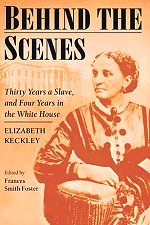 Behind the Scenes: Thirty Years a Slave, and Four Years in the White House This is a memior written by a woman who started life as a slave, then managed to buy her freedom, and later set up a successful living as a seamstress, eventually going to work for Mary Todd Lincoln in the White House |
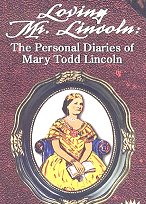 Loving Mr. Lincoln: The Personal Diaries of Mary Todd Lincoln Chronicles life, love, and daily struggles with Abraham in their 26 years together. In frank, haunting journal entries, Mary describes the pain she felt when Abraham left her at the altar, when her sons died, and when Abraham's political career seemed to be at an end |
 First Ladies of the Civil War Mary Todd Lincoln and Varina Davis |
Kindle Available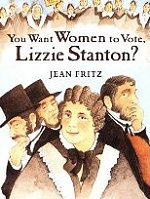 You Want Women to Vote, Lizzie Stanton? Grade 3-6. Fritz applies her gift for creating engaging, thorough historical literature to a larger-than-life historical figure. Stanton was a radical among radicals, and this objective depiction of her life and times, as well as her work for women's rights, makes readers feel invested in her struggle. An appealing, full-page black-and-white drawing illustrates each chapter. For students who need a biography, this title should fly off the shelves with a minimum of booktalking. And it is so lively that it is equally suitable for leisure reading.? |
 Not For Ourselves Alone: The Story of Elizabeth Cady Stanton and Susan B. Anthony Two heroic women who vastly bettered the lives of a majority of American citizens. For more than fifty years they led the public battle to secure for women the most basic civil rights and helped establish a movement that would revolutionize American society |
Kindle Available Women and the American Civil War An Annotated Bibliography The first reference work to draw together the stories and studies of women in the American Civil War, this annotated bibliography offers access to the literature that documents the history of women who experienced the war, changed it, and were changed by it. Offering nearly 800 entries |
 We Are Your Sisters: Black Women in the Nineteenth Century A remarkable documentary and the first in-depth record of many black women, slave and free."--Dorothy B. Porter, curator emeritus, Moorland-Spingarn Research Center, Howard University |
 Abe Lincoln's Hat Step into Reading Abraham Lincoln, started out in life as an absent-minded lawyer. How did he nudge his memory? He stuck letters, court notes, contracts, and even his checkbook in his trademark top hat. |
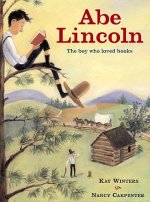 Abe Lincoln The Boy Who Loved Books Children of all ages will enjoy reading this book and realizing that a love of books, as Abraham Lincoln did, can change a persons life and move him or her to become a great person |
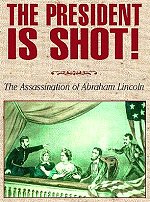 The President Is Shot!: The Assassination of Abraham Lincoln Grade 6-10 --Description of the violent end to Lincoln's life. Holzer provides the Civil War context of the event and then details April 14 and 15, 1865. Why Murder Lincoln?, to demonstrate that this president was not always the universally beloved icon that students see him as today. |
Kindle Available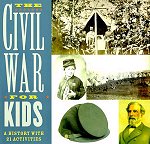 The Civil War for Kids History explodes in this activity guide spanning the turmoil preceding secession, the first shots fired at Fort Sumter, the fierce battles on land and sea, and finally the Confederate surrender at Appomattox. Making butternut dye for a Rebel uniform, learning drills and signals with flags, decoding wigwag, baking hardtack, reenacting battles, and making a medicine kit bring this pivotal period in our nation's history to life. |
 Lincoln and Freedom: Slavery, Emancipation, and the Thirteenth Amendment The history of slavery in North America, the Dred Scott decision, the evolution of Lincoln's view of presidential powers, the influence of religion on Lincoln, and the effects of the Emancipation Proclamation |
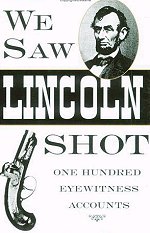 We Saw Lincoln Shot: One Hundred Eyewitness Accounts How witnesses felt after; how rumor of other tragedies spread in the hours after, why some Southerners hated Lincoln and cheered his death; and, ultimately, why those who loved him were so profoundly affected |
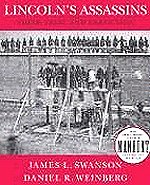 Lincoln's Assassins: Their Trial and Execution For twelve days after the president was shot, the nation waited breathlessly as manhunters tracked down John Wilkes Booth |
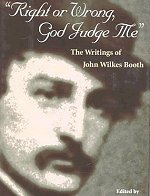 Right or Wrong, God Judge Me: THE WRITINGS OF JOHN WILKES BOOTH Collection of the writings of John Wilkes Booth constitutes a major new primary source that contributes to scholarship on Abraham Lincoln, the Civil War, and nineteenth-century theater history. The nearly seventy documents--more than half published here for the first time--include love letters written during the summer of 1864 |
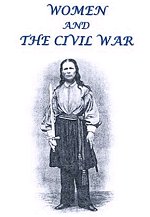 Women And The Civil War The many contributions of women in both the North and South are presented in this program describing their roles on and near the momentous battles of the American Civil War |
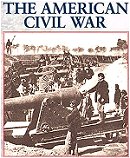 Brother Against Brother The American Civil War Fort Sumter, to the Confederate surrender at Appomattox, Features battle reconstructions and depictions of army life, eyewitness accounts, period photographs and engravings, plus commentary and analyses. |
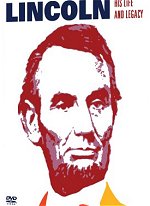 Abraham Lincoln: His Life & Legacy Comprehensive four-DVD set presents a complex portrait of a man who many consider to be our greatest commander-in-chief, but who considered himself "the loneliest man in the world." Bringing to life the tumultuous times in which Lincoln led his country, some of his finest Civil War moments, and his final hours |
 Unsolved History ~ Plots to Kill Lincoln Discovery Channel Before John Wilkes Booth fired that fatal shot in the balcony of Ford's Theater, President Lincoln was the target of at least five other assassination conspiracies. |
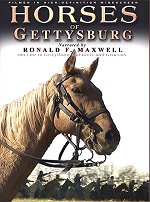 Horses of Gettysburg Civil War Minutes Filmed in high definition with charging horses, battlefield panoramas and no "talking heads," this cinematic documentary tells the story of the estimated 72,000 horses and mules that fought at the Battle of Gettysburg and uncovers the strategies employed to ensure that the millions of animals in service with the North and South remained healthy and well-trained for action. |
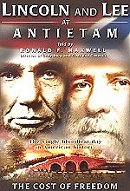 Lincoln and Lee at Antietam: The Cost of Freedom Lincoln and Lee at Antietam covers the entire struggle of the Antietam Campaign. The political concept about why Lincoln needed a Union victory and Lee's need to take the war north were covered as well as the battle. |
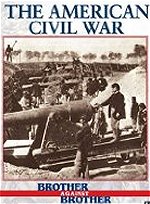 Brother Against Brother The American Civil War It was the most tragic episode in American history. During four years of bitter and bloody fighting between the states, more than 600,000 troops from the Union and Confederate sides lost their lives. The bloody events at places such as Antietam, Gettysburg, Shiloh, Cold Harbor, Vicksburg and Fredericksburg are still burned deep into the American psyche, never to be forgotten |
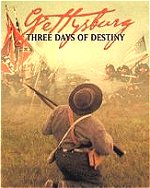 Gettysburg: Three Days of Destiny Presented by the Gettysburg Anniversary Committee and filmed at the massive 140th Gettysburg Battle Reenactment. The dramatic story unfolds through both Union and Confederate commanders dispatches, diaries and after-battle reports, with some of the biggest and most exciting Civil War battle sequences ever filmed |


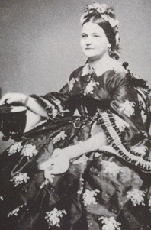 As a girlhood companion remembered her, Mary Todd was vivacious and impulsive, with an interesting personality--but "she now and then could not restrain a witty, sarcastic speech that cut deeper than she intended...." A young lawyer summed her up in 1840: "the very creature of excitement." All of these attributes marked her life, bringing her both happiness and tragedy.
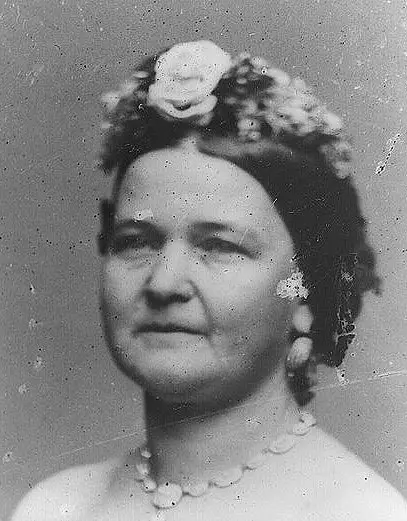 social life and a sound private education.