Kindle Available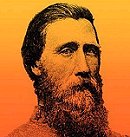 Advance And Retreat: Personal Experiences In The United States And Confederate States Armies John Bell Hood entered the Confederate Army at 29, loyal to Confederate Independence. He led his men into the battles of Second Manassas, Gaines's Mill, Sharpsburg, Fredericksburg, Gettysburg, and Chickamauga |
Confederate General John B. Hood
Born June 29, 1831
|
 The Confederacy's Last Hurrah: Spring Hill, Franklin, and Nashville John Bell Hood rallied his demoralized troops and marched them off the Tennessee, desperately hoping to draw Sherman after him and forestall the Confederacy's defeat |
|
 Nashville: The Western Confederacy's Final Gamble Adequately mapped and illustrated, the read was an enjoyable one. The author was more than fair and accurate in his assessment of Hood who mismanaged, waisted and destroyed the superb Army of Tennessee, in effect throwing away the Confederacy's most viable hope Kindle Available  Standard Catalog of Civil War Firearms Over 700 photographs and a rarity scale for each gun, this comprehensive guide to the thousands of weapons used by Billy Yank and Johnny Reb will be indispensable for historians and collectors. |
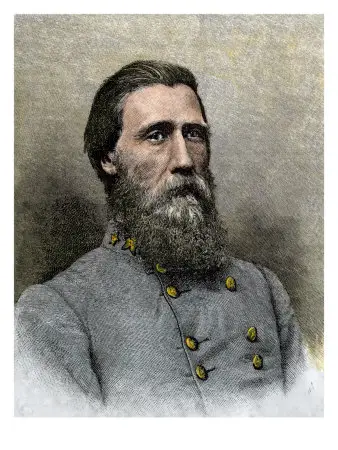
Confederate General John Bell Hood 18 in. x 24 in. Buy at AllPosters.com Framed Mounted |
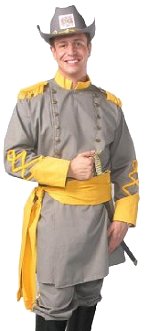 Adult Confederate Officer Uniform |
Kindle Available Staff Officers in Gray: A Biographical Register of the Staff Officers in the Army of Northern Virginia Profiles some 2,300 staff officers in Robert E. Lee's famous Army of Northern Virginia. A typical entry includes the officer's full name, the date and place of his birth and death, details of his education and occupation, and a synopsis of his military record. Two appendixes provide a list of more than 3,000 staff officers who served in other armies of the Confederacy and complete rosters of known staff officers of each general |
Defense of Atlanta by General John Hood Confederate Generals Civil War Exhibits Georgia State Battle Map Confederate President Jefferson Davis Civil War Submarines Kids Zone Causes of the War Civil War Summary Colored Troops |
Kindle Available The Class of 1846: From West Point to Appomattox: Stonewall Jackson, George McClellan, and Their Brothers No single group of men at West Point has been so indelibly written into history as the class of 1846. The names are legendary: Thomas "Stonewall" Jackson, George B. McClellan, Ambrose Powell Hill, Darius Nash Couch, George Edward Pickett, Cadmus Marcellus Wilcox, and George Stoneman |
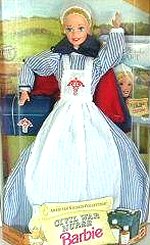 Civil War Nurse Barbie Part of the American Stories Collection. |
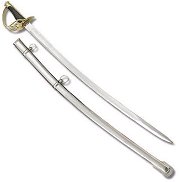 Cavalry Saber This fine replica is 39 inches overall and features a highly polished 33 inch carbon steel blade. Its leather wrapped handle fits the hand perfectly and sports decorative brass accents and a shiny brass pommel. |
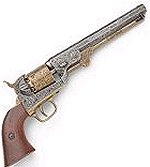 Civil War Model 1851 Naval Pistol Engraved Silver Tone / Gold Tone Finish and Wooden Grips - Replica of Revolver Used by Both USA / Union and CSA / Confederate Forces |
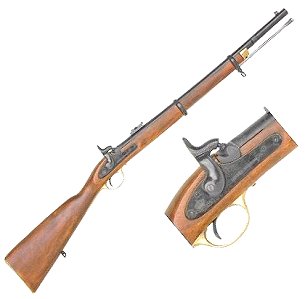 1860 Enfield Civil War Musketoon This piece is a full-size non-firing reproduction of the rifle used in the Civil War. The body is made of European hardwood |
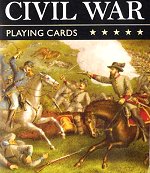 American Civil War Poker Playing Cards Playing Cards commenmorating the AMERICAN CIVIL WAR, featuring great portraits of statesmen, generals and fighting men, as well as graphics scenes of battle in color. Evocative images from the Library of Congress are featured on all 54 cards |
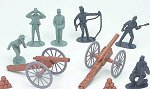 20 piece Civil War Artillery Playset Civil War Artillery Set: 20 piece set includes 12 Artillery Crew Figures in Blue and Gray that stand up to 58mm tall, 4 Parrott Rifle Gun Cannon about 4 inches long, and 4 Cannonball stacks |
 Civil War Figures by IMEX 1/72 Scale. American Civil War Union and Confederate Artillery, Cavalry, and Infantry Set with Base, produced by IMEX. Finely detailed parts are molded in gray (Confederate) and bright blue (Union). |
 House Divided Board Game
|
Sources:
VMI
Temple Daily Telegram
U.S. Army
|
Books Civil War Womens Subjects Young Readers Military History DVDs Confederate Store Civil War Games Music CDs |


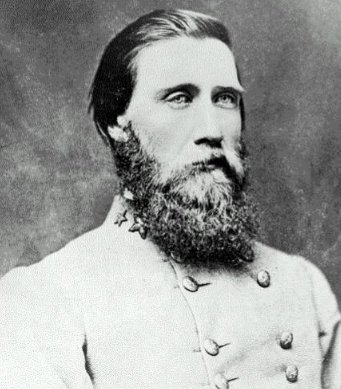 16, 1861 Hood resigns from the Union Army and four days later was commissioned First Lieutenant in Confederate cavalry. He reported to Lee in Virginia who promoted him to Major. In October of the same year he was promoted to Colonel and given command of the Fourth Texas Regiment, Army of Northern Virginia. He was known for being aggressive in battle and again promoted to Brigadier General in March 1862 in command of the Texas Brigade. In October 1862 he received a promotion to Major General and given division command under Longstreet.
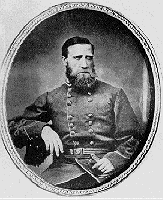 Texas general that if he would apologize to the man whose order he had refused he would be restored to command. Hood refused to apologize, but Lee gave him back his command anyway.