|
|
|
Kindle Available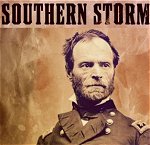 Southern Storm Sherman's March to the Sea The destruction spanned more than sixty miles in width and virtually cut the South in two, disabling the flow of supplies to the Confederate army. He led more than 60,000 Union troops to blaze a path from Atlanta to Savannah, ordering his men to burn crops, kill livestock, and decimate everything that fed the Rebel war machine 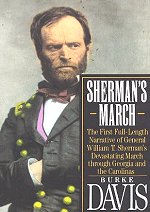 Sherman's March: The First Full-Length Narrative of General William T. Sherman's Devastating March through Georgia and the Carolinas Beginning with the fall of Atlanta, the unrelenting aggressive slash and burn total warfare of General Sherman's Union troops, and then the final march into Raleigh |
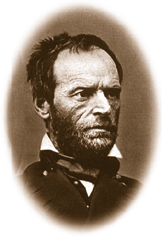
Born in Lancaster, Ohio. Orphaned at age nine and raised by a prominent Ohio politician, he graduated from West Point in 1840, saw service in Florida, and, during the Mexican War, in California; he stayed there and in 1853 resigned from the army to become a banker. When the bank failed in 1857, he became superintendent of the Louisiana Military Academy; he resigned when Louisiana Reentering the army, he led a brigade at First Bull Run (July 1861), then was given command of the Union forces assigned to hold Kentucky in the Union; there (late 1861), under pressure from Washington and the press, he had a mild nervous breakdown. Recovered, he was assigned to Ulysses Grant's command and came into his own leading large units at Shiloh (1862), Vicksburg (1863), and Chattanooga (1863). When Grant left to take command of the Federal forces, Sherman assumed command of operations in the west and by September 1864 had captured Atlanta in one of the Civil War's most decisive campaigns. The advocate of a hard, unrelenting war on all fronts - "War is cruelty and you cannot refine it," he said, thus solidifying his reputation as the first modern general - he then set off on his famous March to the Sea. Cutting a wide swath of destruction through Georgia, and, in early 1865, through the Carolinas, by April 1865 he had forced the surrender of the last major Confederate forces. After directing the fight against the Indians as the transcontinental railroad was being built, he succeeded Grant as commander in chief of the army (1869 - 1883). His excellent Memoirs were published in 1875. Asked to run for president in 1884, he sent his oft-quoted refusal: "I will not accept if nominated and will not serve if elected." United States Army History Information Born at Lancaster, Ohio, on 8 February 1820; upon his father's death, was adopted into the family of Thomas Ewing, 1829; was educated in a local academy, then attended the United States Military Academy, 1836-1840; was commissioned a second lieutenant, July 1840, and posted to the 3d Cavalry in Florida; was promoted to first lieutenant, November 1841, and served at various southern stations; served in California during the Mexican War as adjutant and aide to Generals Stephen W. Kearny, Persifor F. Smith, and Richard B. Mason. 1847-1850; married Ellen Ewing, 1850; was appointed captain, September 1850, and assigned to commissary duty in St. Louis and New Orleans, 1850-1853; resigned his commission, September 1853; engaged unsuccessfully in banking and law, 1853-1859, then successfully as Served in Missouri and Kentucky and commanded the Department of the Cumberland and the District of Paducah, 1861-1862; was appointed major general of volunteers, May 1862; commanded a division in the Tennessee-Mississippi campaigns and was wounded at Shiloh, April 1862; commanded the District of Memphis and the Vicksburg expedition 1862; commanded the XV Corps in the Vicksburg operations to its surrender and was appointed brigadier general in the Regular Army, July 1863; commanded the Army of the Tennessee in the Chattanooga-Knoxville operations, 1863-1864; commanded the Division of the Mississippi, 1864-1865, leading the Union forces in the invasion of Georgia, March to the Sea; was promoted to major general, August 1864; commanded the Armies of the Ohio, Tennessee, and Georgia in the final operations in the South, receiving the surrender of Confederate forces there, April 1865. He was promoted to lieutenant general while in command of the Division of the Mississippi, July 1866; was on a special mission to Mexico, November-December 1866; commanded the Division of the Missouri, 1866-1869; was promoted to general, March 1869; was commanding general of the United States Army, 8 March 1869-1 November 1883; was acting secretary of war, 6 September-25 October 1869; sought to establish senior officer control over bureau heads, pressed for Army control over Indian affairs, urged consolidation of troops at strategic locations, and established a school for infantry and cavalry; retired from active service, February 1884; died in New York City on 14 February 1891. |
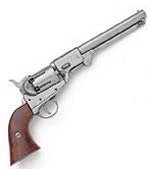 Civil War Confederate Army Revolver |
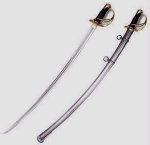 Cold Steel 1860 Cavalry Saber Sword Metal Scabbard Authentic weight |
|
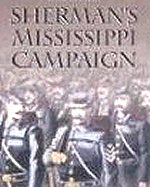 Sherman's Mississippi Campaign Sherman set out from Vicksburg on February 3, 1864, with an army of some 25,000 infantry and a battalion of cavalry. An opportunity to observe how this large-scale raid presaged Shermans Atlanta and Carolina campaigns, revealing the transformation of Shermans strategic thinking |
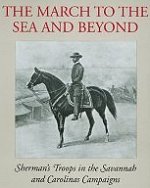 The March to the Sea and Beyond: Sherman's Troops in the Savannah and Carolinas Campaigns This book contains an examination of the army that General William Tecumseh Sherman led through Georgia and the Carolinas, in late 1864 and early 1865. Instead of being just another narrative of the March to the Sea and Carolina campaigns, however, Glatthaar's book is a look at the individuals that composed the army. |
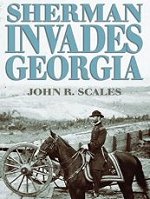 Sherman Invades Georgia: Planning the North Georgia Campaign Using a Modern Perspective Sherman Invades Georgia takes advantage of modern planning techniques to fully examine what went into the Georgia campaign. Unlike other studies, though, this one puts the reader squarely into the mind of General Sherman on the eve of his most famous military undertaking—limiting the information to that possessed by Sherman at the time, as documented in his correspondence during the campaign and not in his after-the-fact reports and autobiography. |
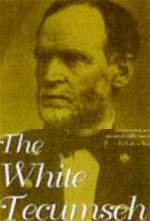 The White Tecumseh: A Biography of General William T. Sherman Utilizing regimental histories, historian Hirshon offers a sympathetic yet excellent biography of one of the more noted Civil War generals, best remembered for burning Atlanta, cutting a swath of destruction across Georgia, then creating total destruction in South Carolina, including the burning of Columbia. Hirshon gives us an insight into how Sherman's own troops felt about him and his relationships with fellow generals, especially Grant. |
Kindle Available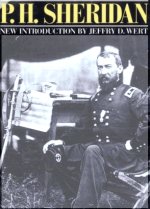 Personal Memoirs of P.H. Sheridan, General United States Army Philip H. Sheridan earned the enmity of many Virginians for laying waste to the Shenandoah Valley. His date and place of birth is uncertain, but he himself claimed to have been born in New York in 1831 |
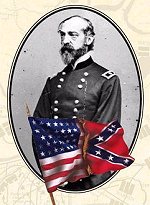 George Gordon Meade and the War in the East To most students of the Civil War, he is merely the man who was lucky enough to benefit from Confederate mistakes at Gettysburg, but whose shortcomings as a commander compelled Abraham Lincoln to bring in Ulysses S. Grant from the West to achieve victory |
Kindle Available Southern Storm Sherman's March to the Sea The destruction spanned more than sixty miles in width and virtually cut the South in two, disabling the flow of supplies to the Confederate army. He led more than 60,000 Union troops to blaze a path from Atlanta to Savannah, ordering his men to burn crops, kill livestock, and decimate everything that fed the Rebel war machine |
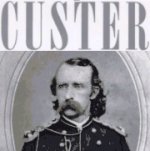 CUSTER: The Controversial Life of George Armstrong Custer After graduating last in his class at West Point, he rose to become the Union's youngest general on the strength of his flamboyance and military genius. Next came 12 years of checkered service in the American West, ending with the famous massacre at Little Bighorn |
 Generals in Bronze: Interviewing the Commanders of the Civil War Revealing interviews with the commanders of the Civil War. In the decades that followed the American Civil War, Artist James E. Kelly (1855-1933) conducted in-depth interviews with over forty Union Generals |
 Grant's Lieutenants From Chattanooga to Appomattox This new volume assesses Union generalship during the final two years of the Civil War. Steven Woodworth, one of the war's premier historians, is joined by a team of scholars-- Grimsley, Marszalek, and Hess, among others--who critique Ulysses S. Grant's commanders |
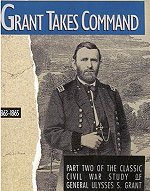 Grant Takes Command: 1863 - 1865 The enigmatic commander in chief of the Union forces through the last year and a half of the Civil War. It is both a revelatory portrait of Ulysses S. Grant and the dramatic story of how the war was won. |
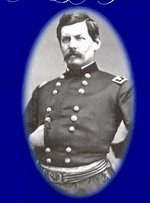 George B. Mcclellan: The Young Napoleon By age 35, General George B. McClellan (1826�1885), designated the "Young Napoleon," was the commander of all the Northern armies. He forged the Army of the Potomac into a formidable battlefield foe, and fought the longest and largest campaign of the time as well as the single bloodiest battle in the nation's history |
 History Channel Presents The Civil War From Harper's Ferry, Fort Sumter, and First Bull Run to Shiloh, Antietam, and Gettysburg. The most legendary Civil War battles in brilliant detail. A selection of the soldiers and legendary leaders. |
 History Channel Presents Sherman's March In November 1864, Sherman and an army of 60,000 troops began their month-long march from Atlanta to Savannah. Burning crops, destroying bridges and railroads, and laying waste to virtually everything in his path |
 Civil War Terror Tales of hidden conspiracies of terror that specifically targeted the civilian populations. Engineers of chemical weapons, new-fangled explosives and biological warfare competed |
 The Civil War: To the Finish Sherman and the March to the Sea After 3 years of battles, a Union general captured Atlanta and decided to change the course of the war for good. That general was William Tecumseh Sherman |
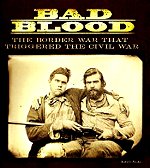 Bad Blood: The Border War That Triggered the Civil War In the years leading up to the Civil War, a bloody conflict between slaveholders and abolitionists focused the nation's eyes on the state of Missouri and the territory of Kansas. Told through the actual words of slave owners, free-staters, border ruffians, and politicians, Bad Blood presents the complex morality, differing values, and life-and-death decisions faced by those who lived on the Missouri-Kansas border |
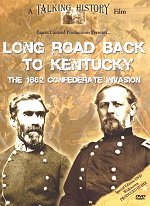 Long Road Back to Kentucky: The 1862 Confederate Invasion The often-overlooked Western campaign of the war with a specific emphasis on Kentucky's involvement in the American Civil War. |
History's Mysteries: Family Feud: The Hatfields And McCoys Millions of dollars worth of timber and coal rich land were at stake, the courts were involved and once the national press got wind of what was happening, the backwoods folk found that their fight was being followed nationwide |
 The Civil War - A Film by Ken Burns Here is the saga of celebrated generals and ordinary soldiers, a heroic and transcendent president and a country that had to divide itself in two in order to become one |
Sources:
Library of Congress
West Point
Federal Citizens


 seceded early in 1861.
 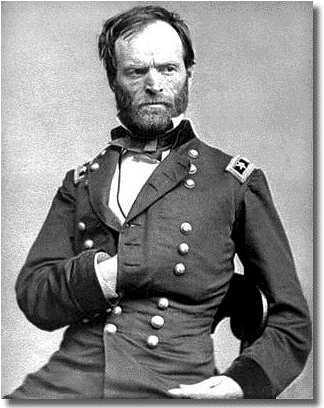 superintendent of a military college at Alexandria, Louisiana, 1859-1861; was reappointed in the Regular Army as colonel, 13th Infantry, May 1861; was appointed brigadier general of volunteers, May 1861, and commanded a brigade at Bull Run in July.