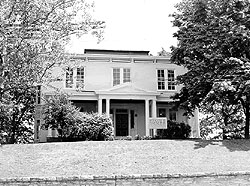
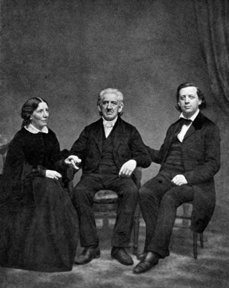
Harriet Beecher Stowe, 1811-1896.
|
 Uncle Tom's Cabin Today the novel is often labeled condescending, but its characters still have the power to move our hearts. Though �Uncle Tom� has become a synonym for a fawning black yes-man, Stowe's Tom is actually American literature's first black hero |
|
 Harriet Beecher Stowe : Three Novels : Uncle Tom's Cabin Or, Life Among the Lowly; The Minister's Wooing; Oldtown Folks Uncle Tom's Cabin is probably the most influential work of fiction in American history. This Christian epic turned millions of Americans against slavery, bringing the "peculiar institution" immeasurably closer to its destruction. In The Minister's Wooing and Oldtown Folks, Stowe examines the interplay of religion, domesticity, and women's roles and choices in the shaping of American culture. Kindle Available  The American Woman's Home by Catharine E. Beecher and Harriet Beecher Stowe Originally published in 1869, was one of the late nineteenth century's most important handbooks of domestic advice. This book represents their attempt to direct women's acquisition and use of a dizzying variety of new household consumer goods available in the post-Civil War economic boom |
American Civil War Women
Women Soldiers
Womens Subject Civil War Titles
Civil War Exhibits
Civil War Timeline
State Battle Maps
Documents of the War
Civil War Cooking
Kids Zone Causes of the War
Young Reader Civil War Books
 Sanctified Trial: The Diary of Eliza Rhea Anderson Fain, a Confederate Woman in East Tennessee The Diary of Eliza Rhea Anderson Fain |
Kindle Available Harriet Tubman: Imagining a Life: A Biography Travel with Tubman along the treacherous route of the Underground Railroad. Hear of her friendships with Frederick Douglass, John Brown, and other abolitionists. |
Kindle Available Rose O'Neale Greenhow, Civil War Spy Fearless spy for the Confederacy, glittering Washington hostess, legendary beauty and lover, Rose Greenhow risked everything for the cause she valued more than life itself |
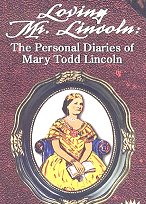 Loving Mr. Lincoln: The Personal Diaries of Mary Todd Lincoln Chronicles life, love, and daily struggles with Abraham in their 26 years together. In frank, haunting journal entries, Mary describes the pain she felt when Abraham left her at the altar, when her sons died, and when Abraham's political career seemed to be at an end |
Kindle Available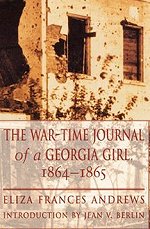 The War-Time Journal of a Georgia Girl, 1864-1865 Eliza Andrews' diary is more cogent than any novel about the Civil War. General Sherman laid a track, and ELiza had to follow his footsteps through Georgia. Her insights into war and the havoc it wrought in the South are accompanied by her own editorial comments forty-four years later |
Kindle Available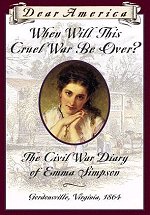 When Will This Cruel War Be Over? A Confederate girl in Virginia, in 1864, Emma Simpson writes about the hardships of growing up during a turbulent time |
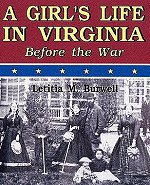 A Girl's Life in Virginia Before the War First published in 1895. An engrossing eyewitness account of antebellum plantation life as it really was |
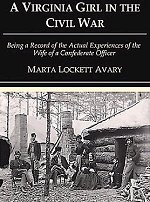 Record of the Actual Experiences of the Wife of a Confederate Officer The author tells of her many travels across the war-torn South, capture behind enemy lines, encounter with Belle Boyd, friendship with General J. E. B. Stuart, and the devastation suffered by the citizens of Richmond in the last days of the Confederacy. |
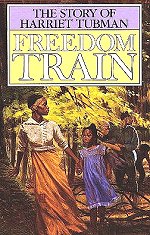 Freedom Train: The Story of Harriet Tubman Harriet escaped North, by the secret route called the Underground Railroad. Harriet didn't forget her people. Again and again she risked her life to lead them on the same secret, dangerous journey. |
Kindle Available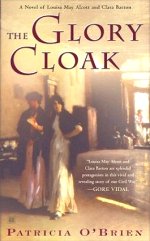 The Glory Cloak: A Novel of Louisa May Alcott and Clara Barton From childhood, Susan Gray and her cousin Louisa May Alcott have shared a safe, insular world of outdoor adventures and grand amateur theater -- a world that begins to evaporate with the outbreak of the Civil War. Frustrated with sewing uniforms and wrapping bandages, the two women journey to Washington, D.C.'s Union Hospital to volunteer as nurses. |
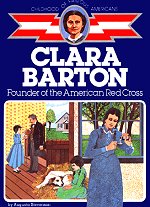 Clara Barton Founder of the American Red Cross Young Clara Barton is shy and lonely in her early days at boarding school. She is snubbed by the other girls because she doesn't know how to talk to them. But when she gets an opportunity to assist the local doctor, her shyness disappears, and Clara begins to discover her true calling as a nurse. |
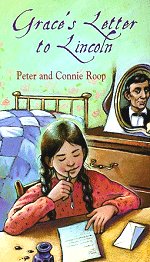 Grace's Letter to Lincoln Many important details of the time period help to make the reader understand what life was like then. It also includes photos of the actual letters written between Grace and Mr. Lincoln |
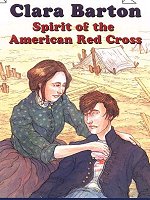 Clara Barton Spirit of the American Red Cross Ready To Read - Level Three Clara Barton was very shy and sensitive, and not always sure of herself. But her fighting spirit and desire to help others drove her to become one of the world's most famous humanitarians. Learn all about the life of the woman who formed the American Red Cross. |
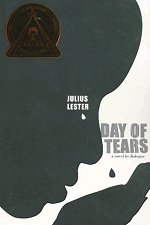 Day Of Tears Through flashbacks and flash-forwards, and shifting first-person points of view, readers will travel with Emma and others through time and place, and come to understand that every decision has its consequences, and final judgment is passed down not by man, but by his maker. |
Kindle Available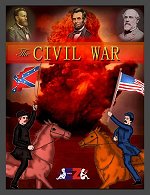 The Civil War Introduces young readers to the harrowing true story of the American Civil War and its immediate aftermath. A surprisingly detailed battle-by-battle account of America's deadliest conflict ensues, culminating in the restoration of the Union followed by the tragic assassination of President Lincoln |
Kindle Available A Yankee Girl at Fort Sumter Tale of a girl and her family from Boston living in Charleston, SC during the months leading up to the beginning of the Civil War by the attack on Fort Sumter. The reader senses the inhumanity of slavery through Sylvia's experiences. |
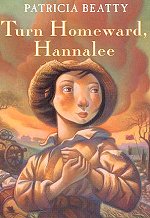 Turn Homeward, Hannalee During the closing days of the Civil War, plucky 12-year-old Hannalee Reed, sent north to work in a Yankee mill, struggles to return to the family she left behind in war-torn Georgia. "A fast-moving novel based upon an actual historical incident with a spunky heroine and fine historical detail."--School Library Journal. |
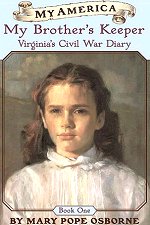 My Brothers Keeper Virginia Dickens is angry. Her father and brother Jed have left her behind while they go off to Uncle Jack's farm to help him hide his horses from Confederate raiders. It's the summer of 1863 and Pa and Jed believe 9-year-old Virginia will be out of harm's way in the sleepy little town of Gettysburg, Pennsylvania. |
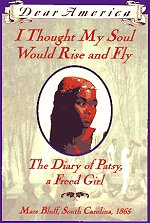 I Thought My Soul Would Rise and Fly: The Diary of Patsy, a Freed Girl, Mars Bluff, South Carolina 1865 Not only is 12-year-old Patsy a slave, but she's also one of the least important slaves, since she stutters and walks with a limp. So when the war ends and she's given her freedom, Patsy is naturally curious and afraid of what her future will hold. |
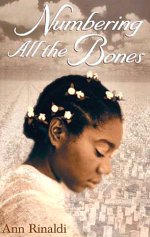 Numbering The Bones The Civil War is at an end, but for thirteen-year-old Eulinda, it is no time to rejoice. Her younger brother Zeke was sold away, her older brother Neddy joined the Northern war effort,. With the help of Clara Barton, the eventual founder of the Red Cross, Eulinda must find a way to let go of the skeletons from her past. |
Kindle Available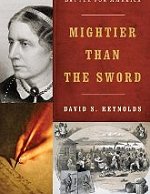 Mightier than the Sword: Uncle Tom's Cabin and the Battle for America |
Uncle Tom's Cabin is likely the most influential novel ever written by an American. In a fitting tribute to the two hundredth anniversary of Harriet Beecher Stowe's birth, Bancroft Prize-winning historian David S. Reynolds reveals her book's impact not only on the abolitionist movement and the American Civil War but also on worldwide events |
| Uncle Tom's Cabin by Harriet Beecher Stowe |
An international bestseller that sold more than 300,000 copies when it first appeared in 1852, Uncle Tom's Cabin was dismissed by some as abolitionist propaganda; yet Tolstoy deemed it a great work of literature "flowing from love of God and man." Today, however, Harriet Beecher Stowe's stirring indictment of slavery is often confused with garish dramatizations that flourished for decades after the Civil War: productions that relied heavily on melodramatic simplifications of character totally alien to the original. Thus "Uncle Tom" has become a pejorative term for a subservient black, whereas Uncle Tom in the book is a man who, under the most inhumane of circumstances, never loses his human dignity. "Uncle Tom's Cabin" is the most powerful and most enduring work of art ever written about American slavery," said Alfred Kazin.
Synopsis : Eliza Harris, a slave whose child is to be sold, escapes her beloved home on the Shelby plantation in Kentucky and heads North, eludes the hired slave catchers and is aided by the underground railroad. Another slave, Uncle Tom, is sent "down the river" for sale and ultimately endures a martyr's death under the whips of Simon Legree's overseers. Originally published in 1852, this is a classic must-read in American Literature. |


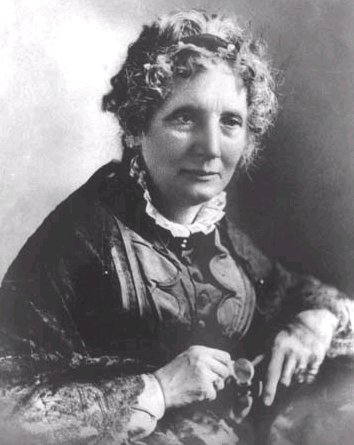
 publication of the book, she became a celebrity, speaking against slavery both in America and Europe. She wrote A Key to Uncle Tom's Cabin (1853) extensively documenting the realities on which the book was based, to refute critics who tried to argue that it was inauthentic; and published a second anti-slavery novel, Dred in1856.
 Stowe became one of America's best-paid and most famous writers. Born into a distinguished New England family, Stowe began her career writing stories for a Cincinnati literary club. Stowe was fortunate to have begun her career before writing had become sufficiently remunerative in the United States to allow men to dominate the profession. First published in weekly installments from June 5, 1851 to April 1, 1852 in the journal National Era, Stowe's novel created such a controversy that when she was introduced to President Abraham Lincoln in 1862, he is said to have greeted her with the words: "So you are the little woman who wrote the book that started this great war!"