Kindle Available Shiloh and the Western Campaign of 1862 The Battle of Shiloh was one of the most critical battles in American History. Some of the biggest figures of the Civil War - Grant, Sherman, Johnston, Bragg, Beauregard, Buell - they all fought there. As Grant would write in his memoirs, before Shiloh, Americans on both sides of the Mason Dixon line believed that the war could still be a short limited affair. |
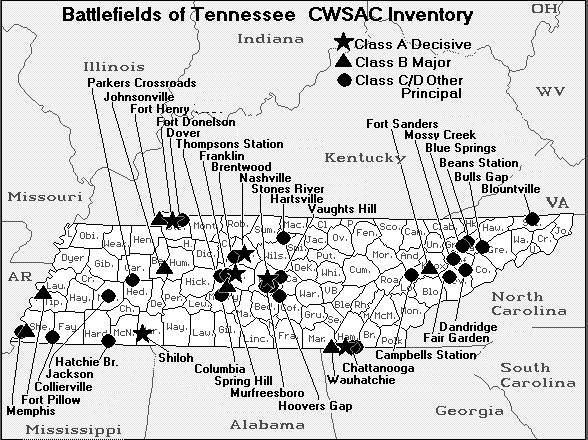
Tennessee Civil War Map of Battles
 |
Kindle Available Failure in the Saddle: Nathan Bedford Forrest, Joe Wheeler, and the Confederate Cavalry in the Chickamauga Campaign In August 1863 William Rosecrans' Union Army of the Cumberland embarked on a campaign of maneuver to turn Braxton Bragg's Army of Tennessee out of Chattanooga, one of the most important industrial and logistical centers of the Confederacy. |
 Nashville: The Western Confederacy's Final Gamble Adequately mapped and illustrated, the read was an enjoyable one. The author was more than fair and accurate in his assessment of Hood who mismanaged, waisted and destroyed the superb Army of Tennessee, in effect throwing away the Confederacy's most viable hope |
 Struggle for the Heartland: The Campaigns from Fort Henry to Corinth The military campaign that began in early 1862 with the advance to Fort Henry and culminated in late May with the capture of Corinth, Mississippi. The first significant Northern penetration into the Confederate west |
Kindle Available From Manassas to Appomattox: General James Longstreet According to some, he was partially to blame for the Confederate defeat at Gettysburg; according to others, if Lee had followed Longstreet's advice, they would have won that battle. He has been called stubborn and vain; and he has been lauded as one of the greatest tacticians of the Civil War |
 Forts Henry and Donelson The Key to the Confederate Heartland The front in Virginia was relatively narrow (Chesapeake Bay to Blue Ridge Mountains) while in Tennessee the front stretched hundreds of miles from the Mississippi River to the Appalachian Mountains. To cover this extensive area the Confederates had a much smaller force than in Virginia |
|
Kindle Available Civil War Curiosities: Strange Stories, Oddities, Events, and Coincidences |
 The Battle of the Wilderness May 5-6, 1864 Fought in a tangled forest fringing the south bank of the Rapidan River, the Battle of the Wilderness marked the initial engagement in the climactic months of the Civil War in Virginia, and the first encounter between Ulysses S. Grant and Robert E. Lee |
 The Civil War Day By Day An Almanac, 1861-1865 The most exhaustively detailed and fascinating book on the American Civil War of its kind. Not only does it provide a day-by-day look at the major events of the war, but lists so many of the small skirmishes and actions as well. Accurate and enjoyable |
Kindle Available Civil War Medicine The staggering challenge of treating wounds and disease on both sides of the conflict. Written for general readers and scholars alike, this first-of-its kind encyclopedia will help all Civil War enthusiasts to better understand this amazing medical saga. Clearly organized, authoritative, and readable |
|
Kindle Available Advance And Retreat: Personal Experiences In The United States And Confederate States Armies John Bell Hood entered the Confederate Army at 29, loyal to Confederate Independence. He led his men into the battles of Second Manassas, Gaines's Mill, Sharpsburg, Fredericksburg, Gettysburg, and Chickamauga |
Kindle Available Tennessee in the Civil War Selected Contemporary Accounts of Military and Other Events, Month by Month |
 Winter Lightning: A Guide to the Battle of Stones River Lincoln thanked Rosecrans saying that the nation could not have taken another defeat. Additionally, Lincoln said he would remember this victory as long as he lived |
 Storming the Heights: A Guide to the Battle of Chattanooga The Confederate victory of Chickamauga drove the Union Army of the Cumberland back to the key railroad hub of Chattanooga. In early October it had appeared that all Union gains in southern Tennessee might be lost |
|
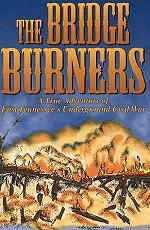 The Bridge Burners: A True Adventure of East Tennessee's Underground Civil War The railroad that proved such a peacetime boon would become a point of conflict only three years later |
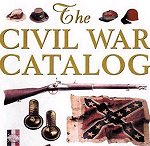 The Civil War Catalog More than 200 illustrations and restored photographs, all the weapons, uniforms, and implements of battle. Packed with color photos of insignia, medals, kits, paper ephemera, rare uniforms, and personal equipment for all enlisted ranks. |
Kindle Available Standard Catalog of Civil War Firearms Over 700 photographs and a rarity scale for each gun, this comprehensive guide to the thousands of weapons used by Billy Yank and Johnny Reb will be indispensable for historians and collectors. |
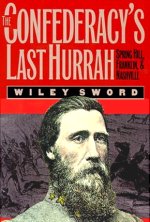 The Confederacy's Last Hurrah: Spring Hill, Franklin, and Nashville John Bell Hood rallied his demoralized troops and marched them off the Tennessee, desperately hoping to draw Sherman after him and forestall the Confederacy's defeat |
|
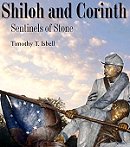 Shiloh and Corinth: Sentinels of Stone The brave deeds performed by soldiers of the North and South. Approximately 93 striking photographs and accompanying histories bring the battlefields to life, from Shiloh and Savannah, Tennessee, to Iuka and Corinth, Mississippi |
 Guide to Civil War Nashville The importance of Nashville during the Civil War, the campaigns that led up to and followed the battle, the actual Battle of Nashville, landmarks, tour guides, historic structures, markers, maps and GPS coordinates are given for many of the historic sites |
|||
 Kentucky Cavaliers in Dixie Reminiscences of a Confederate Cavalryman Mosgrove was born in Kentucky, in 1844, and enlisted in the Fourth Kentucky Cavalry Regiment on September 10, 1862. His eyewitness account illuminates the western theater of the Civil War in Kentucky, east Tennessee, and southwest Virginia |
Kindle Available Patriotic Treason John Brown and the Soul of America The life of the first citizen committed to absolute racial equality. His friendships in defiance of the culture around him, He turned his twenty children into a dedicated militia. He collaborated with black leaders such as Frederick Douglass, Martin Delany, and Harriet Tubman to overthrow slavery. |
 The Camden Expedition of 1864 and the Opportunity Lost by the Confederacy to Change the Civil War The Confederacy had a great opportunity to turn the Civil War in its favor in 1864, but squandered this chance when it failed to finish off a Union army cornered in Louisiana because of concerns about another Union army coming south from Arkansas. The Confederates were so confused that they could not agree on a course of action to contend with both threats, thus the Union offensive advancing from Arkansas saved the one in Louisiana and became known to history as the Camden Expedition. |
 A Stranger And a Sojourner: Peter Caulder, Free Black Frontiersman in Antebellum Arkansas An illiterate free black man, defied all generalizations about race as he served with distinction as a marksman in the U.S. Army during the War of 1812, repeatedly crossed the color line, and became an Arkansas yeoman farmer, thriving and respected by white neighbors until he fell victim of new discriminatory legislation on the eve of the Civil War |
 The Shipwreck of Their Hopes: The Battles for Chattanooga Cozzens follows up his magisterial account of the Battle of Chickamauga, This Terrible Sound (1992), with an equally authoritative study of the Chattanooga campaign that followed it. Braxton Bragg (who sometimes seems unfit to have been at large on the public streets, let alone commanding armies) failed to either destroy or starve out the Union Army of the Cumberland. In due course, superior Northern resources and strategy--not tactics; few generals on either side come out looking like good tacticians--progressively loosened the Confederate cordon around the city. Finally, the Union drove off Bragg's army entirely in the famous Battle of Missionary Ridge, which was a much more complex affair than previous, heroic accounts make it. Like its predecessor on Chickamauga, this is such a good book on Chattanooga that it's hard to believe any Civil War collection will need another book on the subject for at least a generation. |

Buy this Tennessee State Flag 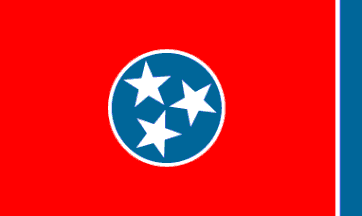 Tennessee State Flag |
The Tennessee State Flag was designed by Captain LeRoy Reeves of the Third Regiment, Tennessee Infantry. Captain Reeves explained the design of his flag as follows: Tennessee is divided into three regions - the Tennessee River divides West Tennessee from Middle Tennessee, and East Tennessee is the area of the Smokey Mountains and east - the "Grand Divisions. The three stars are of pure white, representing the three grand divisions of the state. They are bound together by the endless circle of the blue field, the symbol being three bound together in one.... an indissoluble trinity. The large field is crimson. The final blue bar relieves the sameness of the crimson field and prevents the flag from showing too much crimson when hanging limp. The white edgings, contrast more strongly the other colors. This flag was adopted as the official flag of the State of Tennessee by an act of the Legislature passed and approved April 17, 1905. The design of the flag was described by that act, Chapter 498 of the Public Acts of 1905 |
Bonnie Blue Flag Bonnie Blue The Confederate government did not adopt this flag but the people did and the lone star flags were adopted in some form in five of the southern States that adopted new flags in 1861. |
Southern Cross Flag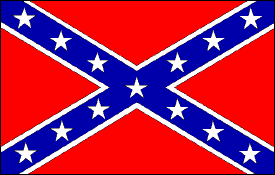 Used as a navy jack at sea from 1863 onward. This flag has become the generally recognized symbol of the South. |
Second Confederate Flag 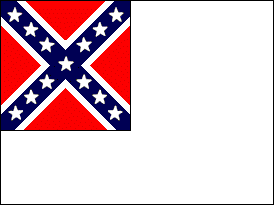 On May 1st,1863, a second design was adopted, placing the Battle Flag (also known as the "Southern Cross") as the canton on a white field. This flag was easily mistaken for a white flag of surrender especially when the air was calm and the flag hung limply. More on Confederate Flags |