Fort Sanders
Fort Loudon Tennessee

American Civil War
November 29, 1863

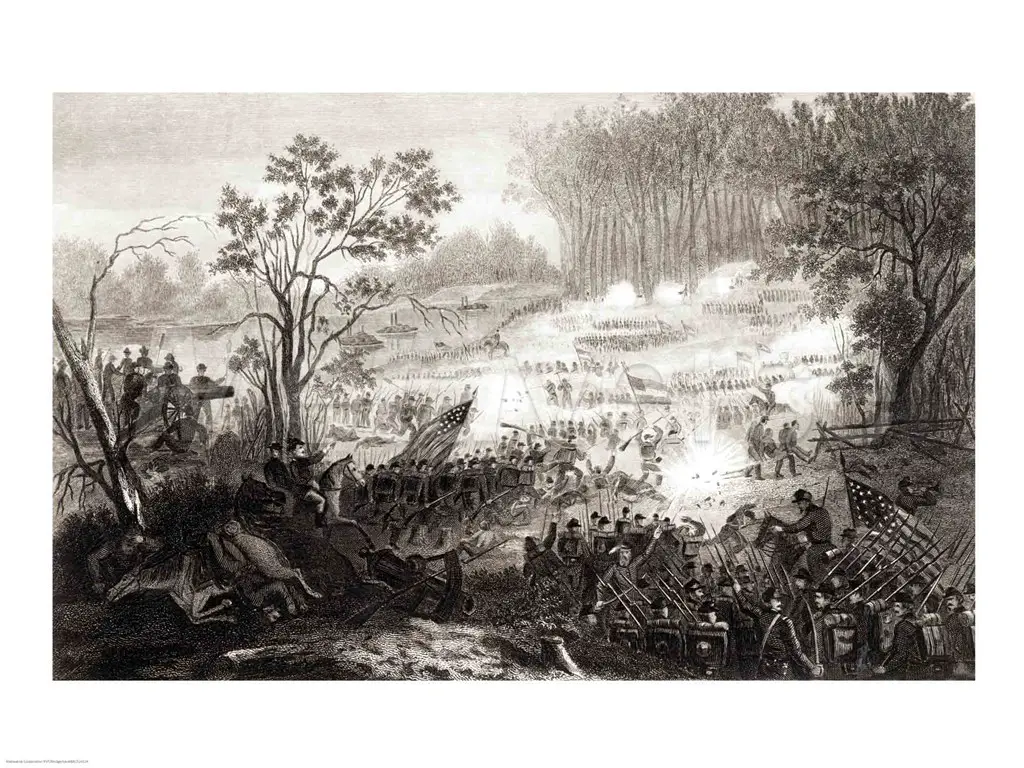
In attempting to take Knoxville, the Confederates decided that Fort Sanders was the only vulnerable place where they could penetrate Union Major General Ambrose E. Burnside's fortifications, which enclosed the city, and successfully conclude the siege, already a week long. The fort surmounted an eminence just northwest of Knoxville.

Northwest of the fort, the land dropped off abruptly. Confederate Lt. General James Longstreet believed he could assemble a storming party, undetected at night, below the fortifications and, before dawn, overwhelm Fort Sanders by a coup de main. Following a brief artillery barrage directed at the fort's interior, three Rebel brigades charged.

Union wire entanglements-–telegraph wire stretched from one tree stump to another to another-–delayed the attack, but the fort's outer ditch halted the Confederates. This ditch was twelve feet wide and from four to ten feet deep with vertical sides. The fort's exterior slope was almost vertical, also. Crossing the ditch was nearly impossible, especially under withering defensive fire from musketry and canister. 

Confederate officers did lead their men into the ditch, but, without scaling ladders, few emerged on the scarp side and a small number entered the fort to be wounded, killed, or captured. The attack lasted a short twenty minutes. Longstreet undertook his Knoxville expedition to divert Union troops from Chattanooga and to get away from General Braxton Bragg, with whom he was engaged in a bitter feud. His failure to take Knoxville scuttled his purpose.

This was the decisive battle of the Knoxville Campaign. This Confederate defeat, plus the loss of Chattanooga on November 25, put much of East Tennessee in the Union camp.

Result(s): Union victory

Location: Knox County

Campaign: Knoxville Campaign (1863)

Date(s): November 29, 1863

Principal Commanders: Major General Ambrose E. Burnside [US]; Lt. General James Longstreet [CS]

Forces Engaged: Department of the Ohio [US]; Confederate Forces in East Tennessee [CS]

Estimated Casualties: 880 total (US 100; CS 780)


Tennessee State Battle Map
State Battle Maps
American Civil War Exhibits
Civil War Timeline
Women in the War
Civil War Summary
Documents of the Civil War
Civil War Cooking
Civil War Submarines
Kids Zone Causes of the War

 
Web AmericanCivilWar.com
Volcano-Pictures.INFO


Sources:
U.S. National Park Service
U.S. Library of Congress.

Civil War History Book Club Reading Titles


The bloodbath at Shiloh, Tenn. (April 6-7, 1862), brought an end to any remaining innocence in the Civil War. The combined 23,000 casualties that the two armies inflicted on each other in two days shocked North and South alike. Ulysses S. Grant kept his head and managed, with reinforcements, to win a hard-fought victory. Confederate general Albert Sidney Johnston was wounded and bled to death, leaving P.G.T. Beauregard to disengage and retreat with a dispirited gray-clad army. Daniel (Soldiering in the Army of Tennessee) has crafted a superbly researched volume that will appeal to both the beginning Civil War reader as well as those already familiar with the course of fighting in the wooded terrain bordering the Tennessee River. His impressive research includes the judicious use of contemporary newspapers and extensive collections of unpublished letters and diaries.

An act of love but also of careful scholarship, This Great Battlefield of Shiloh tells the story of the construction of a National Military Park there and of the people who made it. Everyone interested in the battle will want to read what happened there after the fighting stopped, and anyone interested in the process of reunion after the Civil War will learn that a field of such carnage became a site of reconciliation and nationalism

The first major battle in the Western theatre of the American Civil War, Shiloh came as a horrifying shock to both the American public and those in arms. For the first time they had some idea of the terrible price that would be paid for the preservation of the Union. On 6 April 1862 General Albert Sidney Johnston caught Grant and Sherman by surprise and very nearly drove them into the River Tennessee, but was mortally wounded in the process. Somehow Grant and Sherman hung on and the next day managed to drive back the hordes of grey-clad rebels.
By mid 1862, Union gains in the Mississippi Valley and in Tennessee and Kentucky had brought the Confederacy to a point of strategic crisis. This valuable addition to the growing literature on the Civil War in the West tells how the Union then failed to press home its advantage while the Confederacy failed to force Kentucky into the Confederacy. The climax of these events was the little-known Battle of Perryville, in which a greatly inferior Southern force under Braxton Bragg managed a draw against Don Carlos Buell's Union army but also effectively terminated the Confederate invasion of Kentucky. McDonough has researched thoroughly and written clearly, making this book informative and accessible to a wide range of Civil War students.

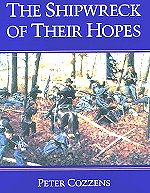
Cozzens follows up his magisterial account of the Battle of Chickamauga, This Terrible Sound (1992), with an equally authoritative study of the Chattanooga campaign that followed it. Braxton Bragg (who sometimes seems unfit to have been at large on the public streets, let alone commanding armies) failed to either destroy or starve out the Union Army of the Cumberland. In due course, superior Northern resources and strategy--not tactics; few generals on either side come out looking like good tacticians--progressively loosened the Confederate cordon around the city. Finally, the Union drove off Bragg's army entirely in the famous Battle of Missionary Ridge, which was a much more complex affair than previous, heroic accounts make it. Like its predecessor on Chickamauga, this is such a good book on Chattanooga that it's hard to believe any Civil War collection will need another book on the subject for at least a generation.