 Fort Donelson's Legacy: War and Society in Kentucky and Tennessee, 1862-1863 This book has period illustrations and maps in each chapter. From the failed Southern invasion of Kentucky to the "uncivil" guerilla warfare in middle Tennessee. |
Fort Donelson
|
|
|
|
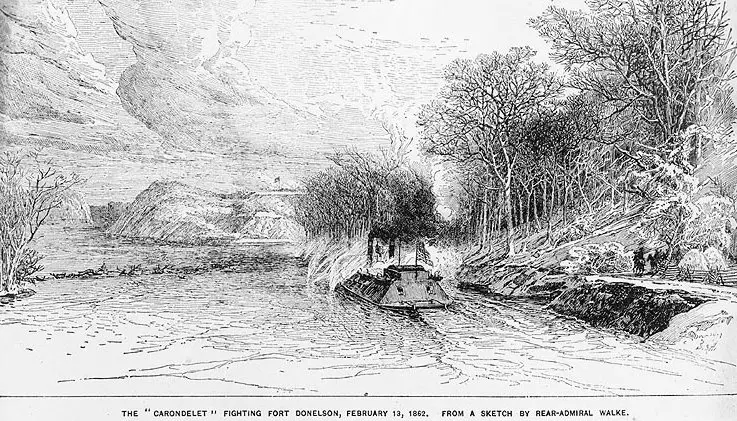
"The 'Carondelet' Fighting Fort Donelson, February 13, 1862." |
 Grant Takes Command 1863 - 1865 The enigmatic commander in chief of the Union forces through the last year and a half of the Civil War. It is both a revelatory portrait of Ulysses S. Grant and the dramatic story of how the war was won.  Struggle for the Heartland: The Campaigns from Fort Henry to Corinth The military campaign that began in early 1862 with the advance to Fort Henry and culminated in late May. The first significant Northern penetration into the Confederate west |
Kindle Available Tennessee in the Civil War Selected Contemporary Accounts of Military and Other Events, Month by Month |
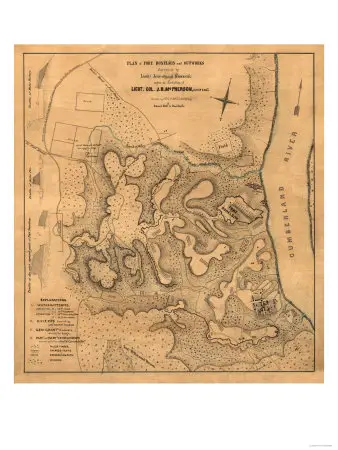
Battle of Fort Donelson - Civil War Panoramic Map 18 in. x 24 in. Buy at AllPosters.com Framed Mounted |
 Where the South Lost the War: An Analysis of the Fort Henry-Fort Donelson Campaign The war probably could have been over in 1862 had Lieutenant Phelps destroyed the bridge at Florence. Not doing so provided a retreat for A. S. Johnston to move his men to Corinth and then to Shiloh |
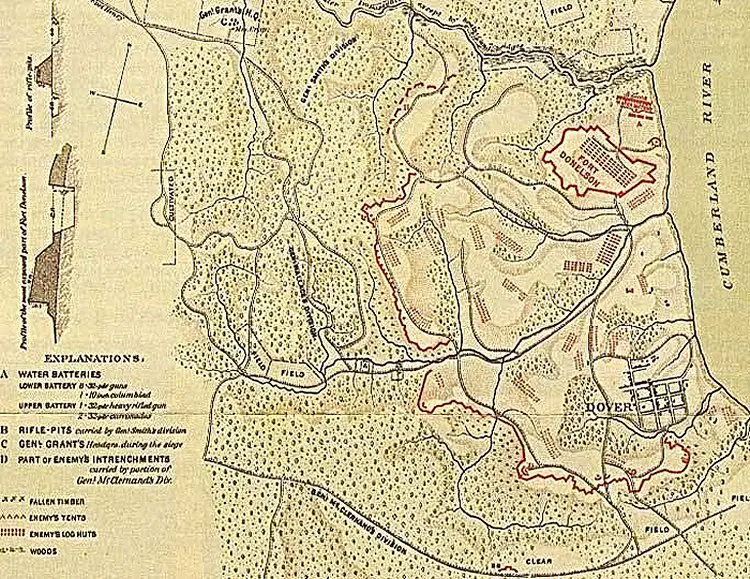
Fort Donelson Plan Map
|
Kindle Available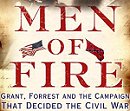 Men of Fire: Grant, Forrest, and the Campaign That Decided the Civil War In the winter of 1862, on the border between Kentucky and Tennessee, two extraordinary military leaders faced each other in an epic clash that would transform them both and change the course of American history forever |
Click to enlarge Map |
Kindle Available John Hunt Morgan and His Raiders The "Thunderbolt of the Confederacy" John Hunt Morgan from Tompkinsville, Kentucky to Greeneville, Tennessee. |
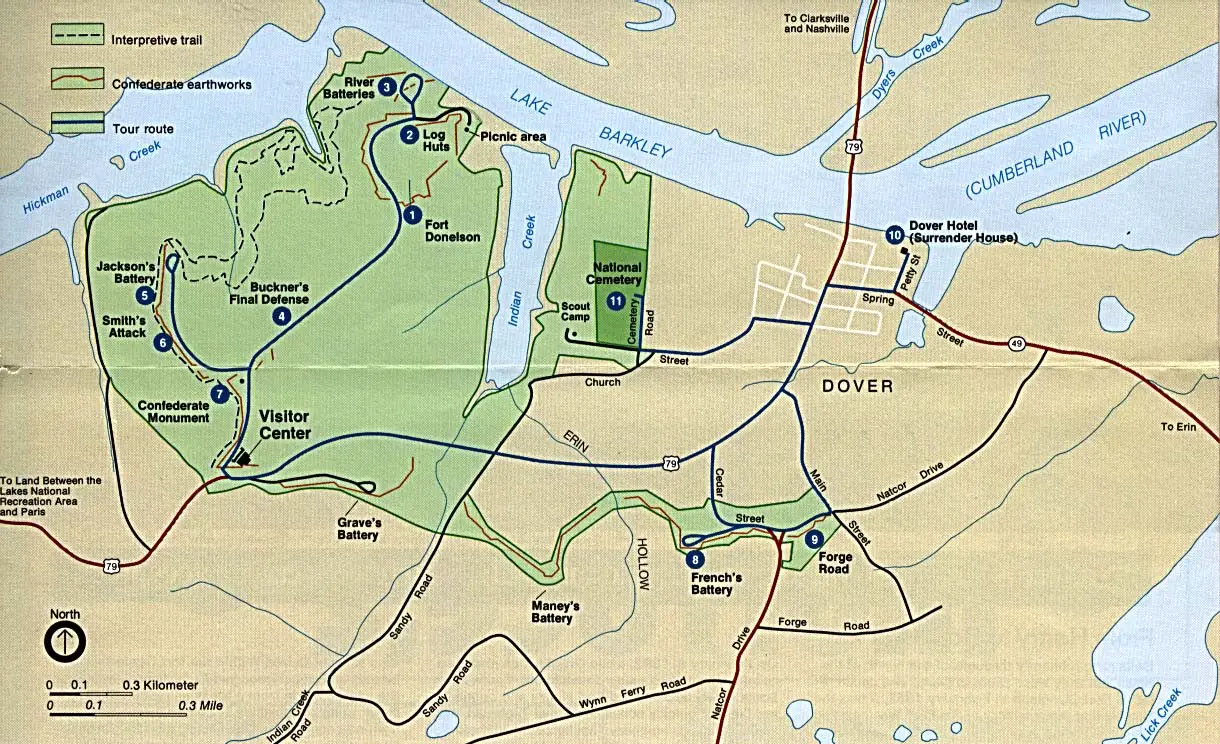
The morning of February 14 dawned cold and quiet. Early in the afternoon a furious roar broke the stillness, and the earth began to shake. Andrew H. Foote's Union gunboat fleet, consisting of the ironclads St. Louis, Pittsburgh, Louisville, and Corondolet, and the timberclads Conestoga and Tyler, had arrived from Fort Henry via the Tennessee and Ohio rivers and were exchanging "iron valentines" with the eleven big guns in the Southern water batteries. During this one and one-half hour duel the Confederates wounded Foote and inflicted such extensive damage upon the gunboats that they were forced to retreat. The hills and hollows echoed with cheers from the Southern soldiers. The Confederate generals�John Floyd, Gideon Pillow, Simon Buckner, and Bushrod Johnson�also rejoiced; but sober reflection revealed another danger. Grant was receiving reinforcements daily and had extended his right flank almost to Lick Creek to complete the encirclement of the Southerners. If the Confederates did not move quickly, they would be starved into submission. Accordingly, they massed their troops against the Union right, hoping to clear a route to Nashville and safety. The battle on February 15 raged all morning, the Union army grudgingly retreating step by step. Just as it seemed the way was clear, the Southern troops were ordered to return to their entrenchments�a result of confusion and indecision among the Confederate commanders. Grant immediately launched a vigorous counterattack, retaking most of the lost ground and gaining new positions as well. The way of escape was closed once more. Floyd and Pillow turned over command of Fort Donelson to Buckner and slipped away to Nashville with about 2,000 men. Others followed cavalryman Colonel Nathan Bedford Forrest across swollen Lick Creek. That morning, February 16, Buckner asked Grant for terms. Grant's answer was short and direct: "No terms except an unconditional and immediate surrender can be accepted." Buckner surrendered. Soon after the surrender, civilians and relief agencies rushed to assist the Union army. The U.S. Sanitary Commission was one of the first to provide food, medical supplies, and hospital ships to transport the wounded. Many civilians came in search of loved ones or to offer support. Although not officially recognized as nurses, women such as Mary Bickerdyke cared for and comforted sick and wounded soldiers. With the capture of Fort Donelson and its sister fort, Henry, the North had not only won its first great victory, it had also gained a new hero�"Unconditional Surrender" Grant, who was promoted to major general. Subsequent victories at Shiloh, Vicksburg, and Chattanooga would lead to his appointment as lieutenant general and commander of all Union armies. Robert E. Lee's surrender at Appomattox would send Grant to the White House. After the fall of Fort Donelson, the South was forced to give up southern Kentucky and much of Middle and West Tennessee. The Tennessee and Cumberland Rivers, and railroads in the area, became vital Federal supply lines. Nashville was developed into a huge supply depot for the Union army in the west. The heartland of the Confederacy was opened, and the Federals would press on until the "Union" became a fact once more. |
Kindle Available Standard Catalog of Civil War Firearms Over 700 photographs and a rarity scale for each gun, this comprehensive guide to the thousands of weapons used by Billy Yank and Johnny Reb will be indispensable for historians and collectors. |
Fort Donelson State Park Map Tennessee State Battle Map State Battle Maps American Civil War Exhibits Civil War Timeline Civil War Summary Women in the War Ships and Naval Battles Southern Commanders Union Generals Confederate Supplies |
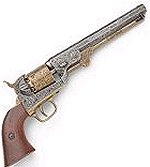 Civil War Model 1851 Naval Pistol Engraved Silver Tone / Gold Tone Finish and Wooden Grips - Replica of Revolver Used by Both USA / Union and CSA / Confederate Forces |
| Kindle Available John Hunt Morgan and His Raiders The "Thunderbolt of the Confederacy" John Hunt Morgan from Tompkinsville, Kentucky to Greeneville, Tennessee. |
 The Partisan Rangers of the Confederate States Army: Memoirs of General Adam R. Johnson The capture of Newburg, Indiana, with only twelve men and two joints of stovepipe mounted on the running gear of a wagon. This episode won him a nickname of "Stovepipe." He was promoted to Brigadier General in June 1864 |
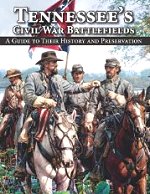 Tennessee's Civil War Battlefields: A Guide to Their History and Preservation Well researched, with detailed maps and photographs, this book allows you to follow General Forrest over his many engagements and march alongside the Army of Tennessee. |
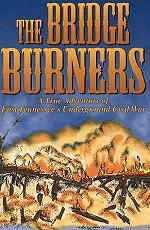 The Bridge Burners: A True Adventure of East Tennessee's Underground Civil War The railroad that proved such a peacetime boon would become a point of conflict only three years later |
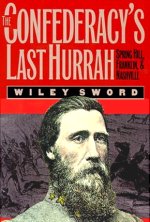 The Confederacy's Last Hurrah: Spring Hill, Franklin, and Nashville John Bell Hood rallied his demoralized troops and marched them off the Tennessee, desperately hoping to draw Sherman after him and forestall the Confederacy's defeat |
Where the South Lost the War: An Analysis of the Fort Henry-Fort Donelson Campaign The war probably could have been over in 1862 had Lieutenant Phelps destroyed the bridge at Florence. Not doing so provided a retreat for A. S. Johnston to move his men to Corinth and then to Shiloh |
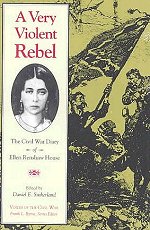 A Very Violent Rebel: The Civil War Diary of Ellen Renshaw House The Siege of Knoxville (November 1863) is covered and Sutherland's footnotes make for good historyl |
 The Untold Story of Shiloh: The Battle and the Battlefield Fought in south central Tennessee, north of Corinth, Mississippi, the battle showed the nation that the Civil War would be long and difficult. The Battle of Shiloh opened up the western Confederacy to the Union invasion that would ultimately prove its undoing |
|
Books Civil War Womens Subjects Young Readers Military History DVDs Confederate Store Civil War Games Music CDs Reenactors |