|
|
|
|
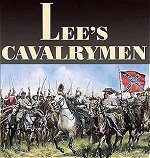 Lee's Cavalrymen: A History of the Mounted Forces of the Army of Northern Virginia, 1861-1865 The cavalry of the Army of Northern Virginia its leadership, the military life of its officers and men as revealed in their diaries and letters, the development of its tactics as the war evolved, and the influence of government policies on its operational abilities. All the major players and battles are involved |
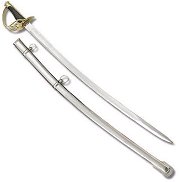 Cavalry Saber This fine replica is 39 inches overall and features a highly polished 33 inch carbon steel blade. Its leather wrapped handle fits the hand perfectly and sports decorative brass accents and a shiny brass pommel. |
North Carolina State Battle Map State Battle Maps American Civil War Exhibits Civil War Timeline Women in the War Civil War Picture Album Civil War Maps Confederate Commanders Civil War Submarines Kids Zone Gettysburg General Stonewall Jackson |
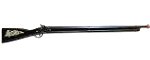 Civil War Musket Wood & Steel Frontier Rifle Designed After The Original Rifle 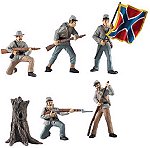 Confederate Army Civil War Collectibles |
 The 2nd North Carolina Cavalry The Second North Carolina Cavalry involvement with the Army of Northern Virginia and the North Carolina Cavalry Brigade, and includes official documents, letters written to and from home, diaries and memoirs to present the soldiers' war experiences |
Kindle Available The Heart of Confederate Appalachia: Western North Carolina in the Civil War Differing ideologies turned into opposing loyalties, and the resulting strife proved as traumatic as anything imposed by outside armies. As the mountains became hiding places for deserters, draft dodgers, fugitive slaves, and escaped prisoners of war, the conflict became a more localized and internalized guerrilla war |
 Two Great Rebel Armies: An Essay in Confederate Military History The Army of Northern Virginia was able to compile a large number of impressive victories during the war. The Army of Tennessee was only able to win at Chickamauga, and even that victory proved barren strategically. |
 55th North Carolina in the Civil War: A History And Roster The 55th Regiment North Carolina Troops was composed primarily of farmers and tradesmen, the regiment also presented a microcosm of the Tar Heel State with a regionally diverse membership from more than 20 counties |
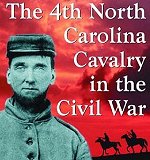 The 4th North Carolina Cavalry in the Civil War: A History and Roster With the Civil War was entering its second year North Carolina was rallying to supply more troops. The Partisan Ranger Act prompted local leaders to recruit companies of irregular soldiers for service in the Confederate Army. Seven such companies were banded together into a regiment to form the 4th North Carolina Cavalry. |
Kindle Available Six Years of Hell Harpers Ferry During the Civil War While Harpers Ferry was an important location during the Civil War, in most Civil War books it's a sideshow of something larger. John Brown's raid, Lee's invasions of 1862 & 1863 as well as Early's 1864 raid are all covered in depth |
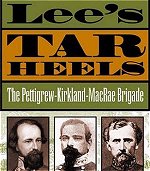 Lee's Tar Heels: The Pettigrew-Kirkland-MacRae Brigade The most successful of North Carolina's units during the Civil War. The brigade played a central role in Pickett's Charge at Gettysburg and also fought with distinction during the Petersburg campaign and in later battles including the Wilderness, Spotsylvania, and Cold Harbor |
Kindle Available Chancellorsville The Battle and Its Aftermath Chancellorsville was a remarkable victory for Robert E. Lee's troops, a fact that had enormous psychological importance for both sides, which had met recently at Fredericksburg and would meet again at Gettysburg in just two months. But the achievement, while stunning, came at an enormous cost: more than 13,000 Confederates became casualties, including Stonewall Jackson |
