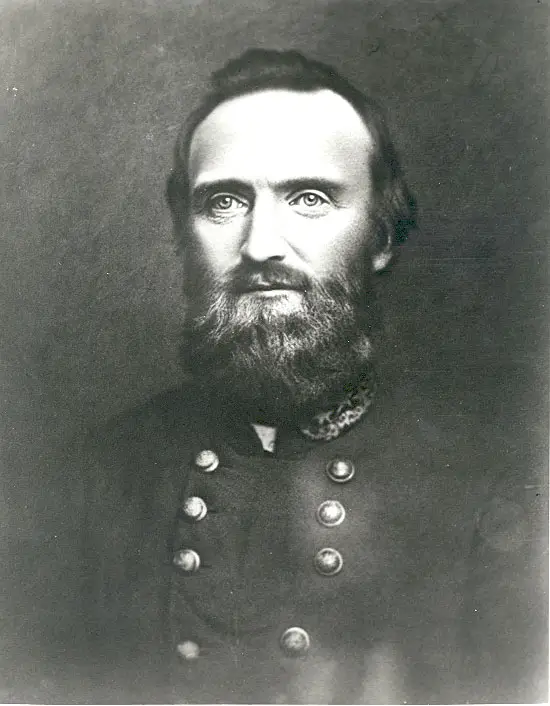
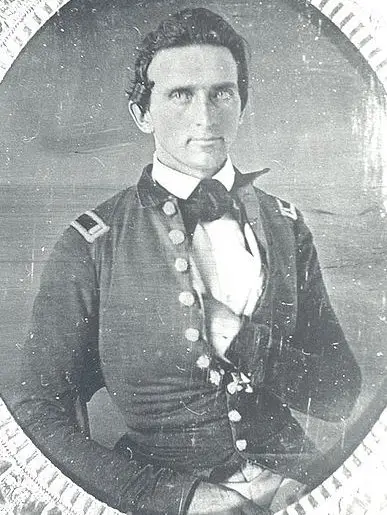
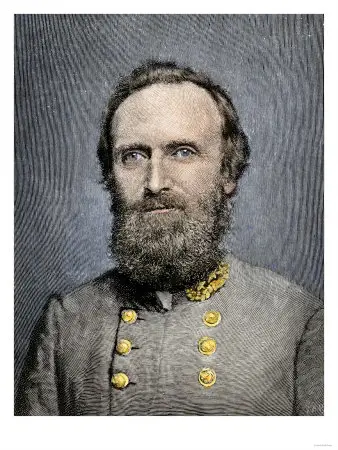
Confederate General Stonewall Jackson
1824-1863
"You may be whatever you resolve to be"


Stonewall Jackson - Biography
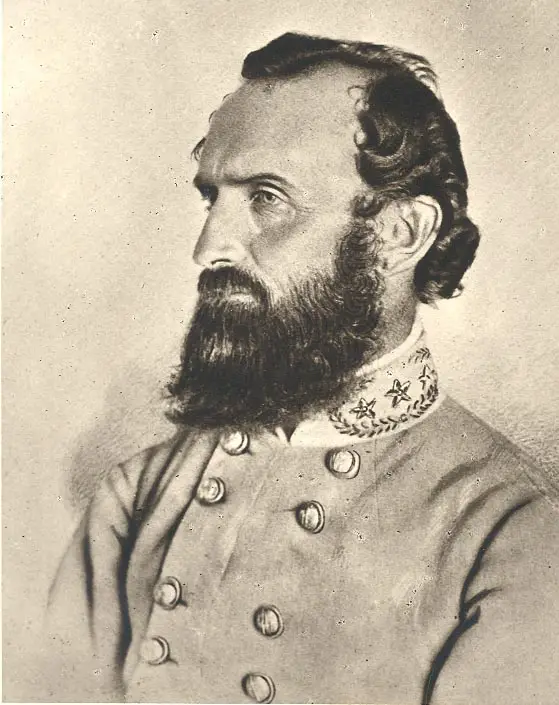
He earned his nickname for bravery at Bull Run. He met his fate in a tragic accident at Chancellorsville. Stonewall Jackson is widely regarded as one of the greatest of the Confederate commanders of the Civil War. An outstanding leader and brilliant tactician he led some of the most stunning campaigns of the war and earned a place in military history.
. DVD
Stonewall Jackson Southern Hero
Thomas Jonathan "Stonewall" Jackson died in an outbuilding on the Chandler plantation in the rural community of Guniea Station. Today, the Jackson Shrine is part of Fredericksburg & Spotsylvania National Military Park.

Born in what is now the state of West Virginia, in the town of Clarksburg, Thomas Jonathan Jackson possessed a strong military background at the outbreak of the Civil War. His training in the U.S. Military Academy at West Point, recognition as a hero in the Mexican War, and his experience as an instructor at the Virginia Military Institute justified Jackson's rank of brigadier general at the first major battle of the Civil War near Manassas, Virginia. Upon that field, General Bernard E. Bee proclaimed, "There is Jackson standing like a stone wall," and a legend as well as a nickname was born.

Jackson's military feats had elevated him to near mythical proportions, in both North and South, when in the midst of one of his most brilliant maneuvers, he was mistakenly shot by his own men on the night of May 2, 1863 at the The Battle of Chancellorsville. Confederate army commander Robert E. Lee decided that his indispensable and most capable subordinate should recuperate in a safe place well behind friendly lines. He selected this area, Guinea Station, as the best location for Jackson because of its proximity to the railroad to Richmond and its familiarity to the wounded general.

The "Stonewall" Jackson Shrine is the plantation office building where General Jackson died. The office was one of several outbuildings on Thomas C. Chandler's 740-acre plantation named "Fairfield." This typical frame structure saw use primarily by the men for recreation as well as for work. Chandler kept records in the office and one of his sons once practiced medicine there, but with three of the Chandler boys away serving in the Confederate Army, the building no longer witnessed its ante-bellum level of activity.

The office stood bare, except for a few items in storage, when Jackson's ambulance arrived. Although offered the use of the Chandler house, Jackson's doctor and staff officers chose the quiet and private outbuilding as the best place for Jackson to rest after his long ambulance ride. I all went well, the general would soon board a train at Guinea Station and resume his trip to Richmond and the medical expertise available there.

Today, the office is the only plantation structure remaining. The Chandler house burned at some point after the Civil War, and its shell was dismantled in the early 1900's. Once established as an historic "shrine," the office underwent restorations in the 1920's and the 1960's, and still retains about 45% original fabric. The National Park Service has augmented some of the items used during Jackson's stay with other pieces from the era, along with a few reproductions, to recreate the scene of those tragic last days of his life.


* 1824 January 21
Thomas Jonathan Jackson was born at Clarksburg, [West] Virginia.
Parents: Jonathan Jackson (1790-1826) an attorney, and Julia Beckwith Neale (1798-1831). They were married in September 1817 and had four children: Elizabeth (1819-1826); Warren (1821-1841); Thomas (1824-1863), and Laura Ann (1826-1911).
More Jackson family genealogy


* 1826 March
Jackson's sister Elizabeth (age 6) and his father died of typhoid fever. Julia Jackson gave birth to Laura the day after her husband died. Widowed at age 28, Julia was left with extensive debts and the family was impoverished.


* 1830-1841
Julia Jackson remarried. Her new husband, Blake Woodson, disliked his stepchildren and the family had financial difficulties. A short time after the marriage, Thomas and Laura were sent to live with Jackson relatives in Jackson's Mill [West] Virginia; Warren was sent to Neale relatives. Julia Jackson died, as a result of childbirth complications, on Dec. 4, 1831. She left behind the three Jackson siblings and a newborn son (Thomas's half brother), William Wirt Woodson (1831-1875). Jackson and Laura spent the remaining years of childhood with their paternal uncles. Jackson's brother, Warren, died of tuberculosis in 1841.


* 1842 June-1846 June
Jackson attended the United States Military Academy at West Point. Jackson was not the first choice for his congressional district's appointment, but the top applicant withdrew from the academy after only one day. Jackson graduated in June 1846, standing 17th out of 59 graduates. Jackson began his U.S. Army career as a 2nd Lt., First Artillery Regiment. In 1844, Jackson's beloved sister, Laura, married Jonathan Arnold.


* 1846-1851
United States Army officer. Served in the Mexican War, 1846-1848; stationed at Carlisle Barracks, PA; Ft. Hamilton, NY; Ft. Meade, FL.


* 1851-1861 April

o In the spring of 1851 Jackson was offered and accepted the appointment to teach at the Virginia Military Institute in Lexington, Virginia; he resigned from the army.
Elinor Junkin, Jackson's first wife, died in childbirth
Elinor Junkin Jackson
o Reported for duty at VMI on August 13, 1851. He taught natural and experimental philosophy (related to modern day physics and including physics, astronomy, acoustics, optics, and other scientific courses).
o On August 4, 1853, Jackson married Elinor Junkin (1825-1854), daughter of Dr. George Junkin (President of Washington College) and Julia Miller Junkin.
o Elinor (Ellie) died in childbirth on October 22, 1854. Their child, a son, was stillborn.
o During the summer of 1856 Jackson toured Europe, visiting Belgium, France, Germany, Switzerland, England and Scotland.
o On July 16, 1857, Jackson married for the second time. His wife was Mary Anna Morrison (1831-1915), daughter of Robert Hall Morrison and Mary Graham Morrison. Mary Anna's family resided in North Carolina; her father was the retired President of Davidson College.
o Mary Anna gave birth to a daughter, Mary Graham, on April 30, 1858; the baby died less than a month later, on May 25.
o In November 1859, Jackson was one of the VMI officers who accompanied a contingent of VMI cadets to Harper's Ferry, where they stood guard at the execution of abolitionist John Brown.

* 1861-1863
o April 21, 1861 - the VMI Corps of Cadets was ordered to Richmond to serve as drillmasters for new army recruits. Jackson was placed in command of the cadets.
o April 27, 1861 - Gov. John Letcher ordered Col. Jackson to take command at Harper's Ferry, where he organized the troops that would soon comprise the famous "Stonewall Brigade" (2nd, 4th, 5th, 27th and 33rd Virginia Infantry Regiments; Rockbridge Artillery; all were from the Shenandoah Valley region of Virginia).
o July 1861 - Promoted to Brigadier General. Battle of 1st Manassas, where he acquired the legendary nickname Stonewall. "Look, there stands Jackson like a stone wall."
o October 1861 - Promoted to Major General. Placed in command of the Valley of Virginia (Shenandoah Valley)
o 1862 May & June - Jackson's brilliant Shenandoah Valley Campaign; victories at Front Royal, Winchester, Cross Keys and Port Republic. Following the successful campaign, Jackson was ordered to join Gen. Lee in the Peninsula (Eastern Virginia).
Julia Jackson (1862-1889).
Her mother was Mary Anna Morrison, Jackson's second wife.
From an original image in the VMI Archives Photograph collection Julia Jackson (1862-1889)
o 1862 June 15-July 1 - Seven Days Battles. Jackson displayed ineffective leadership which stood in stark contrast to the brilliance of the Shenandoah Valley campaign; the reasons for this uncharacteristic military failure is still debated among Jackson scholars. Returned to the Valley.
o 1862 June-September. Battles of Cedar Mountain, Clark's Mt., 2nd Manassas (July 21), Antietam (September 17).
o 1862 October - Lee reorganized his army into two corps. Jackson was promoted to Lt. General and given command of the new Second Corps. Jackson was now in charge of half of Lee's Army of Northern Virginia.
o 1862 November - Jackson's daughter, Julia Laura, was born.
o 1862 December 13 - Battle of Fredericksburg
o 1862 December-1863 March - In quarters at Moss Neck, 10 miles south of Fredericksburg. The estate was owned by the Corbin family, who offered their home as winter headquarters.
o 1863 April - in camp at Hamilton's Crossing
o 1863 May 1 - Battle of Chancellorsville begins.
o 1863 May 2, 9:00 p.m. - While reconnoitering with members of his staff, Jackson was accidentally fired upon by his own troops. The 18th North Carolina Infantry Regiment was responsible for the "friendly fire" incident. Jackson was struck by three .57 caliber bullets. He was taken to a field hospital near the battlefield, where his left arm was amputated.
o 1863 May 4 - Jackson was moved to a field hospital at the home of Thomas and Mary Chandler, near Guiney Station, approximately 30 miles from the battlefield.
o 1863 May 10 - Jackson died at 3:15 p.m. His last words were "Let us cross over the river and rest under the shade of the trees."
o 1863 May 15. Jackson's funeral took place in Lexington, Virginia, the town that was Jackson's home during his years as Professor at VMI.

Postscript
o Mary Anna Morrison Jackson never remarried. She was known as the "Widow of the Confederacy" and lived until 1915.
o The close relationship between Jackson and his sister, Laura Jackson Arnold, was destroyed during the war. Laura was an outspoken Unionist who became estranged from her brother and other members of her family. Federal troops occupied her hometown of Beverly [West] Virginia during most of the war, and Mrs. Arnold cared for Federal wounded in her home. See the Johnson Family Papers for a letter mentioning Laura's wartime reputation.
o Julia Jackson was less than one year old when her father died. She married William E. Christian in 1885; she died of typhoid fever in 1889, at age 26. Her children were Julia Jackson Christian (1887-1991), who married Edmund R. Preston; and Thomas Jonathan Jackson Christian (1888-1952), who married three times. Both of Jackson's grandchildren had several children; thus there are many living descendants of Stonewall Jackson.


PCN Tours: Wounding of Stonewall Jackson - The Battle of Chancellorsville
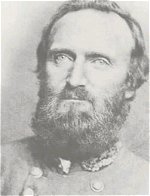


Attack of Stonewall Jackson at Chancellorsville
The cadenced ranks of Lieutenant General Thomas J. Stonewall Jackson's Confederates. The gray-clad Southerners plowed into the Union defense


The Civil War
A Film by Ken Burns

Here is the saga of celebrated generals and ordinary soldiers, a heroic and transcendent president and a country that had to divide itself in two in order to become one


The Battle of Chancellorsville
Civil War Combat

Unflinching, uncompromising and graphic, the images and stories presented here show these battles for what they were, with all the brutality, horror, devastation and desperation


Four Years in the Stonewall Brigade
Forthright confessions of service years in the Army of Northern Virginia stand among the most sought after and cited accounts by a Confederate soldier. First published in 1893 and significantly revised and expanded in 1906

Southern Historical Society Papers.
Vol. XIV. Richmond, Va., January-December. 1886.
Death of Stonewall Jackson


Still Standing: The Stonewall Jackson Story
The life of Stonewall Jackson from his orphaned childhood, to the Sunday School class he taught for African Americans that has resulted in a lasting impact today, to the pivotal role he played as a General in the Civil War
confederate general Stonewall Jackson

72 Piece Civil War Army Men
Play Set 52mm Union and Confederate Figures, Bridge, Horses, Canon
  • 48 Union and Confederate Soldiers up to 2-1/8 inches (52mm) tall
  • 4 Horses, 4 Sandbag Bunkers, 6 Fence Sections, 3 Cannon, 3 Limber Wagons (Ammo Carts)
  • Bridge, Small Barracks, 2 Cardboard buildings
  • Scale: About 1/35th
  • Packaging: Plastic Bag with Header Card
First Battle at Bull Run
Confederate General Robert E. Lee
Confederate President Jefferson Davis
Civil War Submarines
Kids Zone Battle of Gettysburg
Kids Zone Underground Railroad
Civil War Exhibits
Civil War Summary
Civil War Women
State Battle Maps
Civil War Store
Search
AmericanCivilWar.com
 
Enter the keywords you are looking for and the site will be searched and all occurrences of your request will be displayed. You can also enter a date format, April 19,1862 or September 1864.


American Civil War Book Titles
The attack of Stonewall Jackson and his army upon the right flank of the Army of the Potomac at Chancellorsville
Stonewall Jackson at Chancellorsville
Produced from digital images created through the University of Michigan University Library

Chancellorsville
The series of controversial events that define this crucial battle, including General Robert E. Lee's radical decision to divide his small army--a violation of basic military rules--sending Stonewall Jackson on his famous march around the Union army flank

Generals in Bronze: Interviewing the Commanders of the Civil War
Revealing interviews with the commanders of the Civil War. In the decades that followed the American Civil War, Artist James E. Kelly (1855-1933) conducted in-depth interviews with over forty Union Generals

The Illustrated Battle Cry of Freedom: The Civil War Era
1988 Pulitzer Prize for History and a New York Times Bestseller. Rare contemporary photographs, period cartoons, etchings, woodcuts, and paintings, carefully choosing those that best illuminate the narrative

A South Divided: Portraits of Dissent in the Confederacy
An account of Southern dissidents in the Civil War, at times labeled as traitors, Tories, deserters, or mossbacks during the war and loyalists, Lincoln loyalists, and Unionists by historians of the war

Battle at Bull Run: A History of the First Major Campaign of the Civil War
The battle, was unique in the Civil War in that no general on either side had ever exercised high command in combat. July 21, 1861 would demonstrate that careers devoted to theoretical studies of warfare provided poor indicators of success in combat.

First Manassas
The soilders story of the battle in their own words rather then hearing the historians perspective of battle we read the privates letter home or the Colonels battle report this book examines Bull Run, the battle for West Virginia, and the battle of Big Bethel

Memoirs of the Confederate War for Independence
This is a wonderful memoir of the author's year and half of active service on the staff of the legendary Confederate cavalry General, J. E. B. Stuart.

Two Great Rebel Armies: An Essay in Confederate Military History
The Army of Northern Virginia was able to compile a large number of impressive victories during the war. The Army of Tennessee was only able to win at Chickamauga, and even that victory proved barren strategically.

The Civil War: A Narrative
Fort Sumter to Perryville

From the secession crisis of early 1861 to the inauguration of Jefferson Davis as President of the Confederate States. From Yankee disaster at First Manassas to Lee's debut in western Virginia. From riverboat actions on the Mississippi, to McClellan's movement up the York-James Peninsula


The Union Cavalry in the Civil War: From Fort Sumter to Gettysburg, 1861-1863
How the Union cavalry was raised, organized, equipped, and trained. Detailed descriptions of the campaigns and battles in which the cavalry engaged--the Peninsula, Shenandoah Valley/Second Bull Run, Lee's invasion of Maryland, Kelly's Ford, Stoneman's 1863 Raid, Brandy Station

Civil War Album: A Complete Photographic History: Fort Sumter to Appomattox
4000 photographs from the war. Brings to life the battles, bunkers, soldiers, and parades. The farms, cities, and towns as they appeared at the time. This volume is enhanced with essays by Civil War historians, who provide an overview of each battle, and describe each image

American Civil War DVD Titles

Civil War Combat: America's Bloodiest Battles
The violent mayhem of the hornet's nest at Shiloh, the valiant charge on the sunken road at Antietam, the carnage in the wheat field at Gettysburg, and the brutal fighting at Cold Harbor

Civil War Journal - The Conflict Begins
These four programs from the History Channel series Civil War Journal cover critical aspects of the early days of the war.

Manassas 1861

Brother Against Brother: The American Civil War
Fort Sumter, to the Confederate surrender at Appomattox, Features battle reconstructions and depictions of army life, eyewitness accounts, period photographs and engravings, plus commentary and analyses.

The Last Confederate: The Story of Robert Adams
Great historically correct movie of a noble confederate and his undying love of a Yankee girl.

The Blue and the Gray
The Complete Miniseries

The Civil War proved a backdrop for this 1982 miniseries. Complete and uncut three disc set. Two families divided by the War Between the States. A Southerner caught when he becomes a war correspondent for the Northern newspaper. He finds himself  where history's in the making from the Battle of Bull Run to Abraham Lincoln's assassination

The Last Days of the Civil War - April 1865: The Month That Saved America, Civil War Combat:
The Tragedy At Cold Harbor
The remarkable succession of events leading from the fall of Richmond to Appomattox.

The Last Days of the Civil War - Biography: Abraham Lincoln & Robert E. Lee, Civil War Journal: Jefferson Davis
In-depth profiles that series--illuminate the personalities at the heart of the conflict: Abraham Lincoln, Jefferson Davis, and Robert E. Lee

Source:
U.S. National Park Service
VMI

Search
AmericanCivilWar.com
 
Enter the keywords you are looking for and the site will be searched and all occurrences of your request will be displayed. You can also enter a date format, April 19,1862 or September 1864.