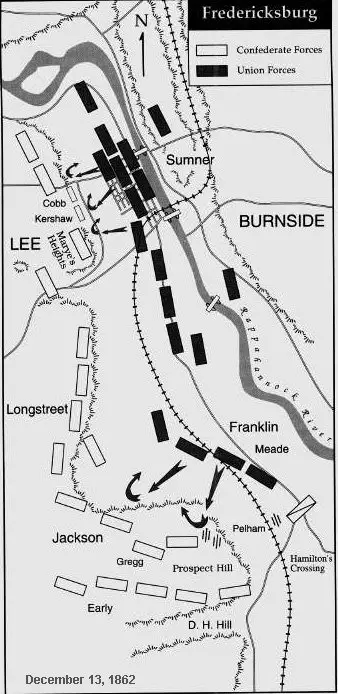
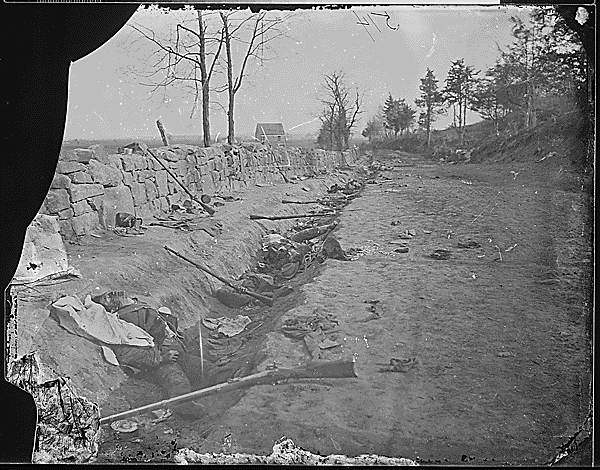
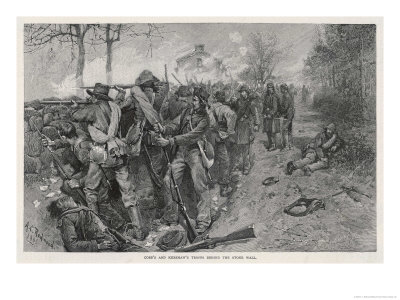
Kindle Available Fredericksburg! Fredericksburg! A stunning defeat for the Union. Confederate Robert E. Lee suffered roughly 5,000 casualties but inflicted nearly 13,000--on his opponent, General Ambrose Burnside. |
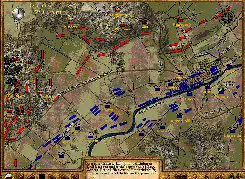
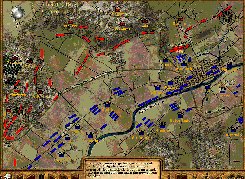
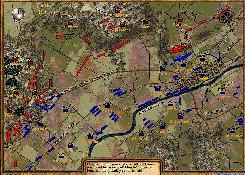
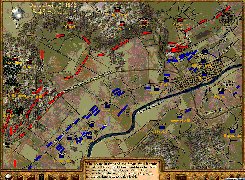
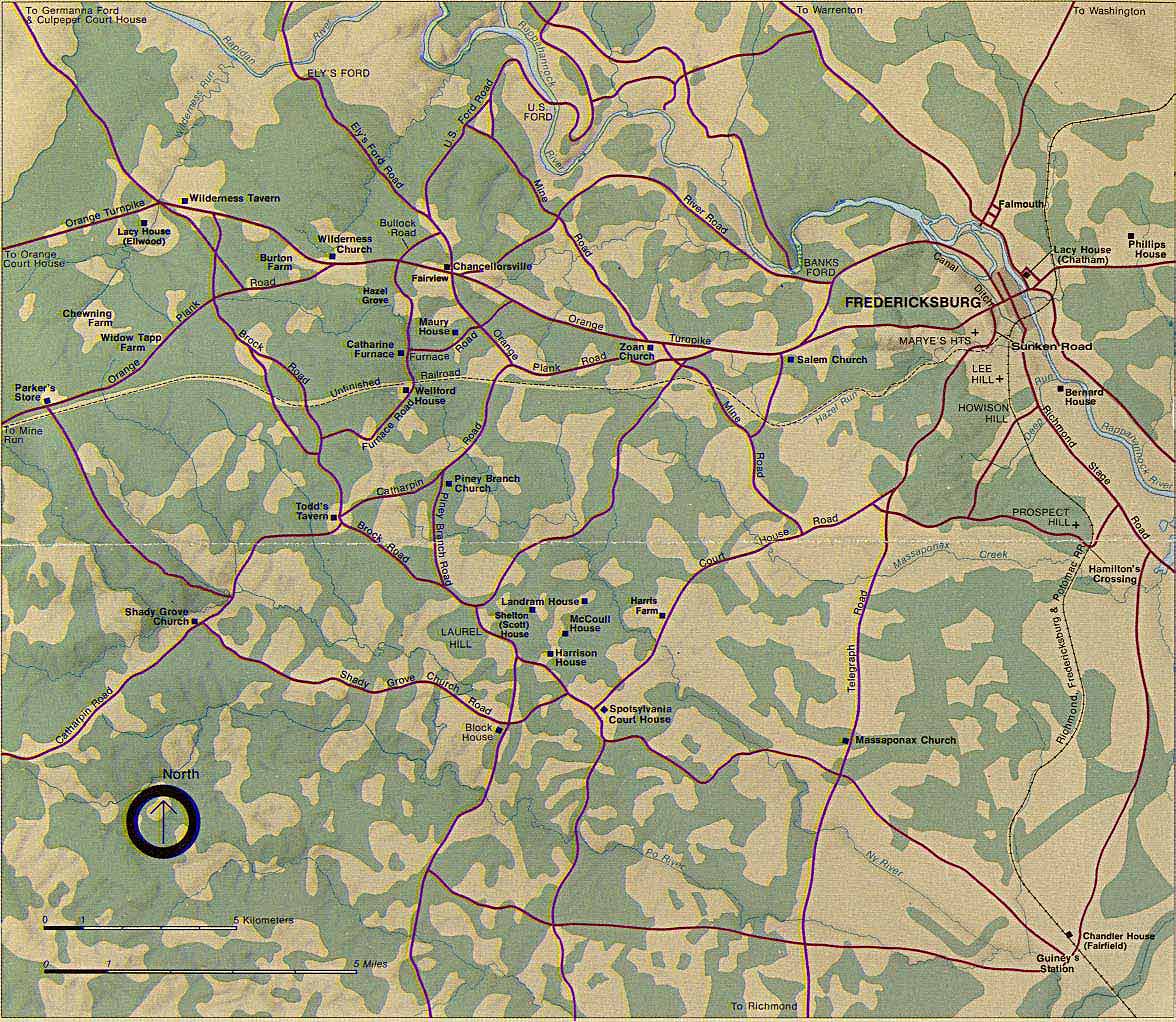
Fredericksburg I Virginia December 11-15, 1862
|
|
|
|
On December 15, Burnside called off the offensive and recrossed the river, ending the campaign. Burnside initiated a new offensive in January 1863, which quickly bogged down in the winter mud. The abortive "Mud March" and other failures led to Burnside's replacement by Major General Joseph Hooker in January 1863. |
 Fredericksburg Voices of the Civil War The courage of the troops who fought at Fredericksburg through their actual accounts. You can sence how the south felt it would win the war after this northern defeat from the soilders letters |
General Ambrose E. Burnside Replaces General McClellan More Fredericksburg Battle Details |
 Journal Of Rufus Rowe Witness To The Battle Of Fredricksburg Witness the raw carnage of war; the dead horses, the deafening boom of cannon and gun fire, the exhaustion and hunger, soldiers stripping clothes and items off dead soldiers, truces agreed upon too bury the dead |
 Lee's Cavalrymen: A History of the Mounted Forces of the Army of Northern Virginia, 1861-1865 The cavalry of the Army of Northern Virginia its leadership, the military life of its officers and men as revealed in their diaries and letters, the development of its tactics as the war evolved, and the influence of government policies on its operational abilities. All the major players and battles are involved . |
|
| On May 1, 1863 General Robert E. Lee left Major General Jubal A. Early's division to hold Fredericksburg, while marching with the rest of the army to meet Hooker's main offensive thrust at Chancellorsville. On May 3, the Union VI Corps under Sedgwick, reinforced by John Gibbon's II Corps division, having crossed the Rappahannock River, assaulted and carried the Confederate entrenchments on Marye's Heights. The outnumbered Confederates withdrew and regrouped west and southeast of town. |
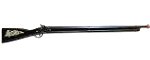 Civil War Musket Wood & Steel Frontier Rifle Designed After The Original Rifle, This Civil War Musket replica has been designed after the original rifle of its era. Measures approximately 37 inches long. Each is constructed with a solid one-piece wood stock, painted steel barrel and die-cast parts. |
American Civil War Exhibits Civil War Summary Women Civil War Soldiers Kid Zone Causes of the War Civil War Submarines State Battle Maps Confederate Commanders Union Generals Ships and Naval Battles Colored Troops Civil War Maps |
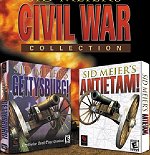 Sid Meier's Civil War Collection Take command of either Confederate or Union troops and command them to attack from the trees, rally around the general, or do any number of other realistic military actions. The AI reacts to your commands as if it was a real Civil War general, and offers infinite replayability. The random-scenario generator provides endless variations on the battles |
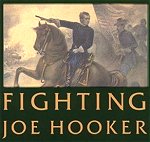 Fighting Joe Hooker Union general Joseph Hooker assumed command of an army demoralized by defeat and diminished by desertion. Acting swiftly, the general reorganized his army, routed corruption among quartermasters, improved food and sanitation, and boosted morale by granting furloughs and amnesties. The test of his military skill came in the battle of Chancellorsville. It was one of the Union Army's worst defeats |
Kindle Available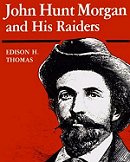 John Hunt Morgan and His Raiders The "Thunderbolt of the Confederacy" John Hunt Morgan from Tompkinsville, Kentucky to Greeneville, Tennessee. |
Kindle Available Civil War Medicine The staggering challenge of treating wounds and disease on both sides of the conflict. Written for general readers and scholars alike, this first-of-its kind encyclopedia will help all Civil War enthusiasts to better understand this amazing medical saga. Clearly organized, authoritative, and readable |
Kindle Available Standard Catalog of Civil War Firearms Over 700 photographs and a rarity scale for each gun, this comprehensive guide to the thousands of weapons used by Billy Yank and Johnny Reb will be indispensable for historians and collectors. |
 Battleground 7: Bull Run July 21, 1861 The earliest large-scale engagement of the Civil War, the First Battle of Bull Run found J.E. Johnston's outnumbered Rebels fighting a desperate delaying action versus the powerful Union army of Irvin McDowell. It was in this battle that General Thomas J. Jackson earned his famous nickname "Stonewall" |
 Civil War Battles Campaign Atlanta You decide the outcome of a duel between two determined generals in the American Civil War. It's 1864 and the Union forces are ready to make a final drive into the Deep South. General William T. Sherman advances to destroy the Confederate Army of Tennessee & capture the city of Atlanta. Confederate General Joseph E. Johnston planned on using Georgia's difficult terrain to inflict heavy losses |
 Campaign Chickamauga Civil War Battles A defining moment in the Civil War -- one that could have spelled victory for the South if things had been slightly different. At Chickamauga Creek near Chattanooga, TN there was a battle that earned it a new nickname: "River Of Blood." Chattanooga was a vital rail station at the time and had fallen to Union General Rosecrans |
 History Channel Civil War Secret Missions There are about a half-dozen different small arms types, but the Henry is the best for rapid repeating fire and least reloading. The shotgun they give you is useless: you must aim spot-on to affect an enemy, so why not just use the rifle? Grenades are useful at times. |
Current Information about Fredericksburg Virginia
|
Books Civil War Womens Subjects Young Readers Military History DVDs Confederate Store Civil War Games Music CDs Reenactors |