Union Civil War Generals
|
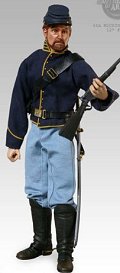 Union Action Figure |
Confederate Commanders Civil War Exhibits Civil War Timeline Women in the War Abraham Lincoln Civil War Submarines Kids Zone Gettysburg Documents of the War Civil War Picture Album Civil War Summary |
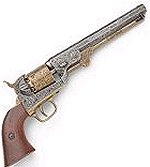 Civil War Model 1851 Naval Pistol Engraved Silver Tone / Gold Tone Finish and Wooden Grips - Replica of Revolver Used by Both USA / Union and CSA / Confederate Forces |
Kindle Available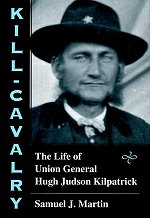 Kill-Cavalry: The Life of Union General Hugh Judson Kilpatrick Nicknamed "Kill-Cavalry" because of the unusually high casualty rate among his men, cavalry commander Hugh Judson Kilpatrick was also the most notorious scoundrel in the Union army. Kilpatrick lied, thieved, and whored his way through the Civil War, yet managed to attain the stars of a major general. |
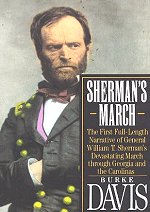 Sherman's March: The First Full-Length Narrative of General William T. Sherman's Devastating March through Georgia and the Carolinas Beginning with the fall of Atlanta, the unrelenting aggressive slash and burn total warfare of General Sherman's Union troops, and then the final march into Raleigh |
 Lee Vs. McClellan: The First Campaign An interesting account of the struggle for western Virginia in 1861. It follows that year's rolls of Generals McClellan and Lee; the former using the successes of the campaign to further his reputation and career, and the latter struggling to straighten out a quagmire and failing to do so |
Kindle Available The Class of 1846: From West Point to Appomattox: Stonewall Jackson, George McClellan, and Their Brothers No single group of men at West Point has been so indelibly written into history as the class of 1846. The names are legendary: Thomas "Stonewall" Jackson, George B. McClellan, Ambrose Powell Hill, Darius Nash Couch, George Edward Pickett, Cadmus Marcellus Wilcox, and George Stoneman |
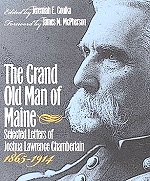 Selected Letters of Joshua Lawrence Chamberlain, 1865-1914 Known as the hero of Little Round Top and the commanding officer who accepted the Confederates' surrender at Appomattox. |
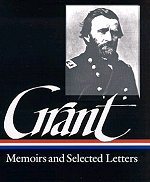 Ulysses S. Grant Memoirs and Selected Letters Grant wrote his "Personal Memoirs" to secure his family's future. In doing so, the Civil War's greatest general won himself a unique place in American letters. His character, sense of purpose, and simple compassion are evident throughout this deeply moving account, as well as in the letters to his wife, Julia |
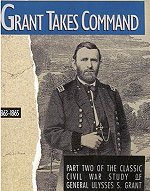 Grant Takes Command: 1863 - 1865 The enigmatic commander in chief of the Union forces through the last year and a half of the Civil War. It is both a revelatory portrait of Ulysses S. Grant and the dramatic story of how the war was won. |
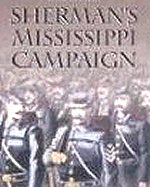 Sherman's Mississippi Campaign Sherman set out from Vicksburg on February 3, 1864, with an army of some 25,000 infantry and a battalion of cavalry. An opportunity to observe how this large-scale raid presaged Shermans Atlanta and Carolina campaigns, revealing the transformation of Shermans strategic thinking |
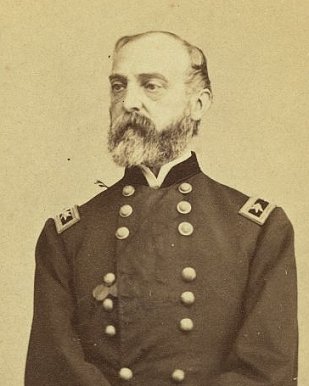
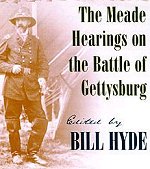 The Union Generals Speak: The Meade Hearings on the Battle of Gettysburg The first annotated edition of the 1864 congressional investigation into Major General George Gordon Meade's conduct during the Gettysburg campaign. The transcripts alone, which present eyewitness accounts from sixteen participant officers at Gettysburg, offer a wealth of information about the most pivotal battles in American history |
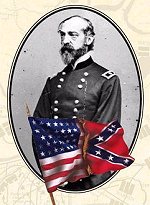 George Gordon Meade and the War in the East To most students of the Civil War, he is merely the man who was lucky enough to benefit from Confederate mistakes at Gettysburg, but whose shortcomings as a commander compelled Abraham Lincoln to bring in Ulysses S. Grant from the West to achieve victory |
Kindle Available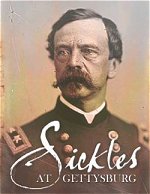 Sickles at Gettysburg: The Controversial Civil War General Who Committed Murder, Abandoned Little Round Top, and Declared Himself the Hero of Gettysburg No individual who fought at Gettysburg was more controversial, both personally and professionally, than Major General Daniel E. Sickles. By 1863, Sickles was notorious as a disgraced former Congressman who murdered his wife's lover on the streets of Washington and used America's first temporary insanity defense to escape justice |
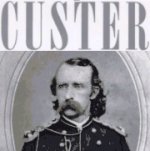 CUSTER: The Controversial Life of George Armstrong Custer After graduating last in his class at West Point, he rose to become the Union's youngest general on the strength of his flamboyance and military genius. Next came 12 years of checkered service in the American West, ending with the famous massacre at Little Bighorn |
 Wargame Construction Age of Rifles 1846 - 1905 Game lets you design and play turn-based strategic battles. You can create scenarios betwen years 1846 and 1905. You have complete control over all the units, and can customize their firepower, movement points, strength, aggressiveness, etc. Supports 1 or 2 players |
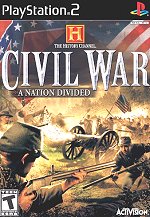 History Channel Civil War A Nation Divided Rally the troops and organize a counterattack -- Your strategic decision and talent as a commander will decide if the Union is preserved or if Dixie wins its independence |
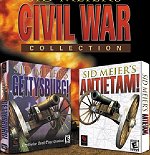 Sid Meier's Civil War Collection Take command of either Confederate or Union troops and command them to attack from the trees, rally around the general, or do any number of other realistic military actions. The AI reacts to your commands as if it was a real Civil War general, and offers infinite replayability. The random-scenario generator provides endless variations on the battles |
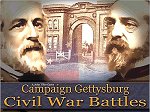 Campaign Gettysburg: Civil War Battles Campaign Gettysburg is simply the best of all the HPS Civil War games. While all of those are very good in their own right they simply do not compete with the level of detail presented here. Hundreds of scenarios and multiple OOBs are only the start, the best thing is the campaign game |
Sources:
Library of Congress
West Point
Federal Citizens
|
Books Civil War Womens Subjects Young Readers Military History DVDs Confederate Store Civil War Games Music CDs |