Iuka Mississippi

American Civil War
September 19, 1862

Confederate Heartland Campaign Map

Major General Sterling Price's Army of the West main column marched into Iuka, Mississippi, on September 14. Price's superior, General Braxton Bragg, the commander of the Confederate Army of the Mississippi, who was leading an offensive deep into Kentucky, ordered him to prevent MajorGeneral William S. Rosecrans's Army of the Mississippi troops from moving into Middle Tennessee and reinforcing Brig. General James Negley's division of Major General Don Carlos Buell's Army of the Ohio, which was garrisoning Nashville.

Price had about 14,000 men, and he was informed that, if necessary, he could request assistance from Major General Earl Van Dorn, commanding the District of the Mississippi, headquartered at Holly Springs. Major General Ulysses S. Grant, commanding the Army of the Tennessee, feared that Price intended to go north to join Bragg against Buell. Grant devised a plan for his left wing commander, Major General E.O.C. Ord, and his men to advance on Iuka from the west; Rosecrans's forces were to march from the southwest, arrive at Iuka on the 18th, and make a coordinated attack the next day.

Ord arrived on time and skirmishing ensued between his reconnaissance patrol and Confederate pickets, about six miles from Iuka, before nightfall. Rosecrans informed Grant that he would not arrive at Iuka on the 18th but would begin his march at 4:30 am, the next morning. On the 19th, Ord sent Price a message demanding that he surrender, but Price refused. At the same time, Price received dispatches from Van Dorn suggesting that their two armies rendezvous, as soon as possible, at Rienzi for attacks on the Federal forces in the area.

Price informed Van Dorn that the military situation had changed so he could not evacuate Iuka immediately. He did, however, issue orders for his men to prepare for a march the next day, to rendezvous with Van Dorn. Rosecrans's army marched early on the 19th, but, instead of using two roads as directed, it followed the Jacinto (Bay Springs) Road. After considering the amount of time that Rosecrans required to reach Iuka, Grant determined that he probably would not arrive on the 19th, so he ordered Ord to await the sound of fighting between Rosecrans and Price before engaging the Confederates.

As Rosecrans advanced, his men fought actions with Confederate troops at points along the way. About 4:00 pm, just after ascending a hill, the Union column halted because the Confederates were well-placed below in a ravine, filled with timber and underbrush. The Confederates launched attacks up the hill, capturing a six-gun Ohio battery, while the Federals counterattacked from the ridge. Fighting, which Price later stated he had "never seen surpassed," continued until after dark; the Union troops camped for the night behind the ridge. Price had redeployed troops from Ord's front to fight against Rosecrans's people. Ord did nothing, later proclaiming that he never heard any fighting and, therefore, never engaged the enemy; Grant also remarked that he had heard no sounds of battle.

Following the fighting on the 19th, Price determined to reengage the enemy the next day, but his subordinates convinced him, instead, to march to join Van Dorn, as earlier planned. At the same time, Rosecrans redeployed his men for fighting the next day. Price's army evacuated via the uncovered Fulton Road, protected its rear with a heavy rearguard and hooked up with Van Dorn five days later at Ripley. Although Rosecrans was supposed to traverse Fulton Road and cover it, he stated that he had not guarded the road because he feared dividing his force; Grant later approved this decision.

Rosecrans's army occupied Iuka and then mounted a pursuit; the Confederate rearguard and overgrown terrain prevented the Union pursuit from accomplishing much. The Federals should have destroyed or captured Price's army, but instead the Rebels joined Van Dorn and assaulted Corinth in October.

Result(s): Union victory (In addition, it caused Grant to have concern about Rosecrans's abilities and leadership.)

Location: Tishomingo County

Campaign: Iuka and Corinth Operations (1862)

Date(s): September 19, 1862

Principal Commanders: Major General William S. Rosecrans [US]; Major General Sterling Price [CS]

Forces Engaged: 2nd Division and cavalry division, Army of the Mississippi (approx. 4,000-4,500) [US]; 1st Division, Army of the West (approx. 3,200) [CS]

Estimated Casualties: 1,482 total (US 782; CS 700)


The Darkest Days of the War: The Battles of Iuka and Corinth
The strategic implications of the battles of Iuka and Corinth, exploring their impact on the fate of the Northern Mississippi Campaign, the fall of Vicksburg and by extension, the fate of the Confederacy.


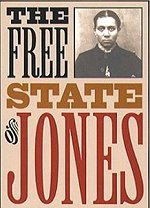
The Free State of Jones: Mississippi's Longest Civil War
The southeastern Mississippi county that was home to a Unionist stronghold during the Civil War and home to a large and complex mixed-race community in the late nineteenth and twentieth centuries

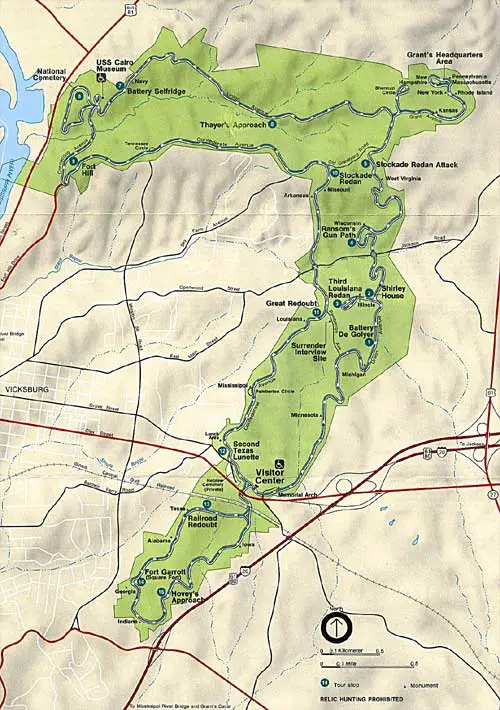
Vicksburg Mississippi Campaign
Vicksburg Battle Map
Mississippi State Battle Map
State Battle Maps
American Civil War Exhibits
Civil War Timeline
Women in the War
Kids Zone Causes of the Civil War
General Stonewall Jackson
Civil War Submarine
Civil War Store
American Civil War Book Titles

Vicksburg: The Campaign That Opened the Mississippi
Confederate troops surrendered Vicksburg on July 4, 1863 a crucial port and rail depot for the South was lost

Champion Hill: Decisive Battle for Vicksburg
The Battle of Champion Hill was the decisive land engagement of the Vicksburg Campaign. The May 16, 1863, fighting took place just 20 miles east of the river city, where the advance of Gen. Ulysses S. Grant's Federal army attacked Gen. John C. Pemberton's hastily gathered Confederates

The Beleaguered City: The Vicksburg Campaign, December 1862-July 1863
Shelby Foote explains all engagements in and around Vicksburg. Every event is descriptively written covering naval strategies along the Mississippi, Yazoo and other rivers which were of importance to naval affairs of each opposing side

Campaign for Corinth: Blood in Mississippi
In 1862 Corinth, was transformed into one of the South's most strategic strongholds. At Corinth, the Mobile and Ohio Railroad crossed the Memphis and Charleston Railroad, creating a crucial nexus for the transport of supplies, material, and men throughout the western Confederacy


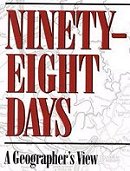
Ninety-Eight Days: A Geographer's View of the Vicksburg Campaign
The geology of the Mississippi river, and how the landcape along the river determined the course of events and logistical realities that the armies had to contend with, such as the pounds per square inch of a cassion wheel as it contacts the earth


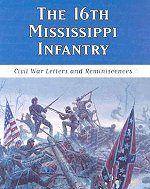
The 16th Mississippi Infantry: Civil War Letters and Reminiscences
Who better to tell an infrantry man's story then themselves. The hardships of Marches, Poor food and bitter fighting.

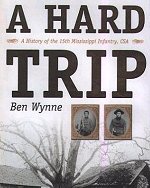
A Hard Trip: A History of the 15th Mississippi Infantry, CSA
The reality of the moment in 1860-61 Mississippi. The thoughts of the men who formed the 15th Mississippi are front and center with good background about the communities the men came from and the reasons they joined the army.

Mississippi's Civil War: A Narrative History
A great treatment of wartime Mississippi that includes a lot of social and political material in addition to information on battles. It also includes a lot of great stories, from the dramatic resignation of Jefferson Davis from the U.S. Senate in 1861 to Ulysses S. Grant's drinking habits during the siege of Vicksburg

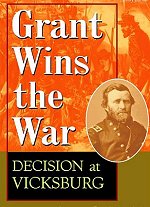
Grant Wins the War : Decision at Vicksburg
Grant Wins the War
by James R. Arnold
Decision at Vicksburg

American History Editor's Recommended Book

As the Civil War accelerated, Abraham Lincoln recognized that the army holding Vicksburg, a town located at a strategic bend in the Mississippi River, essentially controlled passage on the entire river. In the spring of 1863 General Ulysses S. Grant was given the task of capturing the town, thereby effectively cutting the Confederacy in half. His campaign, while often overlooked by the general public, is considered by some historians to be brilliant. In this highly readable treatment of the Vicksburg campaign, historian James R. Arnold, , makes the case that Grant's adroit military maneuvers were the equal of Napoleonic campaigns. The story of this critical turning point in U.S. history is told in a lively manner, and character studies of men such as Jefferson Davis, Admiral David Farragut, Confederate general John Pemberton, and Grant himself enliven the text.
Civil War History Documentary DVD Movie Titles

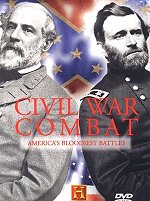
Civil War Combat: America's Bloodiest Battles
The violent mayhem of the hornet's nest at Shiloh, the valiant charge on the sunken road at Antietam, the carnage in the wheat field at Gettysburg, and the brutal fighting at Cold Harbor

Civil War Journal - The Conflict Begins
These four programs from the History Channel series Civil War Journal cover critical aspects of the early days of the war.

Civil War Journal
Collector's Edition 4-DVD Set

Made exclusively for Books Are Fun. Discs include: · Stonewall Jackson · Sherman and the March to the Sea · West Point Classmates-Civil War Enemies · Robert E. Lee · Battle of 1st Bull Run · The 54th Massachusetts · John Brown s War · Destiny at Fort Sumter

Brother Against Brother: The American Civil War
Fort Sumter, to the Confederate surrender at Appomattox, Features battle reconstructions and depictions of army life, eyewitness accounts, period photographs and engravings, plus commentary and analyses.

History Channel Presents The Civil War
From Harper's Ferry, Fort Sumter, and First Bull Run to Shiloh, Antietam, and Gettysburg. The most legendary Civil War battles in brilliant detail. A selection of the soldiers and legendary leaders.

The Civil War - A Film by Ken Burns
Here is the saga of celebrated generals and ordinary soldiers, a heroic and transcendent president and a country that had to divide itself in two in order to become one

The Blue and the Gray
The Complete Miniseries

The Civil War proved a backdrop for this 1982 miniseries. Complete and uncut three disc set. Two families divided by the War Between the States. A Southerner caught when he becomes a war correspondent for the Northern newspaper. He finds himself  where history's in the making from the Battle of Bull Run to Abraham Lincoln's assassination

Blue Vs. Gray - Killing Fields
Relive the most vicious fighting of the Civil War, in which General Ulysses S. Grant forcibly reversed the tide of the conflict by paying with the blood of thousands. It was a desperate time for the Union

Sources:
U.S. National Park Service
U.S. Library of Congress.

Jackson Mississippi City History Current Weather and area lodging

Search
AmericanCivilWar.com
 
Enter the keywords you are looking for and the site will be searched and all occurrences of your request will be displayed. You can also enter a date format, April 19,1862 or September 1864.
Books
Civil War
Womens Subjects
Young Readers
Military History

DVDs
Confederate Store
Civil War Games
Music CDs
Reenactors