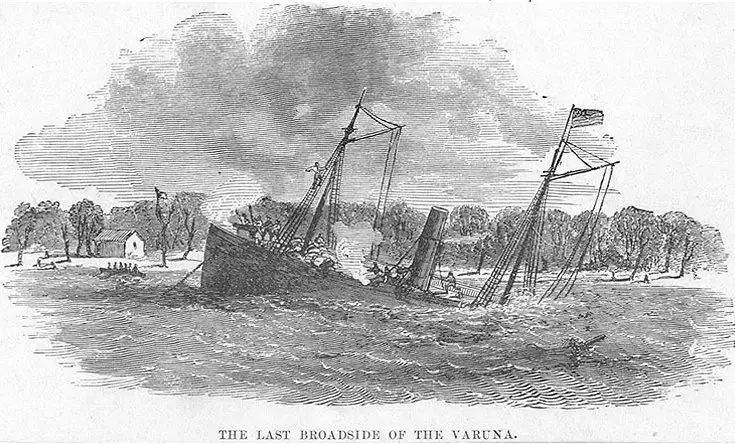
|
|
|
|
 The Capture of New Orleans, 1862 On April 24, 1862, Federal gunboats made their way past two Confederate forts to ascend the Mississippi River, and the Union navy captured New Orleans. A hard look at the selection of military and naval leaders, the use of natural and financial resources, and the performances of all personnel involved. .  The Night the War Was Lost With the fall of the critical city of New Orleans in spring 1862 the South lost the Civil War, although fighting would continue for three more years. On the Mississippi River, below New Orleans, in the predawn of April 24, 1862, David Farragut with fourteen gunboats ran past two forts to capture the South's principal seaport |
Kindle Available Standard Catalog of Civil War Firearms Over 700 photographs and a rarity scale for each gun, this comprehensive guide to the thousands of weapons used by Billy Yank and Johnny Reb will be indispensable for historians and collectors. |
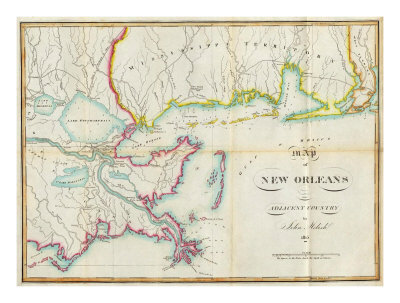 Map of New Orleans and Adjacent Country, c.1815 48 in. x 36 in. $169.99 Buy at AllPosters.com Framed |
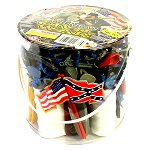 Civil War Soldier 102 Piece Playset
|
Louisiana State Battle Map State Battle Maps Confederate President Jefferson Davis Civil War Summary Civil War Submarines Civil War Cooking Kids Zone Gettysburg Campaigns of the Civil War American Civil War Exhibits Civil War Timeline Women in the War |
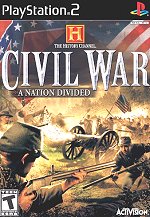 History Channel Civil War A Nation Divided Rally the troops and organize a counterattack -- Your strategic decision and talent as a commander will decide if the Union is preserved or if Dixie wins its independence |
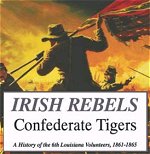 Irish Rebels, Confederate Tigers: A History Of The 6th Louisiana Volunteers A predominately Irish brigade from New Orleans. This regiment fought in Virginia during the entire Civil War, since New Orleans was captured so early in the war and the 6th Louisiana virtually became orphans in regards to State support. |
The Night the War Was Lost With the fall of the critical city of New Orleans in spring 1862 the South lost the Civil War, although fighting would continue for three more years. On the Mississippi River, below New Orleans, in the predawn of April 24, 1862, David Farragut with fourteen gunboats ran past two forts to capture the South's principal seaport. |
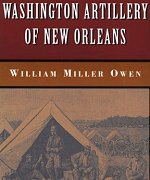 In Camp and Battle With the Washington Artillery of New Orleans Describes all major actions from the First Battle of Bull Run to the final surrender at Appomatox. A must read for all Civil War buffs. First published in 1885, Reissued in a limited edition that is an exact reproduction of the original, with a few additions |
Kindle Available When the Devil Came Down to Dixie: Ben Butler in New Orleans Butler headed the federal occupation of New Orleans, where he quickly imposed order on a rebellious city. He also made out like a bandit, diverting an enormous amount of money into his personal coffers. High society scorned him for his infamous "Woman Order," |
 Midshipman in Gray: Selections from Recollections of a Rebel Reefer |
Kindle Available Wolf of the Deep: Raphael Semmes and the Notorious Confederate Raider CSS Alabama In July 1862, the Confederate captain Raphael Semmes received orders to report to Liverpool, where he would take command of a secret new British-built steam warship. His mission: to prey on Union commercial vessels and undermine the North's ability to continue the war |
 Duel on the Roanoke - The True Story of the CSS Albemarle A 158-foot Confederate ironclad ship built in a cornfield 90 miles up North Carolina's Roanoke River, under the direction of an 18-year-old boy, and the deadly cat-and-mouse game between the two opposing captains. |
 Ironclad of the Roanoke Gilbert Elliott's Albemarle The story of a Confederate Ironcald that was a powerful force until sunk by a Union Torpedo Boat after its brief stormy life. Ironic in the fact it was built in a Cornfield. Confederate Ingenunity at it finest! |
 Bad Blood: The Border War That Triggered the Civil War In the years leading up to the Civil War, a bloody conflict between slaveholders and abolitionists focused the nation's eyes on the state of Missouri and the territory of Kansas. Told through the actual words of slave owners, free-staters, border ruffians, and politicians, Bad Blood presents the complex morality, differing values, and life-and-death decisions faced by those who lived on the Missouri-Kansas border |
 Blue Vs. Gray - Killing Fields Relive the most vicious fighting of the Civil War, in which General Ulysses S. Grant forcibly reversed the tide of the conflict by paying with the blood of thousands. It was a desperate time for the Union |
 Civil War Combat: America's Bloodiest Battles The violent mayhem of the hornet's nest at Shiloh, the valiant charge on the sunken road at Antietam, the carnage in the wheat field at Gettysburg, and the brutal fighting at Cold Harbor |
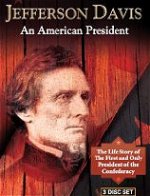 Jefferson Davis An American President One of the most outstanding statesmen of the United States during the first 60 years of the 19th century, he sacrificed everything to defend the South's position regarding the rights of the states and conservative constitutional interpretation. Against staggering odds he led the South and held it together in the bloody Civil War or War Between the States |
 The Blue and the Gray The Complete Miniseries The Civil War proved a backdrop for this 1982 miniseries. Complete and uncut three disc set. Two families divided by the War Between the States. A Southerner caught when he becomes a war correspondent for the Northern newspaper. He finds himself where history's in the making from the Battle of Bull Run to Abraham Lincoln's assassination |
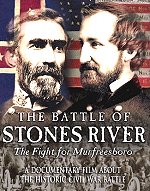 Battle of Stones River The Fight for Murfreesboro At dawn on December 31, 1862 the two armies clashed in a deadly struggle along the banks of Stones River. |
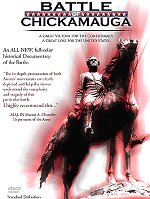 The Battle of Chickamauga Special Widescreen Edition Chickamauga one of the fiercest engagements of the American Civil War. Over a period of two days, more than 100,000 men struggled for control of the south's transportation hub, Chattanooga. |
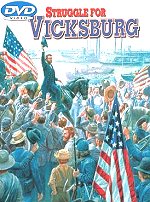 Struggle For Vicksburg Photography of the park with authentic battlefield illustrations and life-like paintings. Vicksburg's wartime role in the bloody and brutal conflict. |