 Battle at Bull Run: A History of the First Major Campaign of the Civil War The battle, was unique in the Civil War in that no general on either side had ever exercised high command in combat. July 21, 1861 would demonstrate that careers devoted to theoretical studies of warfare provided poor indicators of success in combat. |
First Battle of Bull Run
|
|
|
|
| Public demand pushed Union General-in-Chief Winfield Scott to advance on the South before adequately training his untried troops. Scott ordered General Irvin McDowell to advance on Confederate troops stationed at Manassas Junction, Virginia. McDowell attacked on July 21, and was initially successful, but the introduction of Confederate reinforcements resulted in a Southern victory and a chaotic retreat toward Washington by federal troops. |
Kindle Available The Maps of First Bull Run: An Atlas of the First Bull Run (Manassas) Campaign, including the Battle of Ball's Bluff, June-October 1861 "action-sections" enriched with more than fifty full-color original full-page maps.  History Channel Presents The Civil War From Harper's Ferry, Fort Sumter, and First Bull Run to Shiloh, Antietam, and Gettysburg. The most legendary Civil War battles in brilliant detail. DVD  The Battle of First Bull Run: The Civil War Begins Three months after the shelling of Fort Sumter, Union and Confederate forces met for the first time in earnest combat. However, neither side was prepared at this early stage of the war, and confusion reigned on the battlefield  Fields of Fury The American Civil War Written for young readers a stirring account of the greatest conflict to happen on our nation's soil, the Civil War, bringing to life the tragic struggle that divided not only a nation, but also friends and family. well-organized, well-executed, kid-friendly history of the Civil War was a brilliant idea if there ever was one. It's difficult to imagine anyone doing a better job than McPherson at breaking down this complex, interrelated series of events.  Jeb Stuart: The Last Cavalier Biography of the dashing Confederate general is history at its best: fascinating, colorful, provocative. Includes portraits of Stuart's early life, training at West Point, the fateful decision to side with the South and action-packed battle scenes. 7 maps. 8 pages of photos.  Joseph E. Johnston A Civil War Biography A biography of the public and private life of General Joseph E. Johnston, one of the most important Southern field commanders during the American Civil War  P.G.T. Beauregard: Napoleon in Gray Beauregard often gets overlooked, he was never as beloved as Lee or Stonewall Jackson, but he was capable, the man had a sharp mind and Lee understood this, even if Jefferson Davis did not |
Joe Ryan Battlewalk Bull Run
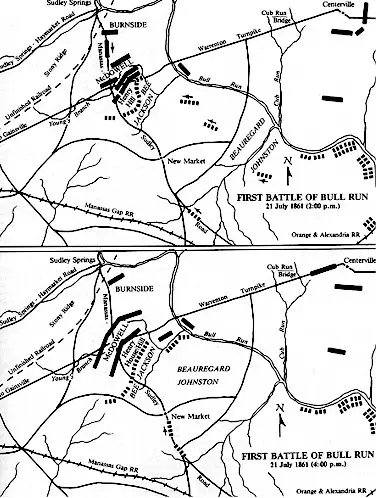
Youtube Channel JoeRyanCivilWar Excerpt: Bull Run: Its Strategy and Tactics, By R. M. Johnston 1st Bull Run, Conclusion A curious thing about McDowell's enterprise at Bull Run is that one may fairly say that it was foreordained to failure, and yet conclude that it came within inches of success. Wholly untrained in the higher branches of the military art, he was compelled, by the force of circumstances, to operate with an army that was entirely unfit for active campaigning; but he had an opponent no better than himself, and the chief difference between two armies that both lacked the distinctive qualities of a field force resolved itself into that which lay between the disadvantage of the offensive and the benefit of the defensive. In some ways McDowell did better than his critics have allowed. To move such an army at all, to get it concentrated at Centreville, to throw a wing of 17,000 men over Bull Run, meant much hard work and hard driving. And yet, as we have seen, all this fell entirely short of what was needed for success. Rapidity of action was essential, and at no moment, at no point, did McDowell show any tendency of the sort, -- rather the contrary. It is perhaps fairer to emphasize that McDowell had had no training or experience in the difficult art of generalship, than to say that he displayed no sign of possessing military qualities. It was certainly not easy for a junior officer in a military service that gave neither practical nor theoretical training to its higher ranks, when suddenly promoted to the command of an army to assume all the superiority and decision, to display all the science, that such a function demands. It is not surprising that he took too much advice, and deferred too much to the views of subordinates whose judgments, on the whole, do not appear to have been as good as his own. Bull Run Manassas July 21 morning click to enlarge
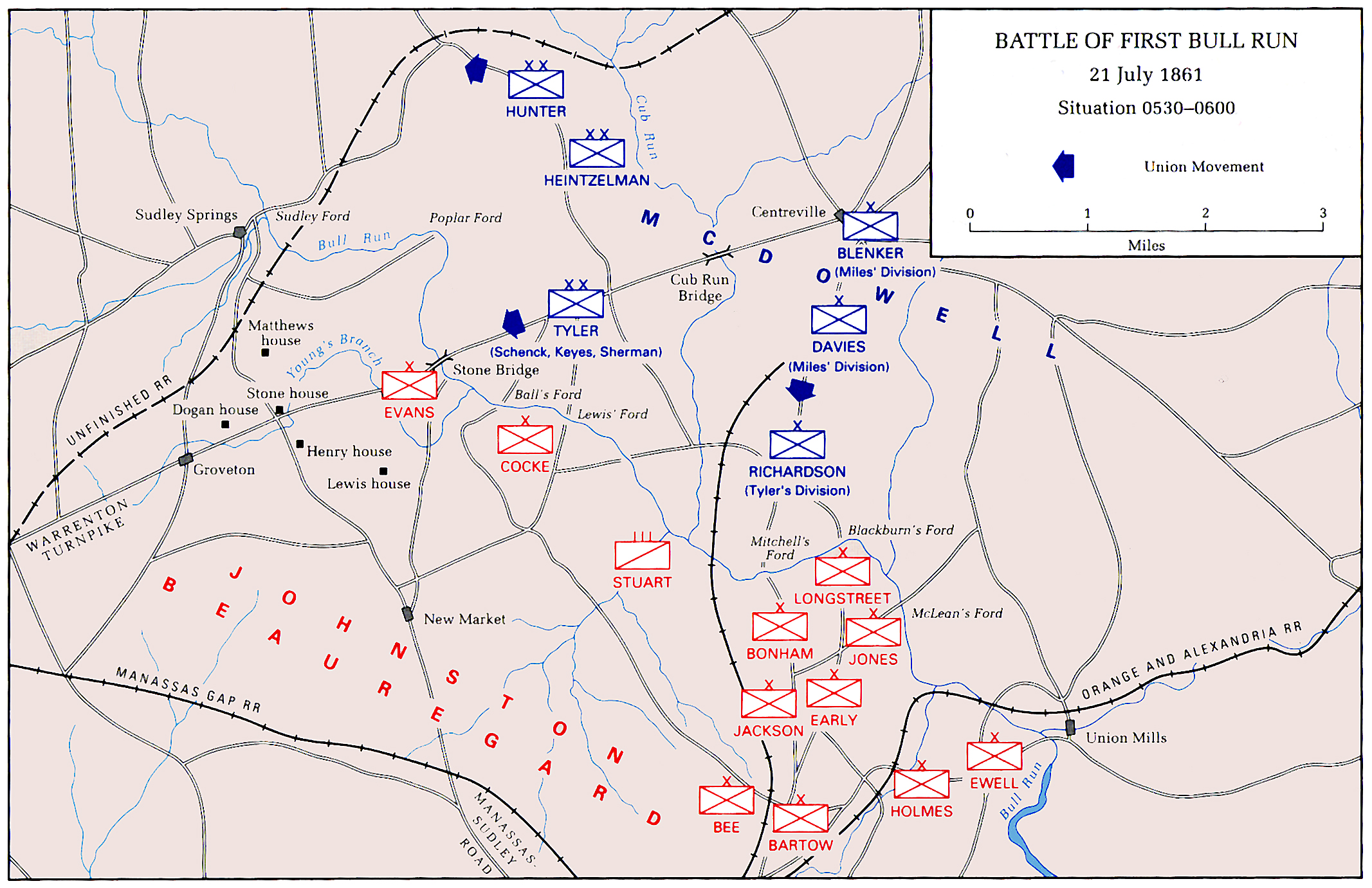 In bringing his troops into contact with the enemy McDowell showed little tactical sense. His order of the 20th of July showed gross inability to handle marching arrangements. But he did better than his opponents in utilizing a considerable part of his forces for delivering his blow. His employment both of his guns and of his infantry was far from good. Griffin's and Ricketts' batteries were recklessly exposed; his infantry brigades were allowed to become mere supports for the artillery, and to go into action as strings of regiments employed one at a time. For these failings, the configuration of the ground, the superior tactics of the Confederates, the general lack of ability of McDowell's subordinates, the want of a proper system of command, and the general ignorance of staff work, were in part responsible. Several of the Federal commanders ascribed their ill success to what they believed to be the inferiority of their musketry. Thus Franklin says :-- "It is my firm belief that a great deal of the misfortune of the day at Bull Run is due to the fact that the troops knew very little of the principles and practice of firing. In every case I believe that the firing of the rebels was better than ours." The truth appears to be this. The Federal infantry as it advanced was too carefully nursed by its officers; as soon as it reached the fire zone it was ordered to lie down and keep covered while the artillery did the work. So long as the artillery was successful in breaking down resistance the plan succeeded, but when the infantry was called on--after the hard day's work and much lying out of sight of the enemy in the sun--to advance into the open, firing at the enemy's line at short range, it jibbed away, fired wildly, and eventually broke. Far more important than this was the complete and miserable failure of the regimental officers. Quite one half of McDowell's regiments were good stuff so far as the men went; all they needed was to be led and commanded. McDowell himself relates that on the field disorganized bodies of soldiers called to him asking to be led. Colonel Biddle, speaking of the volunteers after their return to camp, says: "They had a perfect dread of going into battle with their officers, and they wanted to go back and enter into new organizations.'' If the regimental officers were for the most part worse than useless, the field and staff officers were not much better, though in a different way. The West-Pointers were fearless enough, and fit to lead any troops into battle; but they had no more knowledge of the art of high command than the regimental officers had of the art of company leading. This subject has already been dealt with. Suffice it to say that on the field the confusion of orders and of organization was almost complete. Everybody gave orders, and nobody gave orders. McDowell's staff in large part disintegrated. No one knew what to do, where to find headquarters. At the moment when the attack on the Henry house plateau began, Averell says: "this feeling was uppermost: want of orders." Later, even civilians like Governor Sprague took it on themselves to order troops about. It was the rout of the army back to Centreville and Washington that attracted most attention at the time. On the whole that was a mere incident of a not abnormal character when all the facts of the case are considered. That rout really began when, on the advance, the columns were kept standing long hours in the sun and the officers proved unable to prevent their men from going off into the woods after blackberries; or when the Pennsylvania and New York troops were allowed shamefully to abandon the army, with hardly a word of reproof, at the moment of battle; or even when Lincoln proclaimed that only the It should be added that McDowell showed his even, steady, bravery, in that disheartening hour. He continued to do all that was in him to the bitter end. At Young's Branch, at Centreville, and again at Fairfax Court House, he did his best to turn the stream of fugitives, he continued to take every measure he could to fulfil his duty as a soldier; from that high and honorable standard he never for a moment wavered. And his report is on the whole a straightforward and honest confession of failure, very little colored or distorted in an endeavor to evade responsibility. On the Southern side the superiority of Johnston's corps in leadership, organization, and mobility stands out conspicuously. Bee got much out of his troops. Jackson showed the highest tactical ability, and great firmness of character, in the way he chose his position and handled his infantry and guns together on the Henry house plateau; he earned and he deserved the honors of the day. Johnston himself showed too much diffidence till about twelve o'clock, and it was not till about 2.30 or 3 P.M. that he really assumed control of operations. He displayed courage and at times judgment. Yet on the whole his conduct in the battle was far less creditable to him than the degree of organization and fighting quality he had succeeded in imparting to his little army, and the way in which he brought it from the Valley to Manassas. Beauregard's errors, and his lack of the logic, system, and clearness of vision which are called for in the higher command of armies, have already been sufficiently emphasized. It is doubtful whether he did any one single thing that helped to bring success to the Confederate arms on the 21st of July, while his blunders would require a lengthy enumeration. The defensive was assuredly a great advantage to the Confederate commanders. When their turn came to take the offensive on the Henry hill, -- and they timed the moment skilfully, -- their opponents were spent. Beauregard's orders and staff work certainly give one the impression that a Confederate offensive towards Centreville would probably have been marked by even less cohesion than McDowell's movement was. For although the Federal general failed to keep his brigades marching by the left after they passed Sudley Spring, he did at all events keep them together and strike a concerted blow. The movements of Ewell, Jones, and Longstreet do not suggest that Beauregard could have done as much. Johnston himself wrote as follows:-- "A large proportion of it [Beauregard's army] was not engaged in the battle. This was a great fault on my part. When Bee's and Jackson's brigades were ordered to the vicinity of the Stone Bridge, those of Holmes and Early should have been moved to the left also, and placed in the interval on Bonham's left--if not then, certainly at nine o'clock, when a Federal column was seen turning our left: and, when it seemed certain that General McDowell's great effort was to be made there. Bonham's, Longstreet's, Jones', and Ewell's brigades, leaving a few regiments and their cavalry to impose on Miles' division, should have been hurried to the left to join in the battle. If the tactics of the Federals had been equal to their strategy we should have been beaten. If, instead of being brought into action in detail, their troops had been formed in two lines with a proper reserve, and had assailed Bee and Jackson in that order, the two Southern brigades must have been swept from the field in a few minutes, or enveloped. General McDowell would have made such a formation, probably, had he not greatly underestimated the strength of his enemy." The subsequent action of the Confederate authorities contains an official verdict on the generals. J. E. Johnston was left in charge of the main Confederate army at Manassas. Jackson was promoted to an independent command in the Shenandoah; while Beauregard was sent out West and placed under A. S. Johnston, with whom in the following year he fought the battle of Shiloh against Grant. At Washington the scenes that followed the battle were disheartening for the Federal cause. The city openly avowed its satisfaction at the Confederate victory. The volunteers showed up badly after their defeat. Discipline was at an end; drunkenness and disorder of the worst kind reigned supreme. The gravest anxiety prevailed, and a change of commanders was decided on that brought McClellan to Washington. Whether McClellan was any better than McDowell may be doubted, but at all events from that moment it was recognized by the Administration that the military problem was one for experts, and could not be solved by a handful of improperly organized three months' volunteers. |
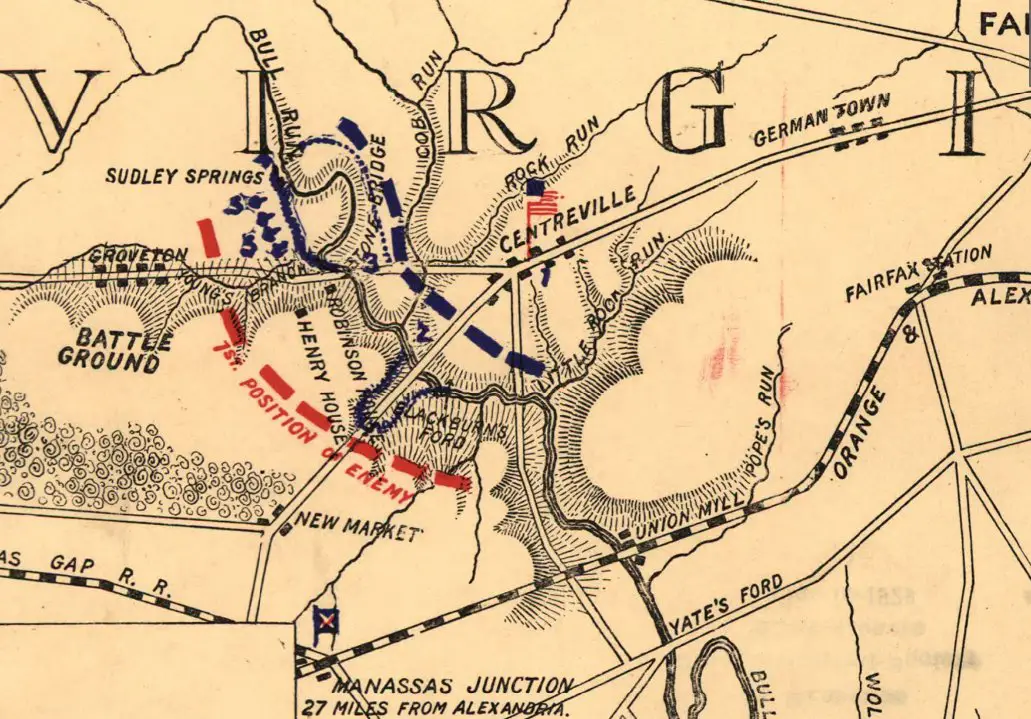
Battle Map
|
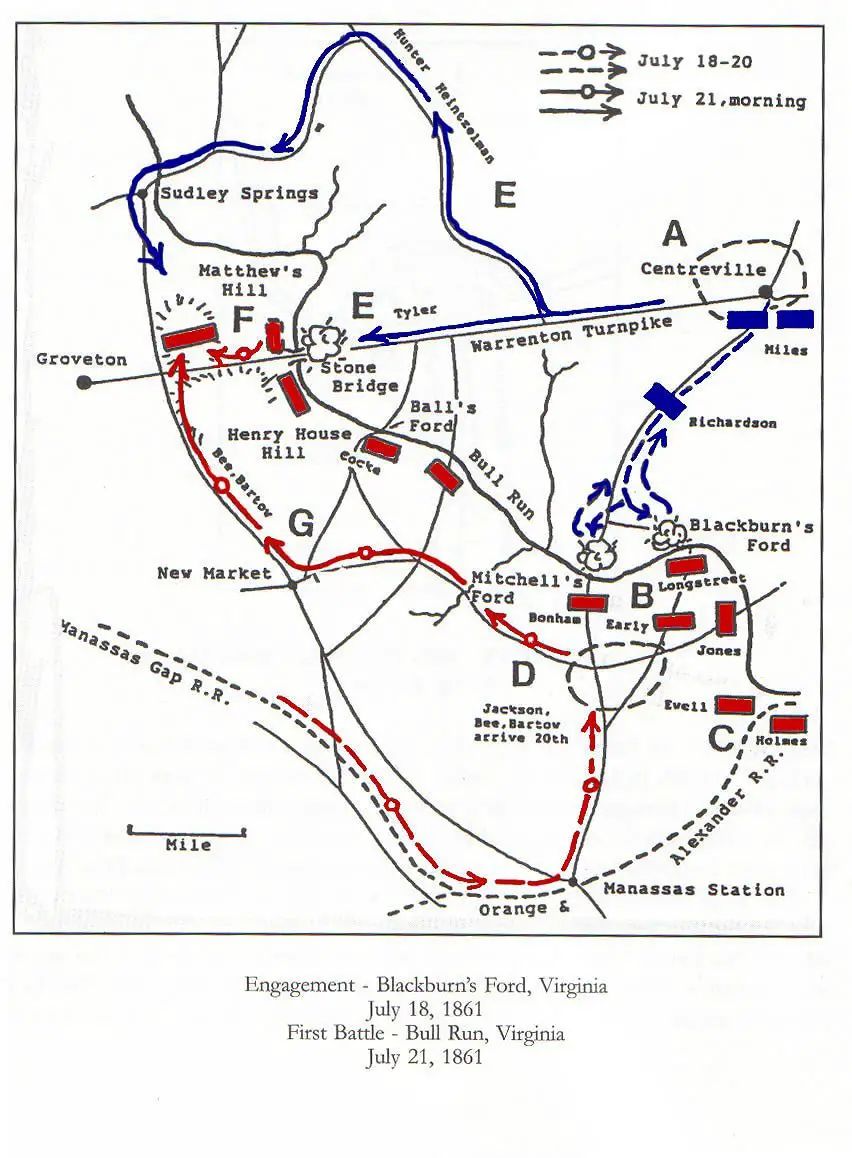
Blackburns Ford July 18, 1861
Click to enlarge |
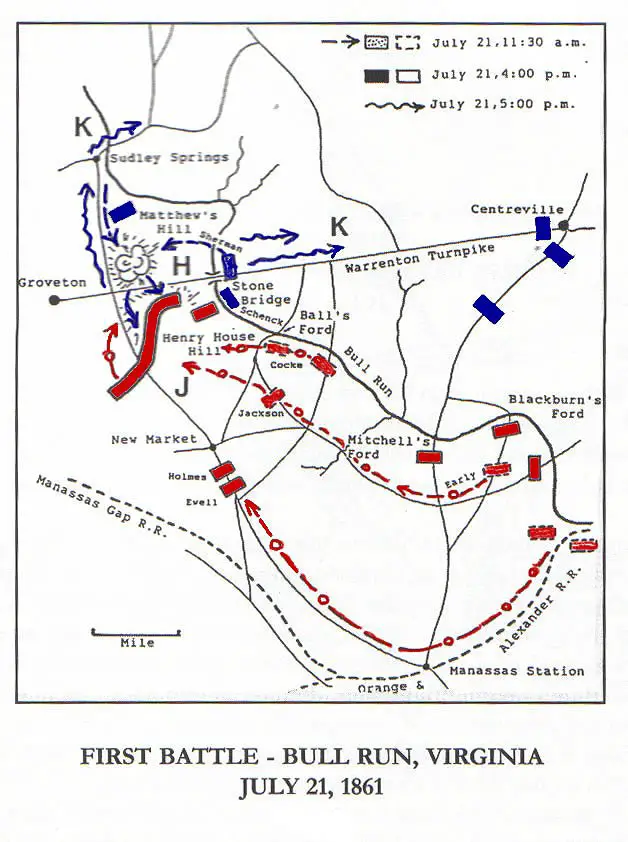
July 21,1861
|
 "We Shall Meet Again": The First Battle of Manassas (Bull Run), July 18-21, 1861 The First Battle of Manassas claimed the lives of approximately 878 soldiers and wounded another 2,489. With a battlefield stretching nearly five miles, 15,000 Union and 14,000 Confederate soldiers clashed for four fateful days, many of them young and terrified and receiving their first taste of a long and bitter war |
|
The battle statistics and summary for the Virginia Civil War battle at: First Bull Run, First Manassas July 21, 1861 Kindle Available The Maps of First Bull Run: An Atlas of the First Bull Run (Manassas) Campaign, including the Battle of Ball's Bluff, June-October 1861 |
Confederate General Beauregard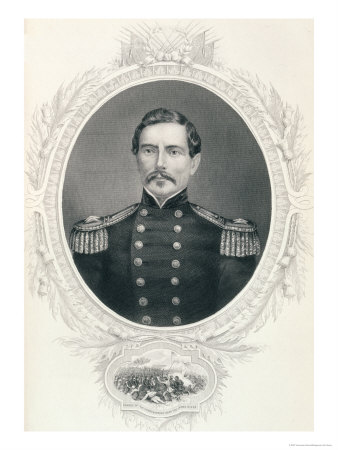 General Pierre Gustave Toutant Beauregard 18 in. x 24 in. Buy at AllPosters.com Framed Mounted |
Union General McDowell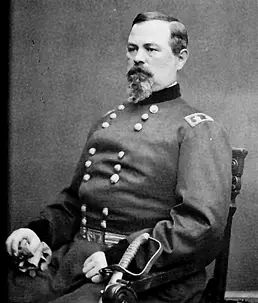 |
|
Kindle Available Civil War Curiosities: Strange Stories, Oddities, Events, and Coincidences |
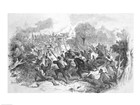
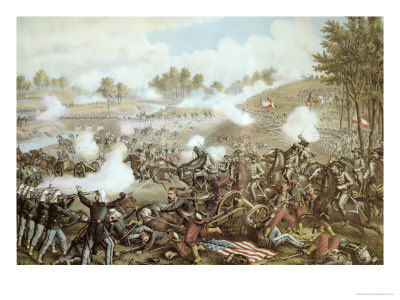 Battle of First Bull Run, 1861 24 in. x 18 in. Buy at AllPosters.com Framed Mounted |
||
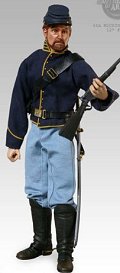 Union Action Figure |
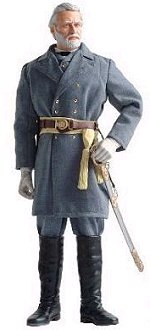 Robert E Lee CSA 12 inch Action Figure by Dragon |
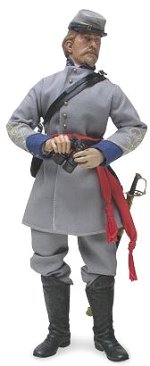 Infantry Officer Army of Northern Virginia 12 inch Figure |
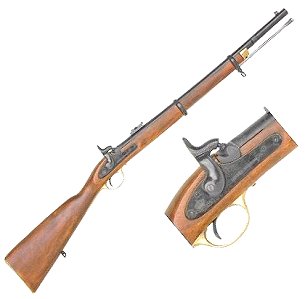 1860 Enfield Civil War Musketoon This piece is a full-size non-firing reproduction of the rifle used in the Civil War. The body is made of European hardwood |
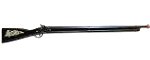 Civil War Musket Wood & Steel Frontier Rifle Designed After The Original Rifle, This Civil War Musket replica has been designed after the original rifle of its era. Measures approximately 37 inches long. Each is constructed with a solid one-piece wood stock, painted steel barrel and die-cast parts. |
More on Bull Run Virginia State Battle Map State Battle Maps American Civil War Exhibits Civil War Timeline Women in the War Vicksburg Campaign Civil War Submarines Kids Zone Gettysburg |
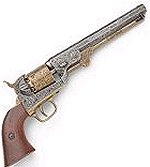 Civil War Model 1851 Naval Pistol Engraved Silver Tone / Gold Tone Finish and Wooden Grips - Replica of Revolver Used by Both USA / Union and CSA / Confederate Forces |
 Rebel Boast First at Bethel, Last at Appomattox Based on the stories of 5 men who enlisted in the Confederate Army to fight for what they believed. Where did they go? How did they feel? What did they do day to day? What did they see? How did they live and die? Nominated for a Pulitzer in 1956 |
 Civil War in the American West An accurate and detailed history of the Western Theater of the Civil War, which was largely forgotten by history. He was one of the first historians to fully understand the impact that California had on the war as he gives an accounting of the Federal raid on the Dan Showalter Ranch in San Bernadino on October 5, 1861. |
"We Shall Meet Again": The First Battle of Manassas (Bull Run), July 18-21, 1861 The First Battle of Manassas claimed the lives of approximately 878 soldiers and wounded another 2,489. With a battlefield stretching nearly five miles, 15,000 Union and 14,000 Confederate soldiers clashed for four fateful days, many of them young and terrified and receiving their first taste of a long and bitter war |
 Nathan Bedford Forrest In Search of the Enigma The lost story of Nathan Bedford Forrest. Forrest was a pivotal character in the war, yet so much of his story has been swept aside in light of General Lee and other figures who were more recognized or perhaps more publicized. This is a must read |
 Stonewall Jackson The Man, the Soldier, the Legend Jackson traces his life from his humble beginnings, through his military career, to his untimely death in 1863, discussing his military campaigns and strategies, religious beliefs, personal eccentricities |
Kindle Available Stonewall Jackson at Cedar Mountain At Cedar Mountain on August 9,1862, Stonewall Jackson exercised independent command of a campaign for the last time |
 Brandy Station Virginia, 1863: Major General Joseph "Fighting Joe" Hooker. |
 Grant Takes Command 1863 - 1865 A revelatory portrait of Ulysses S. Grant and the dramatic story of how the war was won. |
 Battleground 7: Bull Run July 21, 1861 The earliest large-scale engagement of the Civil War, the First Battle of Bull Run found J.E. Johnston's outnumbered Rebels fighting a desperate delaying action versus the powerful Union army of Irvin McDowell. It was in this battle that General Thomas J. Jackson earned his famous nickname "Stonewall" |
 Civil War Battles Campaign Atlanta You decide the outcome of a duel between two determined generals in the American Civil War. It's 1864 and the Union forces are ready to make a final drive into the Deep South. General William T. Sherman advances to destroy the Confederate Army of Tennessee & capture the city of Atlanta. Confederate General Joseph E. Johnston planned on using Georgia's difficult terrain to inflict heavy losses |
 Campaign Chickamauga Civil War Battles A defining moment in the Civil War -- one that could have spelled victory for the South if things had been slightly different. At Chickamauga Creek near Chattanooga, TN there was a battle that earned it a new nickname: "River Of Blood." Chattanooga was a vital rail station at the time and had fallen to Union General Rosecrans |
 History Channel Civil War Secret Missions There are about a half-dozen different small arms types, but the Henry is the best for rapid repeating fire and least reloading. The shotgun they give you is useless: you must aim spot-on to affect an enemy, so why not just use the rifle? Grenades are useful at times. |
 Wargame Construction Age of Rifles 1846 - 1905 Game lets you design and play turn-based strategic battles. You can create scenarios betwen years 1846 and 1905. You have complete control over all the units, and can customize their firepower, movement points, strength, aggressiveness, etc. Supports 1 or 2 players |
 History Channel Civil War A Nation Divided Rally the troops and organize a counterattack -- Your strategic decision and talent as a commander will decide if the Union is preserved or if Dixie wins its independence |
 Sid Meier's Civil War Collection Take command of either Confederate or Union troops and command them to attack from the trees, rally around the general, or do any number of other realistic military actions. The AI reacts to your commands as if it was a real Civil War general, and offers infinite replayability. The random-scenario generator provides endless variations on the battles |
 Campaign Gettysburg: Civil War Battles Campaign Gettysburg is simply the best of all the HPS Civil War games. While all of those are very good in their own right they simply do not compete with the level of detail presented here. Hundreds of scenarios and multiple OOBs are only the start, the best thing is the campaign game |
|
Books Civil War Womens Subjects Young Readers Military History DVDs Confederate Store Civil War Games Music CDs Reenactors |

 common soldier could be trusted and his officer was a leader not entitled to confidence. The rout at Stone Bridge was good newspaper copy, and little more.