|
|
|
|
 Return to Bull Run: The Campaign and Battle of Second Manassas Expertly researched and well written. This was one of the most interesting campaigns in the eastern theater. High drama prevailed from the very start. Jackson's performance is well documented |
 Lee's Cavalrymen: A History of the Mounted Forces of the Army of Northern Virginia, 1861-1865 The cavalry of the Army of Northern Virginia its leadership, the military life of its officers and men as revealed in their diaries and letters, the development of its tactics as the war evolved, and the influence of government policies on its operational abilities. |
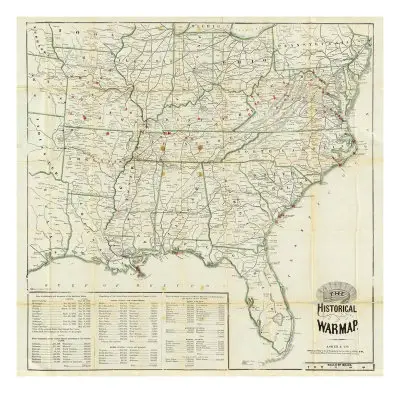
The United States Historical War Map, c.1862 48 in. x 47.125 in. Buy at AllPosters.com Framed |
Battles of the Confederate
Cedar Mountain |
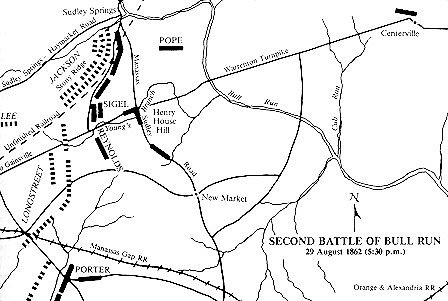
Second Manassas Second Bull Run Campaign Map click for full size map |
| August 29, 1862 |
August 30, 1862 |
Chronology Second Manassas
|
0500 |
Sigel's Corps with Reynold's Division pressed westward and became engaged in a series of disjointed attacks against Jackson's position along the railroad |
1000 |
Sigel called off attacks. |
0900-1000 |
Longstreet's Corps began arriving south of Jackson's line and completed its deployment about 1100. Hood's Division was on both sides of the turnpike near Pageland Lane. Wilcox's Division was echeloned to his left rear, while Kemper's Division was echeloned to his right rear. D. R. Jones' Division extended from Kemper's farther south across the Manassas Gap Railroad and Robertson's Cavalry screened toward Manassas. Jones engaged elements of Morell's Division; Porter's Corps was engaged in desultory fighting all afternoon. |
1100 |
Heintzelman's Corps (Kearny's and Hooker's Divisions) and Reno's Corps (Reno's and Stevens' Divisions) arrived near the Stone House. |
1200 |
The Federal attack was renewed. Schurz's Division seized part of Jackson's railroad position and held it until relieved at 1400 by Heintzelman's Corps. |
1400-1500 |
Period of regrouping and rest with some skirmishing. |
1500 |
Grover's Brigade, Hooker's Division made a successful bayonet attack against the center of Jackson's line; lost 500 men in 20 minutes, was not supported and was forced back. |
1700 |
Kearny attacked on Jackson's extreme left (north) and began to roll up that part of the line held by A. P. Hill's Division. Two brigades of Confederate reinforcements were rushed from an unthreatened portion of their line and repulsed Kearny's men. |
1700 |
Wilcox's Division was shifted by Longstreet to support D. R. Jones toward Manassas; it soon returned when no threat developed. Fitz-John Porter's presence to the south had fixed Longstreet's right wing all afternoon. The Confederate did not want to commit himself until he had determined Porter's intentions. |
1730 |
Hatch's (formerly King's) Division arrived at the Stone House and was ordered to attack westward along the Pike. |
1830 |
Hatch's Division collided with Hood's Division, which was probing eastward along the Warrenton Pike. Fighting endured around Groveton until about 1915. Reynolds' Division south of the Pike had been prevented from supporting effectively by Longstreet's artillery. |
c. 1830 |
Pope ordered Porter to bring his corps to Groveton. Pope felt Jackson was retreating and disregarded Porter's reports of Longstreet's presence south of the Pike. Longstreet was freed for the next day. |
30 August 1862
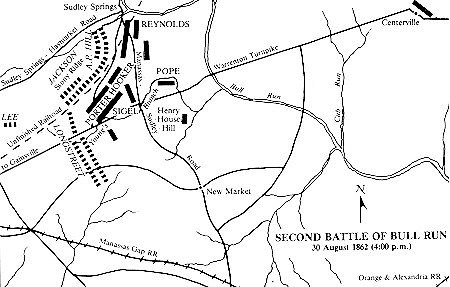
1200 |
Federals began to move into attack positions; Reynolds shifted to Chinn's Ridge. |
1500 |
Butterfield's and Hatch's Divisions with Sykes' in support commenced the main attack. They pushed to the railroad held by Jackson's men but were enfiladed by Longstreet's artillery on their left (south). Meanwhile Heintzelman's units pressed farther north. |
1500 |
Reynolds was pulled from his position to support Porter. Only Warren's Brigade (Sykes' Division) and Anderson's Brigade (Reynolds' Division) remained south of the Pike. |
1530 |
Longstreet attacked, pivoting on Jackson's position. Hood's Division advanced along an axis formed by the Pike while Longstreet's other units advanced in an arc north-northeast. |
1600 |
Warren's position was overrun. Pope placed more troops on Chinn's Ridge: Ricketts', along with Schurz's and parts of Schenck's Division were rushed in; Sykes' Division went to Henry Hill farther east and was joined later by Reynolds with two of his brigades. Reno and Heintzelman delayed north of the Pike against Jackson, who conformed to Longstreet's advance. |
1800 |
Chinn's Ridge was taken. Fighting shifted to Henry Hill. Sykes and Reynolds held until relieved by Stevens' Division of Reno's Corps, which halted the last Confederate attack. |
2030 |
All quiet. |
2300 |
Schurz's Division evacuated a bridgehead west of Stone Bridge. |
31 August 1862
0100 |
Turnpike Bridge was blown up; Federals drew into Centreville positions. (The stone bridge had been destroyed 9 March 1862 by Confederates. The bridge destroyed 31 August was a temporary wooden span.) |
 Second Manassas 1862 Robert E Lee's greatest victory Robert E Lee came as close as he ever would to exterminating his Northern enemies. In so doing, Lee established himself as the South's pre-eminent military commander and the Army of Northern Virginia as it's most powerful weapon |
Campaigns of the Civil War Virginia Battle Map 1862 Civil War Exhibits Timeline of the War State Battle Maps Civil War Navy Ships Civil War Summary Civil War Picture Album Women of the Civil War Civil War Submarines |
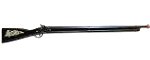 Civil War Musket Wood & Steel Frontier Rifle Designed After The Original Rifle 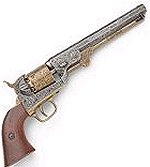 Civil War Model 1851 Naval Pistol |
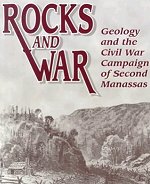 Rocks and War: Geology and the Civil War Campaign of Second Manassas The first study of the Battle of Second Manassas to show the importance of the landscape through which the generals maneuvered. Knowledge of landforms was vital to officers as they planned strategy and movements |
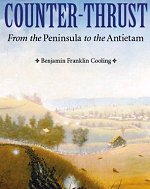 Counter-Thrust From the Peninsula to the Antietam A window into the Union's internal conflict at building a military leadership team. Lincoln's administration in disarray, with relations between the president and field commander McClellan strained to the breaking point. Shows how the fortunes of war shifted abruptly in the Union's favor, climaxing at Antietam. |
 Echoes of Thunder A Guide to the Seven Days Battles This is a valuable and welcome addition to this series of battlefield guides. This book will provide you with a guide on the field or it will supplement reading about the American Civil War battle of The Seven Days. |
Kindle Available Rebels At The Gate The dramatic story of the first Union victories of the Civil War and the events that caused Virginians to divide their state. In a defiant act to sustain President Lincoln's war effort, Virginia Unionists created their own state government in 1861-destined to become the new state of West Virginia. Their actions blocked what should have been Confederate control of the territory and closed one of their key gateways to the Union states |
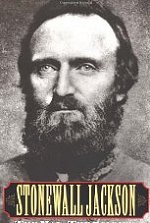 Stonewall Jackson The Man, the Soldier, the Legend Jackson traces his life from his humble beginnings, through his military career, to his untimely death in 1863, discussing his military campaigns and strategies, religious beliefs, personal eccentricities |
 Conquering the Valley: Stonewall Jackson at Port Republic Using accurate background information as well as anecdotal material, eyewitness accounts, and new primary sources, a historic narrative outlines the events surrounding the Civil War battles at Port Republic and Cross Keys |
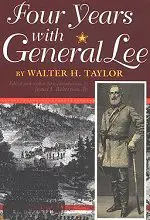 Four Years With General Lee Walter Taylor was staff officer to General Robert E. Lee. His book first appeared in 1877. For many years a standard authority on Confederate history, it is the source for dozens of incidents that have now become a part of every biography of Lee. |
Kindle Available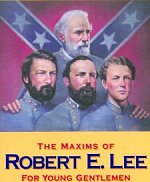 The Maxims Of Robert E. Lee For Young Gentlemen: Advice, Admonitions, and Anecdotes on Christian Duty and Wisdom from the Life of General Lee All his life, Robert E. Lee relied upon his faith for strength and guidance not only in troubled times, but also as the foundation upon which he based all of his dealings with others. |
Sources:
United States Military Academy
US Army
Library of Congress
National Park Service