
Ironclad USS Galena 1862 - 1872
Civil War Gunboat Union Navy Ship
|
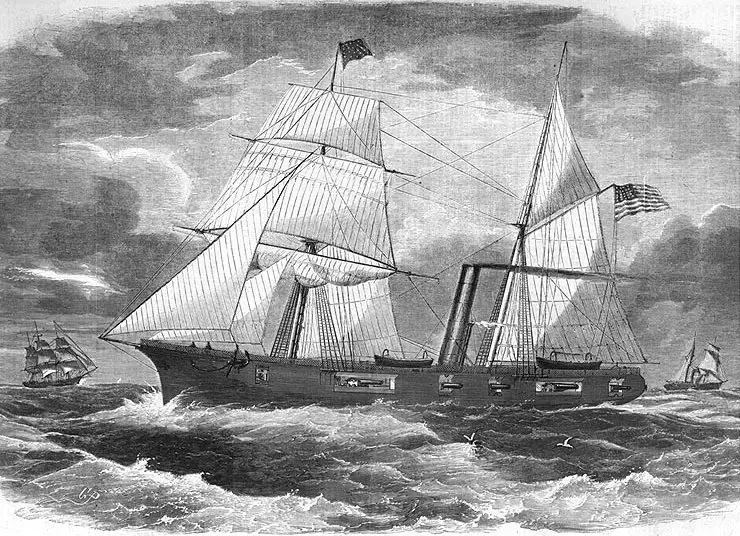
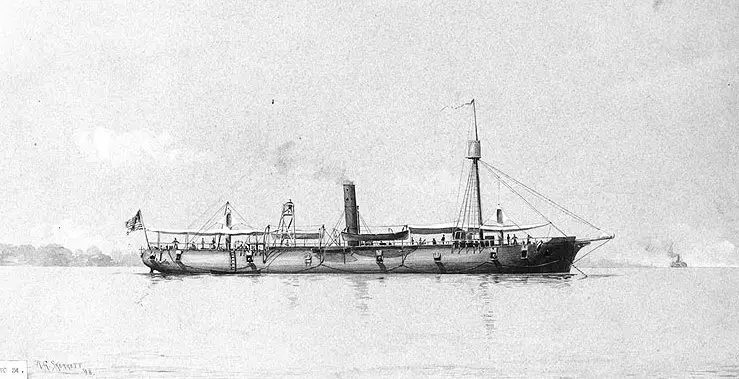
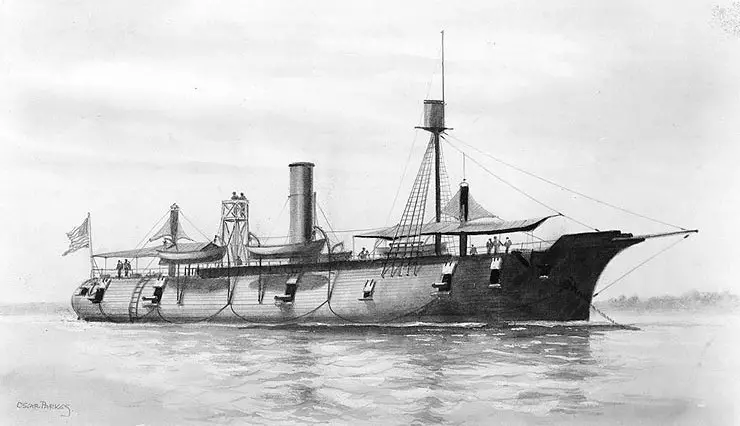
USS Galena , a 950-ton ironclad gunboat, was built at Mystic, Connecticut. Commissioned in April 1862 as the second of the U.S. Navy's first three armored warships, she was immediately sent to Hampton Roads, Virginia, to join the Navy's pioneer ironclad Monitor in containing CSS Virginia . On 8 May, Galena attacked enemy shore batteries on the James River, part of an intended drive up the river to take Richmond, the Confederate capital city. After the Virginia was destroyed, Galena and other Union warships steamed up the James on 15 May to bombard Fort Darling, located at Drewry's Bluff about eight miles below Richmond. In a sharp action, Confederate gunners badly damaged Galena , killing twelve of her crew and demonstrating the inadequacy of her relatively thin iron armor. Despite her injuries, the ship remained in the James River area through the next four months, shelling enemy shore positions on several occasions in support of General McClellan's army during the flow and ebb of its campaign on the Virginia Peninsula. After Galena left the James in September 1862, she was stationed in Hampton Roads until May 1863, when she went to Philadelphia for repairs and alterations. Recommissioned in February 1864, Galena had been stripped of her iron plating, given a heavier gun battery and enlarged sail rig. Now a conventional unarmored steam warship, in May she joined the West Gulf Blockading Squadron's pending assault on Mobile Bay, Alabama. She was one of the ships that ran past the Bay's defending Fort Morgan on the morning of 5 August 1864. During that action, she assisted USS Oneida to safety after that ship was disabled by Confederate gunfire. Later in the month, Galena took part in the siege that led to Fort Morgan's surrender. Galena served in the East Gulf Blockading Squadron in September-November 1864. After four months of shipyard repairs, she served on Virginia's James and Nansemond Rivers through the end of the Civil War. She decommissioned in June 1865 and was thereafter inactive except for a brief time in the spring of 1869. USS Galena was broken up in 1872 at the Norfolk Navy Yard, where a new and somewhat larger Galena was built under the administrative fiction of repairing the original. |
Kindle Available Wolf of the Deep: Raphael Semmes and the Notorious Confederate Raider CSS Alabama In July 1862, the Confederate captain Raphael Semmes received orders to report to Liverpool, where he would take command of a secret new British-built steam warship. His mission: to prey on Union commercial vessels and undermine the North's ability to continue the war |
|
|
USS Galena Ironclad 24 in. x 18 in. Buy at AllPosters.com Framed Mounted |
| Line engraving, published in "Harper's Weekly", 1862, depicting the ship as she appeared when first completed, with a two-masted schooner rig.
|
 The Civil War on Hatteras Island North Carolina New light on the experiences of Civil War soldiers stationed on the Outer Banks. It follows the crucial maritime battles along the Outer Banks and the famous Burnsides Expedition. Aa fascinating history of how one of America's most treasured islands played a significant part in the Civil War |
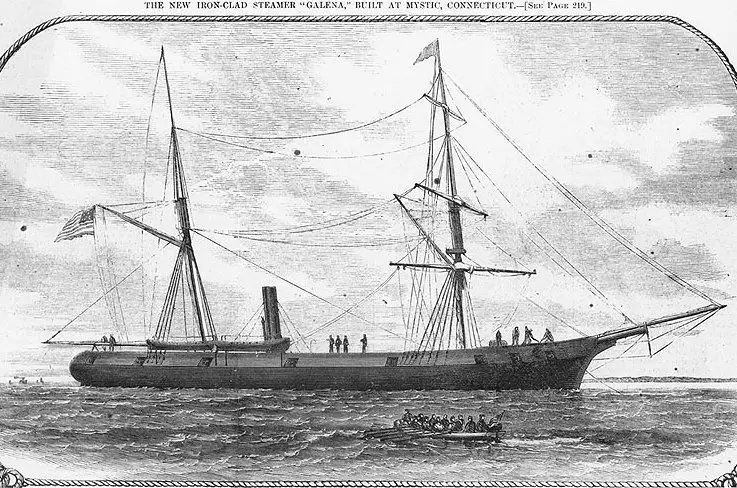


| Line engraving published in "Harper's Weekly", July-December 1861, page 669, while the ship was under construction at Mystic, Connecticut.
|
 Midshipman in Gray: Selections from Recollections of a Rebel Reefer |
| Wash drawing by R.G. Skerrett, 1898
|
 Duel on the Roanoke - The True Story of the CSS Albemarle A 158-foot Confederate ironclad ship built in a cornfield 90 miles up North Carolina's Roanoke River, under the direction of an 18-year-old boy, and the deadly cat-and-mouse game between the two opposing captains. |
| Watercolor by Oscar Parkes
|
 Ironclad of the Roanoke Gilbert Elliott's Albemarle The story of a Confederate Ironcald that was a powerful force until sunk by a Union Torpedo Boat after its brief stormy life. Ironic in the fact it was built in a Cornfield. Confederate Ingenunity at it finest! |
| Line engraving, published in "Harper's Weekly", 1862
|
 Ironclad Down: USS Merrimack-CSS Virginia from Design to Destruction A treasure trove of detailed information about one of history s most famous vessels. Describing Stephen Russell Mallory, John Mercer Brooke, John Luke Porter, et al.--who conceived, designed and built one of the world's first ironclads |
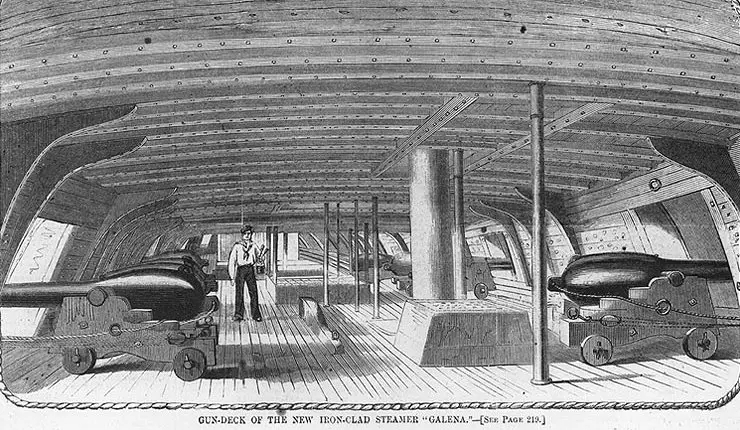
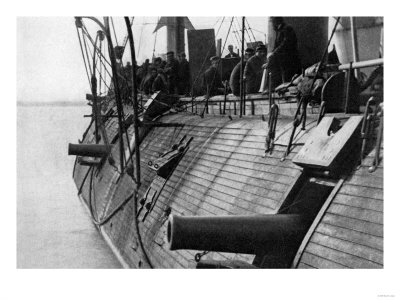
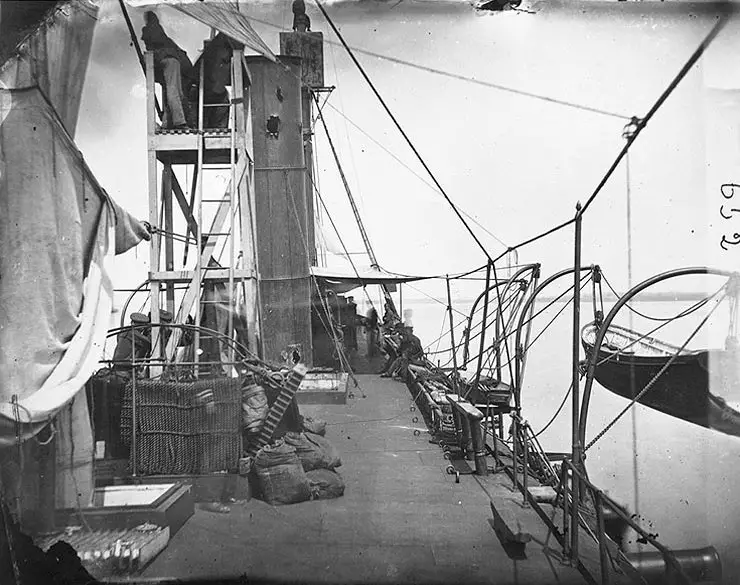
| Photograph looking forward along the ship's port side, shortly after her 15 May 1862 action with Confederate batteries at Drewry's Bluff, on the James River, Virginia.
|
 War, Technology, and Experience aboard the USS Monitor The experience of the men aboard the Monitor and their reactions to the thrills and dangers that accompanied the new machine. The invention surrounded men with iron and threatened their heroism, their self-image as warriors, even their lives Kindle Available  Naval Strategies of the Civil War: Confederate Innovations and Federal Opportunism Compare and contrast the strategies of the Southern Secretary of the Navy, Mallory, against his rival in the North, Welles. |
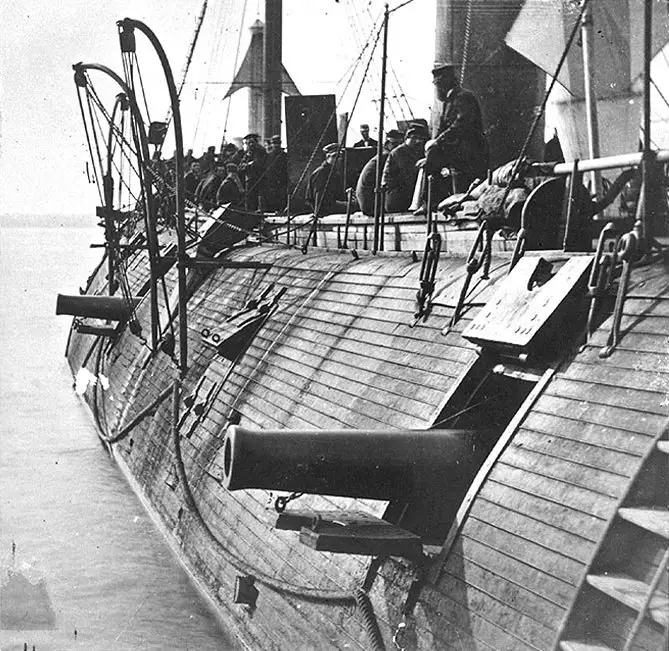
| Photograph taken on board by Matthew Brady, shortly after the 15 May 1862 action with Confederate batteries at Drewry's Bluff, Virginia.
|
 Confederate Ironclad 1861-65 Every aspect of Confederate ironclads is covered: design, construction, armor, armament, life on board, strategy, tactics, and actual combat actions. 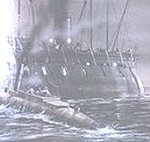 Confederate Submarines and Torpedo Vessels 1861-65 Interesting information and many excellent illustrations. It addresses the CSA David class torpedo boats and the Hunley |
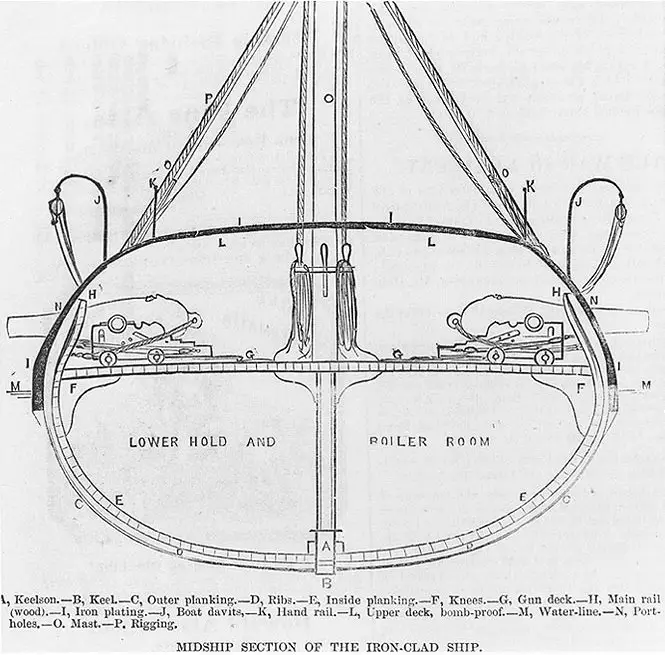
| Line engraving, published in "Harper's Weekly", 1862
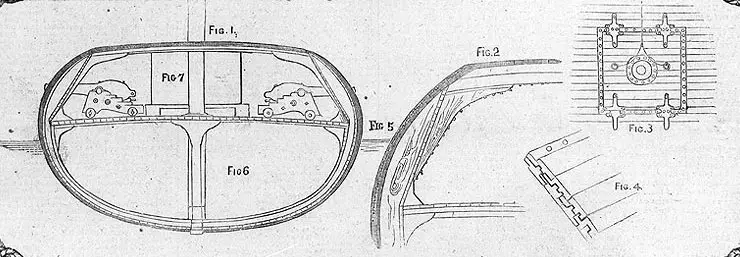
Line engraving published in "Harper's Weekly", July-December 1861
|
 Life in Mr. Lincoln's Navy A tantalizing glimpse into the hardships endured by the naval leadership to build and recruit a fighting force. The seaman endured periods of boredom, punctuated by happy social times and terrifying bouts of battle horror  Confederate Phoenix The CSS Virginia The CSS Virginia of the Confederate States Navy destroyed two of the most formidable warships in the U.S. Navy. Suddenly, with this event, every wooden warship in every navy in the world became totally obsolete |
 1860 Enfield Civil War Musketoon This piece is a full-size non-firing reproduction of the rifle used in the Civil War. The body is made of European hardwood  Civil War Cannon Collectible Models and childrens playsets Miniature Collectible Civil War Cannon12 pound Civil War field cannon replica weapon |
USS Galena in Action on the James River Civil War Ships and Battles Civil War Submarines RAM Ships Civil War Naval Timeline American Civil War Exhibits State Battle Maps Civil War Summary Civil War Timeline Women in the Civil War Battles by Campaign |
 Sid Meier's Civil War Collection Take command of either Confederate or Union troops and command them to attack from the trees, rally around the general, or do any number of other realistic military actions.  History Channel Civil War A Nation Divided Rally the troops and organize a counterattack -- Your strategic decision and talent as a commander will decide if the Union is preserved or if Dixie wins its independence |
Kindle Available The H. L. Hunley The Secret Hope of the Confederacy On the evening of February 17, 1864, the Confederacy H. L. Hunley sank the USS Housatonic and became the first submarine in world history to sink an enemy ship. Not until World War I "half a century later” would a submarine again accomplish such a feat. But also perishing that moonlit night, vanishing beneath the cold Atlantic waters off Charleston, South Carolina, was the Hunley and her entire crew of eight |
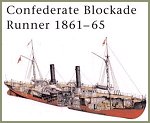 Confederate Blockade Runner 1861-65 The blockade runners of the Civil War usually began life as regular fast steam-powered merchant ships. They were adapted for the high-speed dashes through the Union blockade which closed off all the major Southern ports, and for much of the war they brought much-needed food, clothing and weaponry to the Confederacy |
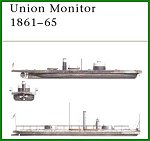 Union Monitor 1861-65 The first seagoing ironclad was the USS Monitor, and its profile has made it one of the most easily recognised warships of all time. Following her inconclusive battle with the Confederate ironclad Virginia on March 9, 1862, the production of Union monitors was accelerated. By the end of the year a powerful squadron of monitor vessels protected the blockading squadrons off the Southern coastline, and were able to challenge Confederate control of her ports and estuaries |
 Battle on the Bay: The Civil War Struggle for Galveston Civil War history of Galveston is one of the last untold stories from America's bloodiest war, despite the fact that Galveston was a focal point of hostilities throughout the conflict. Galveston emerged as one of the Confederacy's only lifelines to the outside world. |
 Halls of Honor The U.S. Navy Museum takes you on an informed and entertaining romp through one of North America s oldest and finest military museums. The museum has been in continuous operation at the Washington Navy Yard since the American Civil War |
 Raise The Alabama She was known as "the ghost ship." During the Civil War, the CSS Alabama sailed over 75,000 miles and captured more than 60 Union vessels. But her career came to an end in June of 1864 when she was sunk by the USS Kearsarge off the coast of Northern France |
 The Civil War - A Film by Ken Burns Here is the saga of celebrated generals and ordinary soldiers, a heroic and transcendent president and a country that had to divide itself in two in order to become one |
 Civil War Journal The Conflict Begins These four programs from the History Channel series Civil War Journal cover critical aspects of the early days of the war. |
|
Books Civil War Womens Subjects Young Readers Military History DVDs Confederate Store Civil War Games Music CDs Reenactors |
American Military Gear Recruiter and History
United States Marines gear history and support of Semper Fi Fund
