Old Fort Wayne
Beatties Prairie
Civil War Oklahoma

American Civil War
October 22, 1862

Brigadier General James G. Blunt and his troops attacked Colonel Douglas H. Cooper and his Confederate command on Beatties Prairie near Old Fort Wayne at 7:00 am on October 22, 1862.

The Confederates put up stiff resistance for a half hour, but overwhelming numbers forced them to retire from the field in haste, leaving artillery and equipage behind.

This was a setback in the 1862 Confederate offensive that extended from the tidewater in the east to the plains of the Indian Territory of the west.

Result(s): Union victory

Location: Delaware County

Campaign: Operations North of Boston Mountains (1862)

Date(s): October 22, 1862

Principal Commanders: Brigadier General James G. Blunt [US]; Colonel Douglas H. Cooper [CS]

Forces Engaged: 1st Division, Army of the Frontier [US]; 1st Brigade [CS]

Estimated Casualties: 164 total (US 14; CS 150)


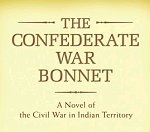
The Confederate War Bonnet: A Novel of the Civil War in Indian Territory
An evocative historical novel that helps to answer how Indians became involved in the Civil War, why they joined Confederate forces, and how the experience shaped their future in America.

500 Nations
An eight-part documentary that explores the history of the indigenous peoples of North and Central America, from pre-Colombian times through the period of European contact and colonization, to the end of the 19th century and the subjugation of the Plains Indians of North America
Oklahoma State Battle Map
State Battle Maps
American Civil War Exhibits
Civil War Summary
Women in the War
Civil War Submarines
Documents of the Civil War
Confederate Commanders
Union Generals
Civil War Picture Album
Civil War Store

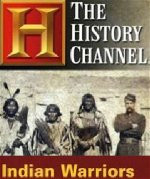
Indian Warriors - The Untold Story of the Civil War
Some 20-30 thousand Native Americans fought in the Civil War. Ely Parker was a Seneca leader who found himself in the thick of battle at the side of General Ulysses S. Grant. Stand Waite, a Confederate General and a Cherokee was known for his brilliant guerilla tactics
Native American Civil War Book Titles

The American Indian and the End of the Confederacy, 1863-1866
The vulnerability of the Indians caught between two warring sides. The failure of the US government to afford to the southern Indians the protection solemnly guaranteed by treaty stipulations was the great cause of their entering into an alliance with The Confederacy

General Stand Watie's Confederate Indians
The Confederacy pioneered the idea of giving blacks and women positions of authority [the Matron Law], placed Jews in positions of power, put General's stars on a Mexican and the first American Indian General. This book is his story

The Civil War in Arizona: The Story of the California Volunteers, 1861-1865
History of the California Column in wartime Arizona and a rare compilation of letters written by the volunteer soldiers who served in the U.S. Army from 1861 to 1866. These letters provide testimony of the grueling desert conditions the soldiers endured as they fought on many fronts

Lincoln and the Indians Civil War Policy and Politics
Overview of the system of Indian administration as it had developed by 1860. Dominated by the political spoils system and by corruption of the Indian agents. As a master of the art of pragmatic politics, Lincoln used the system as he needed to do to hold the Union together-resulting in tragedy for our country's Indian wards

The First Americans: Prehistory-1600 A History of US
Tribes of hunters made their way from Asia across the Bering land bridge to North America. They didn't know it, but they had discovered a New World. The First Americans is a fascinating re-creation of pre-Columbian Native American life, and it's an adventure of a lifetime

Civil War in the Indian Territory
When the war broke out, both sides wanted the Five Civilized Tribes, led by the Cherokees, and each got around half. The Confederacy sent Brigadier General Albert Pike to recruit them, and he did a pretty good job. A strange, brilliant, man, Pike's career as a General is a minor footnote in his long life

Civil War in the American West
An accurate and detailed history of the Western Theater of the Civil War, which was largely forgotten by history. He was one of the first historians to fully understand the impact that California had on the war as he gives an accounting of the Federal raid on the Dan Showalter Ranch in San Bernadino on October 5, 1861.

The Cherokee Nation in the Civil War
The Cherokee people, who had only just begun to recover from the ordeal of removal, faced an equally devastating upheaval in the Civil War. The Cherokee Nation, with its sovereign status and distinct culture, had a wartime experience unlike that of any other group of people


President Abraham Lincoln
History of Colored Troops
Confederate President Jefferson Davis

Sources:
U.S. National Park Service
U.S. Library of Congress

Search
AmericanCivilWar.com
 
Enter the keywords you are looking for and the site will be searched and all occurrences of your request will be displayed. You can also enter a date format, April 19,1862 or September 1864.
Books
Civil War
Womens Subjects
Young Readers
Military History

DVDs
Confederate Store
Civil War Games
Music CDs
Reenactors