|
|
|
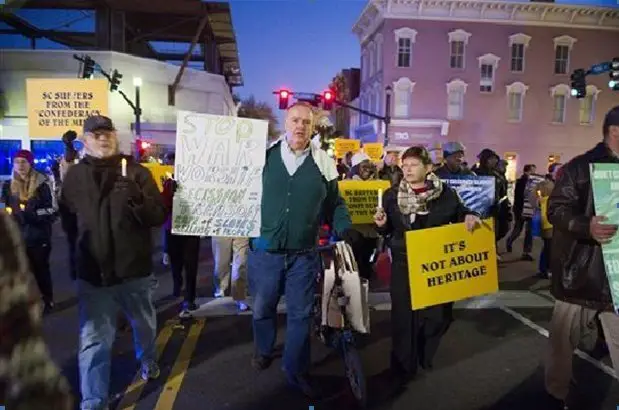
Jeffrey Collins, Associated Press, reports from Charleston:
“The memory of the Civil War collided with modern-day civil rights Monday, December 20th, as protesters targeted a `Secession Ball,’ commemorating South Carolina’s decision exactly 150 years ago to secede from the United States. (Read the entire story)
The sesquicentennial of the Civil War has barely begun and the NAACP has already made its policy toward celebration plain: We Americans, white or not, should view the Southern experience of the Civil War as the Jews view the German experience of the Holocaust. In the political view of the NAACP, in other words, the Southern soldier, much less his friends and family, was as base as the German soldier who facilitated the extermination of Jews. And his descendents should bow their heads in shame and hide the location of his grave.
The policy of the NAACP manifests itself most blatantly in the organization’s persistent attack on the public display of the Confederate battle flag. To the NAACP the display of the battle flag is racist behavior—nothing more or less; and the flag itself a symbol of a racist heritage that through violence sought the breakup of the Union in order to maintain slavery.
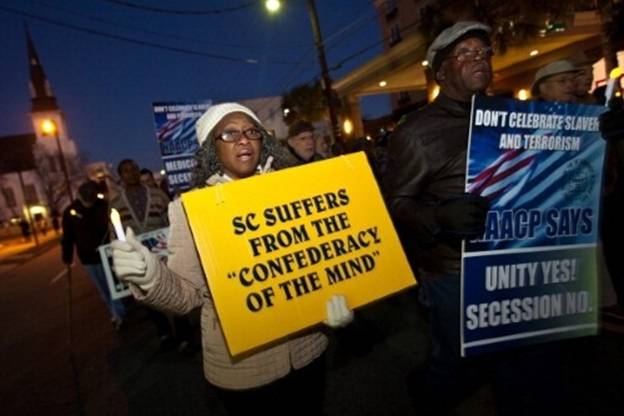
Click to read the entire article
Of course, there is a great deal really that the N.A.A.C.P. can celebrate about the 150th anniversary of the Civil War that relates directly to the participation of African-Americans in it. After January 1, 1863, over two hundred thousand Africans served as Union soldiers in the war.
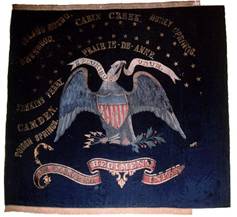 The earliest engagement of Africans in uniform with their Confederate counterparts waving the repugnant battle flag occurred in October 1862, when the First Kansas Volunteers repulsed an attack on their position at Island Mound on the Mississippi. Later, in 1863, the regiment skirmished repeatedly with rebel raiders along the Kansas-Missouri border, and fought off Confederate attack on wagons trains they escorted across Indian Territory to the Western forts. The First Kansas was integrated into the Regular Army, in 1864, as the 79th U.S. Infantry Regiment.
Less than six months later, there were fourteen African regiments in the field. These regiments fought with valor at such places as Port Hudson, Louisiana, Fort Wagner, South Carolina, Fort Pillow, Tennessee, Chaffin’s Farm and the Crater at Petersburg, Virginia. By the end of the war, Africans comprised ten percent of the Union armies; approximately one third of this number lost their lives in action. Here are some of their regimental flags:
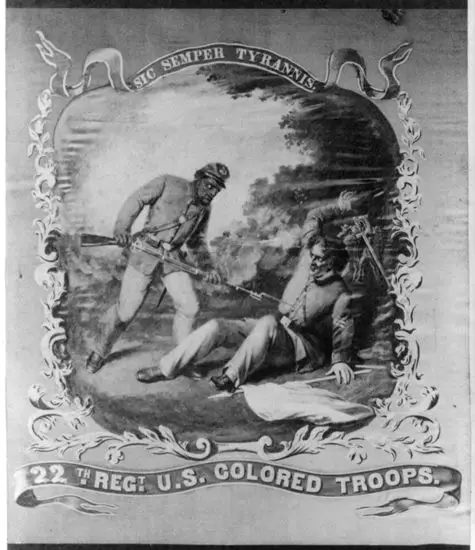
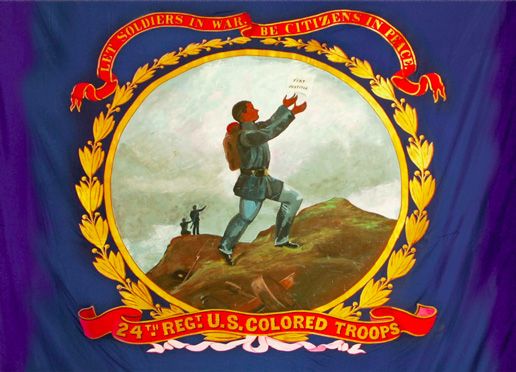
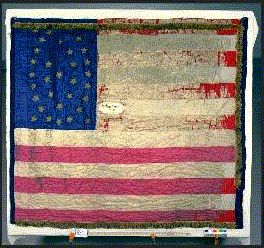
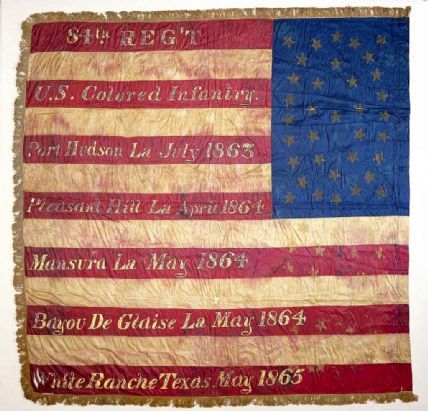
PHOTOGRAPHS AND IMAGES OF AFRICAN UNION SOLDIERS
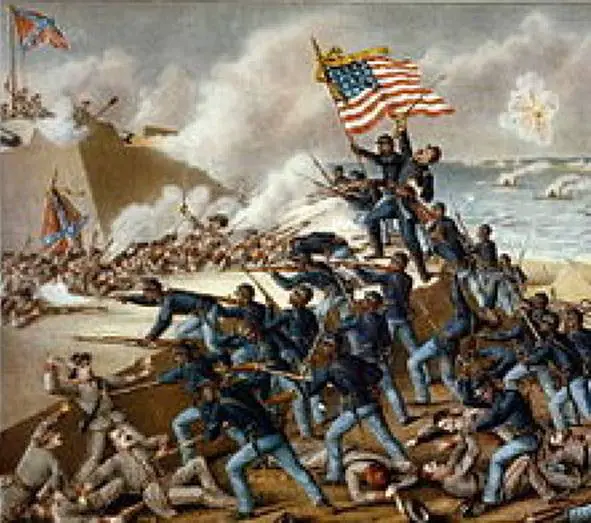
54th Volunteer Regiment at Fort Wagner
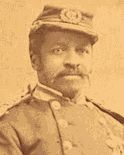
Christian Fleetwood, Union Soldier
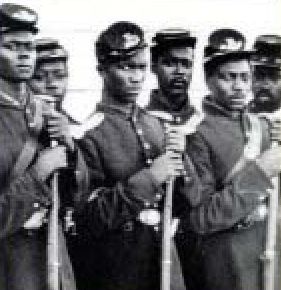
Union Soldiers
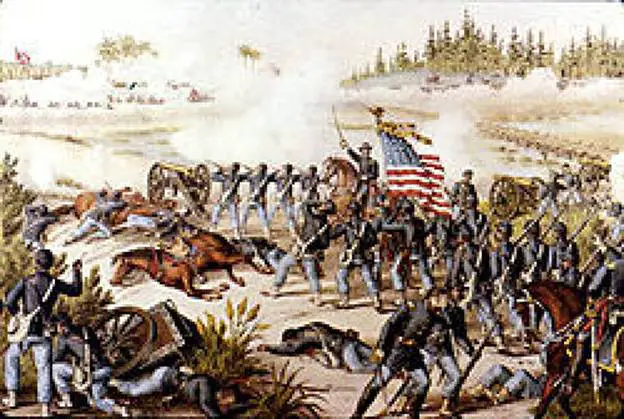
African Union Soldiers
Writing of their conduct during Grant’s Virginia campaign, in 1864, General W.F. Smith, commander of the 18th corps, said: “No nobler effort has been put forth and no greater success achieved than that of the colored troops. With the veterans of the corps they have stormed the works of the enemy and carried them, taking guns and prisoners and displaying all the qualities of good soldiers.”
General Ben Butler echoed this view when he wrote, in salutation: “The colored soldiers, by coolness, steadiness, determined courage and dash, have silenced every cavil of the doubters of their soldierly capacity, and have brought their late masters to the consider themselves whether to employ them as soldiers.”
Twenty-one Africans were awarded the Medal of Honor for conduct above the call of duty.
African-Americans Soldiers Awarded the Medal of Honor
For Conduct Above the Call of Duty
Bruce Anderson
William H. Barnes
Powhatan Beaty
Robert Blake
James h. Bronson
William H. Carney
Decatur Dorsey
Christian Fleetwood
James D. Gardner
James H. Harris
Thomas R. Hawkins
Alfred B. Hilton
Milton M. Holland
Miles James
Alexander Kelly
Edward Ratcliff
Andrew J. Smith
Charles Veale
Thomas Boyne
Benjamin Brown
John Denny
It is a sad commentary on the politics of the NAACP that it fails to recognize the value and importance to the country of the thousands of African-Americans who actively participated as soldiers in the American Civil War. One of the most significant memorial days of the Civil War is Gettysburg Remembrance Day, held on November 19th of each year to commemorate not only the men who fought the battle of Gettysburg but also Abraham Lincoln's visit to Gettysburg National Cemetery where he gave the Gettysburg Address. On this day, thousands of men and women visit Gettysburg and join in a one hour parade, as both participants in the parade and observers of it; many of these visitors spend the day on the streets of Gettysburg, dressed in authentic period garb, recreating a realistic picture of what the people in the town of 1863 looked like.
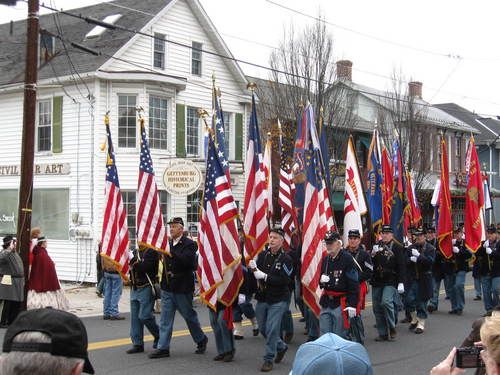
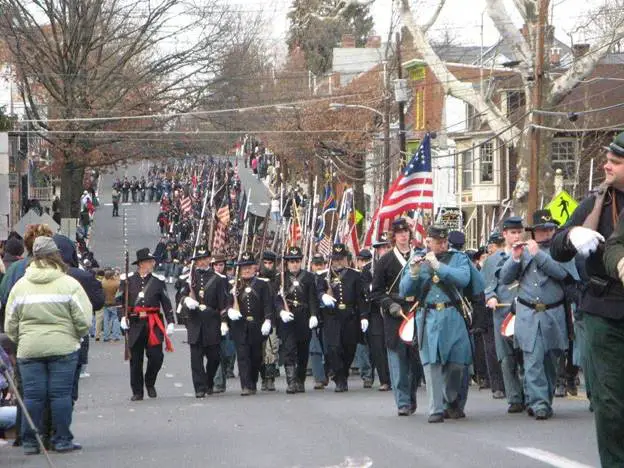
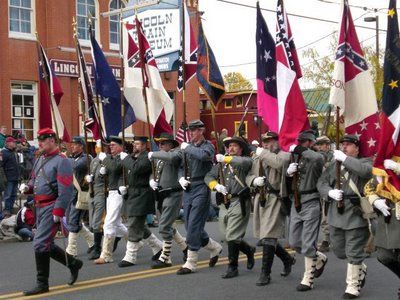
Predominantly, it is true, the crowd and the parade participants are white, but there are an intrepid few who are black.
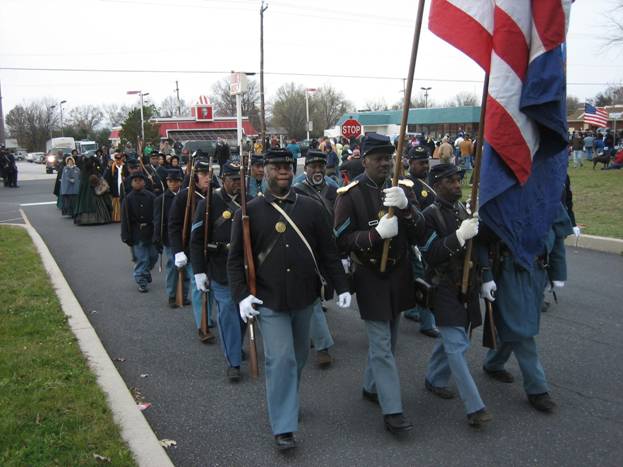
It is a sad state of affairs, indeed, that these men are not encouraged by the NAACP, and that the NAACP has no interest in encouraging African-American men to come to Gettysburg for this event in regiment, if not brigade, strength—with all the great banners of their regiments flying in the breeze as they march in their place in the long column of Union soldiers winding its way down King Street, wheeling sharply into Baltimore Street and passing through the town, to the cadence of their snare drums and the bark of their officers. Eight hundred black men in Union uniform as a solid block filling the street in fluid motion; it would be a grand sight conjuring a view of the full strength of the Republic's grand army.
The House of Representatives, February 22, 1862
Presentation of Rebel Flags
 Mr. Crittenden of Kentucky: "Mr. Speaker, by joint resolution of the two Houses, I suppose we have prescribed the proceedings of this day. I see, in a publication made on the subject, that there has been added the presentation of the flags. I do not think that such flags should be presented on this occasion. I move, therefore, that that part of the proceedings be omitted.
The House was divided on the motion; and there were—yeas fifty-three, noes not counted
Mr. Lovejoy of Illinois: "I demand the yeas and nays. This has been ordered by the War Department; and according to the gentlemen, we have no right to oppose anything done by military men. The War Department has ordered the presentation of these flags."
Mr. Dawes of Massachusetts: "I would like to know how these flags are to be presented to us, if we will not receive them. I do not want to magnify those rebel flags in this way, and I hope that Congress will respectfully decline to receive them in this public manner."
Mr. Campbell of Pennsylvania: "These are the trophies which have been won by our brave officers and soldiers upon hotly contested battlefields. I would magnify the deeds of our officers and soldiers, and not the flags. These flags represent the blood and struggle of these brave men, and I hope, in that view, they will be received, and treated with respect." [Laughter]
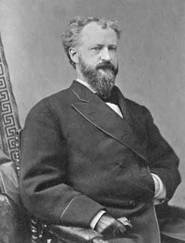
Mr. Roscoe Conkling of New York: "I submit to the House that these flags are not trophies to be treated with respect or with consideration by the Government of the United States. I submit that they are the badges, the tokens, carried by armed rebels—men red-handed with the murder of the citizens of this country—men who are entitled to no flag, who possess no flag—men whom we ought not to recognize as parties to be treated with or considered here at all.
Now, sir, if there was a riot in this city, and the municipal authorities had at last succeeded in quelling it, and the proposition should be made that the muncipal council should assemble, and that there should be a public presentation of the banners and transparcencies, or the badges which had been carried through the streets by the rioters, would anybody suppose that such a proposition was in harmony either with self-respect or public decency; and, if not, why should we accept the presentation of a flag—not a piece of bunting simply, but a flag which means more than that, coming from a people who have no flag and who have no existence, national or otherwise; but who are simply rebels. Now, sir, I hope there will be no hesitation in dispensing with a public presentation of these rebel flags, for that is no part of the resolution which we have adopted."
Mr. Campbell: "I think the gentleman from New York misunderstood my remarks. I intended to say distinctly that our soldiers who sent these trophies from distant battlefields were to be treated with respect by giving these trophies a proper reception; not, however, that these trophies themselves were entitled to any respect anywhere."
Mr. Lovejoy: "The law of the land requires, as I understand it, that all flags taken in battle shall be presented by the officers of the Government, and placed at the disposal of Congress. I do not think we respect the rebels by the action which is proposed. To suppose that by receiving these rebel flags we pay respect to the rebels themselves is the most preposterous idea that could ever enter the human brain. I am willing to receive, as a member of Congress or an individual, every flag taken in battle—the more the better. They are the evidence of the power of this Government to suppress this southern rebellion. I now withdraw my call for the yeas and nays.
I want the clerk to read the law on the subject of captured flags."
The Clerk read as follows: "That the Secretaries of War and Navy be directed to cause to be collected and transmitted to them, at the seat of the Government of the United States, all such flags, standards, and colors as shall be taken from their enemies; that such flags shall be then transmitted to the President of the United States, for the purpose of being, under his direction, preserved and displayed in such public place as he shall deem proper."
Mr. Crittenden: "What is the date of that law?"
The Clerk: " The 18th of April, 1814."
Mr. Edwards of New Hamsphire: "The House has decided that this presentation should take place." [Cries of "No!" "No!"]
Mr. Roscoe Conkling: "It is no part of the resolution of either House."
Mr. Edwards: "It is now to be determined what is the will of the House in this matter. As an individual, I am in favor of the reception of these flags taken from armed rebels by our brave officers and soldiers.
Now, sir, I say, if any gentleman wishes to draw any analogy between a riot in this city and half a nation in arms, he argues from premises which have no influence with me.
Sir, we have witnessed within the last three weeks the most desperate exhibition of courage and military skill that has ever been mainifested in any part of the world. To our Navy on the coast and to the soldiers of the West we are indebted for that which has changed the gloom into cheerfulness. These flags have been wrested from an enemy by our sailors and soldiers; and as a tribute of admiration, I would now—[disturbance I the galleries]
The Speaker: The Chair appeals to the gentlemen in the galleries to preserve order."
Mr. Richardson of Illinois: "I think the galleries have behaved better than we have." [laughter]
 Mr. Edwards: "I would do it for another reason; I would hand down to `the deep damnation of all future time,' every memento of this rebellion, and every flag that has been wrested and every flag that can be wrested from those arms against the Government. I would have them treasured up as if they were sacred relics, in some depository of this Capitol, so that all who shall come hereafter may know that we were able to suppress the greatest rebellion the world has ever known."
Mr. Sedgwick of New York demanded the yeas and nays.
Mr. Lovejoy: "Has the Secretary of War arranged for the presentation of these flags? [Cries of "Call the roll!" "Call the roll!"]
The question was then put; and it was decided in the affirmative—yeas 69. nays 62. So the resolution was agreed to.
Note: Most of the over 400 captured rebel battle flags were entrusted to the Museum of the Confederacy, in Richmond, VA, by mandate of the United States Congress and the Commonwealth of Virginia in 1905.
Richmond Confederate Memorials
| Civil War Sesquicentennial Original Articles |
Article Submissions to [email protected] | View Reader Submitted Responses to Original Works at AmericanCivilWar.com |

