Kindle Available Lincoln's Emancipation Proclamation: The End of Slavery in America No single official paper in American history changed the lives of as many Americans as Lincoln's Emancipation Proclamation. But no American document has been held up to greater suspicion. Its bland and lawyerlike language is unfavorably compared to the soaring eloquence of the Gettysburg Address and the Second Inaugural |
THE EMANCIPATION PROCLAMATION By Abraham Lincoln President of the United States of America: A PROCLAMATION |
Kindle Available Raising Freedom's Child: Black Children and Visions of the Future After Slavery Previously untapped documents and period photographs casts a dazzling, fresh light on the way that abolitionists, educators, missionaries, planters, politicians, and free children of color envisioned the status of African Americans after emancipation |
| On July 13, 1862, President Abraham Lincoln consulted Secretaries William H. Seward and Gideon Welles on the particulars of the Emancipation Proclamation. Both men were speechless. Seward anticipated anarchy in the South and perhaps foreign intervention. Seeing that Welles was even more confused, Lincoln let the matter rest, but on July 22 he presented this draft proclamation to the full cabinet. Reaction was mixed. Cabinet secretaries Stanton and Chase advocated the document's immediate release, but Postmaster General Montgomery Blair foresaw defeat in the coming fall elections. Lincoln again abandoned the issue; however, it was clear to his advisors that his mind was set. There would be an Emancipation Proclamation at year's end. |
| Whereas on the 22nd day of September, A.D. 1862, a proclamation was issued by the President of the United States, containing, among other things, the following, towit:
"That on the 1st day of January, A.D. 1863, all persons held as slaves within any State or designated part of a State the people whereof shall then be in rebellion against the United States shall be then, thenceforward, and forever free; and the executive government of the United States, including the military and naval authority thereof, will recognize and maintain the freedom of such persons and will do no act or acts to repress such persons, or any of them, in any efforts they may make for their actual freedom. "That the executive will on the 1st day of January aforesaid, by proclamation, designate the States and parts of States, if any, in which the people thereof, respectively, shall then be in rebellion against the United States; and the fact that any State or the people thereof shall on that day be in good faith represented in the Congress of the United States by members chosen thereto at elections wherein a majority of the qualified voters of such States shall have participated shall, in the absence of strong countervailing testimony, be deemed conclusive evidence that such State and the people thereof are not then in rebellion against the United States." Now, therefore, I, Abraham Lincoln, President of the United States, by virtue of the power in me vested as Commander-In-Chief of the Army and Navy of the United States in time of actual armed rebellion against the authority and government of the United States, and as a fit and necessary war measure for supressing said rebellion, do, on this 1st day of January, A.D. 1863, and in accordance with my purpose so to do, publicly proclaimed for the full period of one hundred days from the first day above mentioned, order and designate as the States and parts of States wherein the people thereof, respectively, are this day in rebellion against the United States the following, to wit: Arkansas, Texas, Louisiana (except the parishes of St. Bernard, Palquemines, Jefferson, St. John, St. Charles, St. James, Ascension, Assumption, Terrebone, Lafourche, St. Mary, St. Martin, and Orleans, including the city of New Orleans), Mississippi, Alabama, Florida, Georgia, South Carolina, North Carolina, and Virginia (except the forty-eight counties designated as West Virginia, and also the counties of Berkeley, Accomac, Morthhampton, Elizabeth City, York, Princess Anne, and Norfolk, including the cities of Norfolk and Portsmouth), and which excepted parts are for the present left precisely as if this proclamation were not issued. And by virtue of the power and for the purpose aforesaid, I do order and declare that all persons held as slaves within said designated States and parts of States are, and henceforward shall be, free; and that the Executive Government of the United States, including the military and naval authorities thereof, will recognize and maintain the freedom of said persons. And I hereby enjoin upon the people so declared to be free to abstain from all violence, unless in necessary self-defence; and I recommend to them that, in all case when allowed, they labor faithfully for reasonable wages. And I further declare and make known that such persons of suitable condition will be received into the armed service of the United States to garrison forts, positions, stations, and other places, and to man vessels of all sorts in said service. And upon this act, sincerely believed to be an act of justice, warranted by the Constitution upon military necessity, I invoke the considerate judgment of mankind and the gracious favor of Almighty God. In witness whereof, I have hereunto set my hand and caused the seal of the United States to be affixed. Done at the City of Washington, this first day of January, in the year of our Lord one thousand eight hundred and sixty three, and of the Independence of the United States of America the eighty-seventh. By the President: ABRAHAM LINCOLN WILLIAM H. SEWARD, Secretary of State. On Jan. 1, 1863, U.S. President Abraham Lincoln declared free all slaves residing in territory in rebellion against the federal government. This Emancipation Proclamation actually freed few people. It did not apply to slaves in border states fighting on the Union side; nor did it affect slaves in southern areas already under Union control. Naturally, the states in rebellion did not act on Lincoln's order. But the proclamation did show Americans-- and the world--that the civil war was now being fought to end slavery. Lincoln had been reluctant to come to this position. A believer in white supremacy, he initially viewed the war only in terms of preserving the Union. As pressure for abolition mounted in Congress and the country, however, Lincoln became more sympathetic to the idea. On Sept. 22, 1862, he issued a preliminary proclamation announcing that emancipation would become effective on Jan. 1, 1863, in those states still in rebellion. Although the Emancipation Proclamation did not end slavery in America--this was achieved by the passage of the 13TH Amendment to the Constitution on Dec. 18, 1865--it did make that accomplishment a basic war goal and a virtual certainty. DOUGLAS T. MILLER
|
 Slaves No More: Three Essays on Emancipation and the Civil War The first essay traces the destruction of slavery by discussing the shift from a war for the Union to a war against slavery The second essay examines the evolution of freedom in occupied areas of the lower and upper South. The third essay demonstrates how the enlistment and military service of nearly 200,000 slaves hastened the transformation of the war into a struggle for universal liberty |
 Mississippi to Madrid: Memoir of a Black American in the Abraham Lincoln Brigade From his birth to a share cropper family in Mississippi to the unrest in Chicago and New York during the depression, James Yates's experience with labor protest and union organizing shaped his vision of freedom and led to his decision to fight against fascism in the Spanish Civil War |
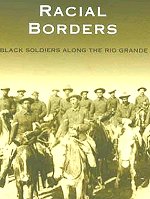 Black Soldiers Along the Rio Grande With the publication of Racial Borders Leiker has established himself as a leading authority on African American military history. This is a fine example of new social history and should be widely read.—Journal of America’s Military Past |
Kindle Available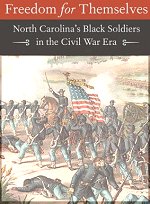 Freedom for Themselves: North Carolina's Black Soldiers in the Civil War Era The processes by which black men enlisted and were trained, the history of each regiment, the lives of the soldiers' families during the war, and the experiences of the colored veterans and their families living in an ex-Confederate state |
 Bitter Fruits Of Bondage: The Demise Of Slavery And The Collapse Of The Confederacy, 1861-1865 The process of social change initiated during the birth of Confederate nationalism undermined the social and cultural foundations of the southern way of life built on slavery, igniting class conflict that ultimately sapped white southerners of the will to go on. |
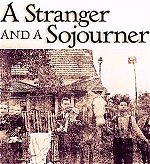 A Stranger And a Sojourner: Peter Caulder, Free Black Frontiersman in Antebellum Arkansas An illiterate free black man, defied all generalizations about race as he served with distinction as a marksman in the U.S. Army during the War of 1812, repeatedly crossed the color line, and became an Arkansas yeoman farmer, thriving and respected by white neighbors until he fell victim of new discriminatory legislation on the eve of the Civil War |
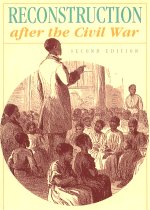 Reconstruction after the Civil War Chicago History of US Civilization Praised for cutting through the controversial scholarship and popular myths of the time to provide an accurate account of the role of former slaves during this period in American history |
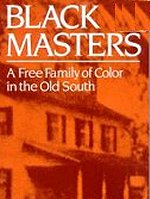 Black Masters: A Free Family of Color in the Old South This book focuses on biracial persons of white/black ancestry. Persons who tend to be dark complected often consider themselves to be black and because the laws of antebellum South Carolina clearly differentiated between whites and free persons who did not fall into the white category |
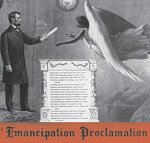 The Emancipation Proclamation: Three Views The Emancipation Proclamation in three distinct respects: the influence of and impact upon African Americans; the legal, political, and military exigencies; and the role pictorial images played in establishing the document in public memory. |
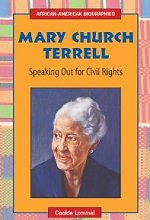 Mary Church Terrell Speaking Out for Civil Rights Grade 4-7-This biography of the civil rights activist tells of a strong woman who overcame great obstacles throughout her life in order to meet her goals. Although her father was the son of a white master, he was not able to gain his freedom until after the Emancipation Proclamation |
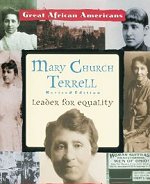 Mary Church Terrell Leader for Equality Grades 2-4 Mary Church Terrell lived in the 19th century, but was born free into a life of privilege and wealth. However, Terrell also faced the obstacles placed before African Americans and fought to overcome them. She was active in African-American women's groups and the newly formed NAACP. |
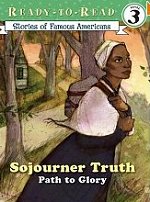 Sojourner Truth: Path to Glory Grade 3-5–The life of Isabella Baumfree, the woman who became Sojourner Truth, is told with dignity and respect, accompanied by Denos's color illustrations. As a former slave turned traveling preacher, Truth was an advocate for the rights of blacks and women. The author gives an overview of slavery, including the fact that it was legal in the North as well as the South. |
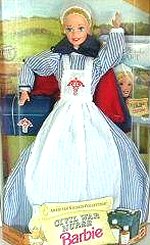 Civil War Nurse Barbie Part of the American Stories Collection. |
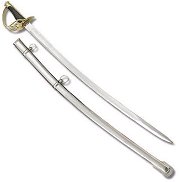 Cavalry Saber This fine replica is 39 inches overall and features a highly polished 33 inch carbon steel blade. Its leather wrapped handle fits the hand perfectly and sports decorative brass accents and a shiny brass pommel. |
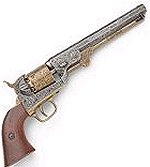 Civil War Model 1851 Naval Pistol Engraved Silver Tone / Gold Tone Finish and Wooden Grips - Replica of Revolver Used by Both USA / Union and CSA / Confederate Forces |
 1860 Enfield Civil War Musketoon This piece is a full-size non-firing reproduction of the rifle used in the Civil War. The body is made of European hardwood |
Source:
Library Of Congress
