Who Wrote The Lost Order? Not Venable or Stuart
|
|
|
|
From Venable’s letter to General McLaws dated |
||
 |
||
From the Lost Order 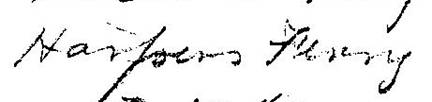 |
||
From the Lost Order (another example)  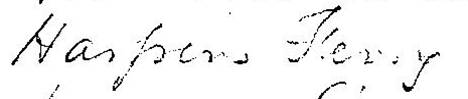 |
||
From Venable’s letter to McLaws: 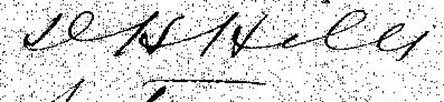 From the Lost Order (Hagerstown) 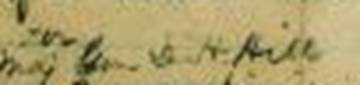 |
||
From Venable’s letter to McLaws:
From Venable’s letter to McLaws:
From the Lost Order:
|
||
A comparison of Venable’s authenicated handwriting (His letter to McLaws) with the Lost Order reveals distinct differences in style of writing and letter formation. The most obvious difference is the way Venable’s writing appears elongated, spread out, while the writing of the Lost Order appears compacted. However, the issue is for the viewer to decide.
Assuming that at least a two thirds majority of viewers agree that Venable’s handwriting is not a probable match for that of the Lost Order, the analysis must turn to the issue of whether JEB Stuart, or General Lee, is the writer of the Lost Order.
From Stuart’s 1864 field note to Lee (“cross at
From the Lost Order:
From Stuart’s 1864 field notes:
|
||
From the Lost Order:
From the Lost Order:
From The Lost Order:
From Stuart’s 1864 field notes:
Another example:
From the Lost Order (road)
Another example:
Another exampe:
Stuart’s 1864 field notes:
Another example:
|
||
The comparison seems to rule Stuart out as the writer of the Lost Order, but the call is with the viewer.
With Stuart eliminated from the case, General Lee’s
handwriting becomes the focus of the analysis. On or about
Several versions of his accident are given by writers,
including Walter Taylor and A.L. Long. In substance, the story is that, pn
Obviously, in the trial of the case, the issue of whether Lee’s injury incapacitated him from writing with a pencil may be proven by demonstrating that, in fact, Lee wrote the Lost Order.
The word “conspiracy” does not reasonably apply to the
process whereby Lee and Jackson engaged in planning battles. If Lee designed
the Lost Order as a ruse of war, he would naturally want to restrict knowledge
of that fact to his closest and most trusted confidant, Stonewall Jackson. In
the event the resulting battle went badly for the rebel side, General Lee’s
army severely beaten and driven back by McClellan, perhaps destroyed, Lee would
certainly not want it known by anyone not absolutely necessary to the ruse’s
execution, that he had designed the ploy as the means to gain an extra day or
two for Stonewall to capture Harper’s Ferry. Therefore, in the absence of evidence showing someone among his staff
wrote the Lost Order, it is not
unreasonable to expect that Lee wrote it himself, perhaps as the first draft.
If Lee wrote the Lost Order, those in his confidence would
have been limited to Jackson and the civilian who planted it, probably
|
||
Who wrote the Lost Order, General Lee? |
||
Collected by Joseph Ryan Lee's Ruse of War: Special Order 191
|
||||||||