|
|
|
Born Ruza Wenclawska in Poland, Rose Winslow was brought to the United States as an infant with her immigrant parents. Winslow's father worked as a coal miner and steelworker in Pennsylvania. She began working as a mill girl in the hosiery industry in Pittsburgh at age 11 and was also employed as a shop girl in Philadelphia, but was forced to quit work temporarily at age 19 when she contracted tuberculosis, leaving her disabled for the next two years. Winslow became a factory inspector and a trade union organizer in Winslow's NWP activism is emblematic of the somewhat uneasy role of working-class women and labor rights advocates in the suffrage movement, as well as the NWP's stated�but imperfectly realized�desire to reach out to women across the social spectrum. Winslow differed with Alice Paul over the former's desire for outreach to male miners and factory workers and whether the NWP program was too focused on upper- and middle-class women. Winslow brought her speaking and organizing powers first to the Congressional Union for Woman Suffrage (CU) and then to the NWP by addressing gatherings on the streets, in union halls, and at suffrage rallies. In February 1914 she and Doris Stevens spoke at a mass meeting for working women, after which a contingent of working women marched to the White House to meet with Woodrow Wilson on suffrage rights. That same year, Winslow joined Lucy Burns as leaders of the CU campaign in California to urge voters to oppose Democratic congressional candidates. Later, she worked similarly with other organizers in Wyoming during the electoral campaigns of 1916. Winslow, like Inez Milholland and many of the other speakers sent out by Alice Paul on extensive speaking tours, displayed great energy at the podium or on the platform, but suffered privately from periodic collapse and exhaustion. Paul became irritated with Winslow when she became incapacitated, despite her history of ill-health. Demonstrating persistency and endurance was, after all, part of the NWP strategy. Winslow was a leading demonstrator on the picket lines in the 1917 silent protests at the White House in Washington, D. C. She subsequently served time in the District jail and the Occoquan Workhouse. In October 1917 Winslow and Alice Paul combined forces to set examples by refusing to eat or do work while they were imprisoned. Their actions demonstrated that they were political prisoners who refused to be classified and treated as criminals by the courts for exercising their First Amendment right to public assembly. Weakened by their hunger strike, Winslow and Paul were subjected to force-feedings. Their determination helped inspire other suffragists to perform acts of civil disobedience�defying court authority to convict them on false charges and placing even more pressure on the Wilson White House to accede to suffrage demands. |
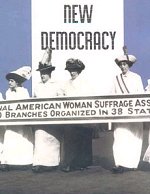 Woman Suffrage and the New Democracy The woman suffrage movement achieved its goal by forging a highly organized and centrally controlled interest group, the National American Woman Suffrage Association (NAWSA), one of the most effective single-issue pressure groups in the United States |
Women of the American Suffrage Movement
Womens Suffrage Timeline
American Civil War Women
Womens Civil War Reading Titles
American Civil War Recipes
Civil War Exhibits
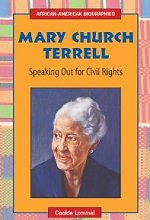 Mary Church Terrell Speaking Out for Civil Rights Grade 4-7-This biography of the civil rights activist tells of a strong woman who overcame great obstacles throughout her life in order to meet her goals. Although her father was the son of a white master, he was not able to gain his freedom until after the Emancipation Proclamation |
 From Equal Suffrage to Equal Rights: Alice Paul and the National Woman's Party, 1910-1928 The woman's movements and work in American history was dramatic. It dealt with the past, with pageants and politics; with organizations and with conflict from within |
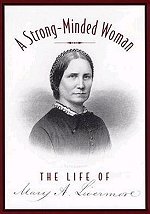 A Strong-minded Woman The Life of Mary Livermore A leading figure in the struggle for woman's rights as well as in the temperance movement, she was as widely recognized during her lifetime as Susan B. Anthony, and for a time the most popular and highly paid female orator in the country |
Kindle Available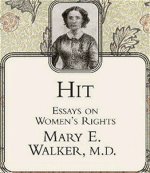 Hit: Essays on Women's Rights by Mary Edwards, M.D. Walker The only woman to receive the Congressional Medal of Honor for her service during the Civil War, Dr. Mary E. Walker (1832-1919) was a surgeon, a public lecturer, and an outspoken champion of women's rights. One of the first women in the country to be awarded a medical degree, she served as an assistant surgeon for the Fifty-second Ohio Infantry |
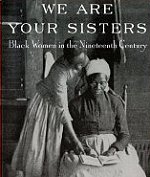 We Are Your Sisters: Black Women in the Nineteenth Century A remarkable documentary and the first in-depth record of many black women, slave and free."--Dorothy B. Porter, curator emeritus, Moorland-Spingarn Research Center, Howard University |
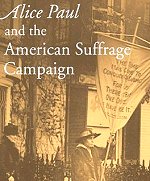 Alice Paul and the American Suffrage Campaign An analysis of Paul's nonviolent and visual rhetorical strategies, Alice Paul and the American Suffrage Campaign narrates the remarkable story of the first person to picket the White House, the first to attempt a national political boycott, the first to burn the president in effigy, and the first to lead a successful campaign of nonviolence |
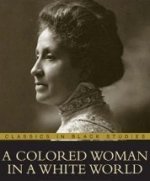 A Colored Woman In A White World In this autobiography, originally published in 1940, Terrell describes the important events and people in her life. With a new introduction by Debra Newman Ham, professor of history at Morgan State University, this new edition of Mary Church Terrell's autobiography will be of interest to students and scholars of both women's studies and African American history. |
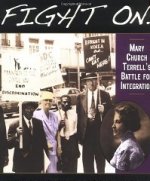 Fight On!: Mary Church Terrell's Battle for Integration The acclaimed civil rights leader Mary Church Terrell (1863–1954) is brought vividly to life in this well researched and compelling biography. The daughter of an ex-slave, Terrell was considered the best-educated black woman of her time. She was the first African American member of the Washington, D.C., Board of Education |
Kindle Available The Grimke Sisters from South Carolina: Pioneers for Women's Rights and Abolition A landmark work of women's history originally published in 1967, Gerda Lerner's best-selling biography of Sarah and Angelina Grimke explores the lives and ideas of the only southern women to become antislavery agents in the North and pioneers for women's rights. This revised and expanded edition includes two new primary documents and an additional essay by Lerner. In a revised introduction Lerner reinterprets her own work nearly forty years later and gives new recognition to the major significance of Sarah Grimke's feminist writings |
Kindle Available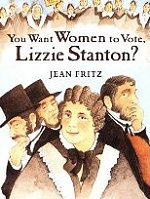 You Want Women to Vote, Lizzie Stanton? Grade 3-6. Fritz applies her gift for creating engaging, thorough historical literature to a larger-than-life historical figure. Stanton was a radical among radicals, and this objective depiction of her life and times, as well as her work for women's rights, makes readers feel invested in her struggle. An appealing, full-page black-and-white drawing illustrates each chapter. For students who need a biography, this title should fly off the shelves with a minimum of booktalking. And it is so lively that it is equally suitable for leisure reading.? |
 Recollections of 92 Years, 1824-1916 When the indomitable Meriwether was banned from her home by Union soldiers because her husband was a Confederate officer, she spent the next two years bartering for food and shelter for herself and her three young sons. After the war, Meriwether embarked on a decades-long career as an author and advocate for the equality of women, keeping up the crusade until her death in 1916--the year congressional support for women's suffrage emerged. |
Sources:
U.S. Library of Congress
Federal Citizen

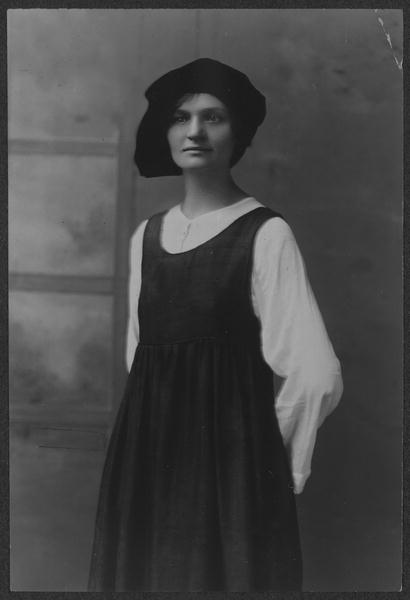 New York City with the National Consumers' League and the National Women's Trade Union League. In addition to her labor and suffrage activism, she was an actress and poet.