|
|
|
Confederate Civil War Song LyricsI Wish I Was In Dixie
|
 The Civil War Songbook This collection of "War Between the States" music has been the standard one in the re-enacting circuit for many years now. The sheet music is published just as it was originally and it contains some of the best known classic songs. Civil War Music CDs Civil War MP3 Listen Download and Copy Just Before The Battle When Johnny Comes Marching Home Stonewall Jackson's Way I Wish I Was In Dixie Good Ol' Rebel |
Civil War Music History
American Civil War Exhibits
Women in the Civil War
Ships and Naval Battles
Civil War Picture Album
Recipes of the Civil War
| Songs of the Civil War Tennessee Ernie Ford
|
Civil War Classics
|
Folk Songs of the Civil War
|
 Unconditional Surrender U. S. Grant and the Civil War This is the best juvenile biography on Ulysses S. Grant by a wide margin. Marrin has done an excellent job in introducing Grant to a young audience. I highly recommend it. |
 Weapons and Strategies of the Civil War For grades 3-6 which packs 48 pages with color photos and 30 links providing quality Internet sites for more research. Chapter notes, a bibliography and an index round out information and assure not just accuracy, but constant updates to research information. |
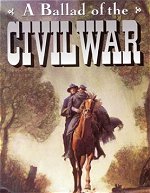 A Ballad of the Civil War A wonderful chapter book for children that should help them to appreciate the fact that some people could not defend a person's right to own other people and to understand that sad era that ended in the "brothers' war." It has four chapters with a prologue and a closing author's note. The conversations that Tom has with the household slave "Uncle Roger" provide some unique insight into the dilemma that slaves faced in the antebellum South |
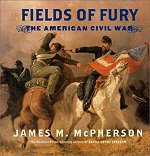 Fields of Fury The American Civil War Written for young readers a stirring account of the greatest conflict to happen on our nation's soil, the Civil War, bringing to life the tragic struggle that divided not only a nation, but also friends and family. well-organized, well-executed, kid-friendly history of the Civil War was a brilliant idea if there ever was one. It's difficult to imagine anyone doing a better job than McPherson at breaking down this complex, interrelated series of events. |
 History Channel Civil War Secret Missions There are about a half-dozen different small arms types, but the Henry is the best for rapid repeating fire and least reloading. The shotgun they give you is useless: you must aim spot-on to affect an enemy, so why not just use the rifle? Grenades are useful at times. |
 Wargame Construction Age of Rifles 1846 - 1905 Game lets you design and play turn-based strategic battles. You can create scenarios betwen years 1846 and 1905. You have complete control over all the units, and can customize their firepower, movement points, strength, aggressiveness, etc. Supports 1 or 2 players |
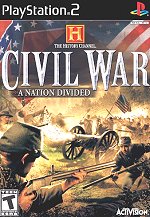 History Channel Civil War A Nation Divided Rally the troops and organize a counterattack -- Your strategic decision and talent as a commander will decide if the Union is preserved or if Dixie wins its independence |
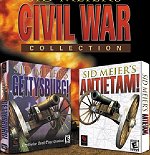 Sid Meier's Civil War Collection Take command of either Confederate or Union troops and command them to attack from the trees, rally around the general, or do any number of other realistic military actions. The AI reacts to your commands as if it was a real Civil War general, and offers infinite replayability. The random-scenario generator provides endless variations on the battles |
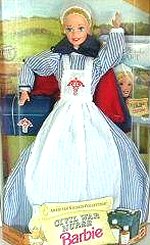 Civil War Nurse Barbie Part of the American Stories Collection. |
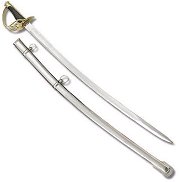 Cavalry Saber This fine replica is 39 inches overall and features a highly polished 33 inch carbon steel blade. Its leather wrapped handle fits the hand perfectly and sports decorative brass accents and a shiny brass pommel. |
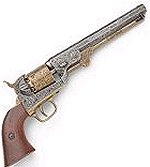 Civil War Model 1851 Naval Pistol Engraved Silver Tone / Gold Tone Finish and Wooden Grips - Replica of Revolver Used by Both USA / Union and CSA / Confederate Forces |
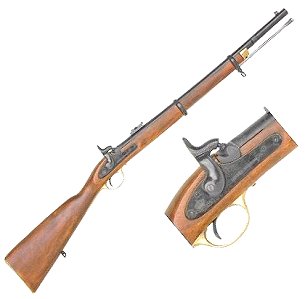 1860 Enfield Civil War Musketoon This piece is a full-size non-firing reproduction of the rifle used in the Civil War. The body is made of European hardwood |
Source:
National Park Service
Gettysburg National Military Park