
USS Bainbridge
Civil War Union Naval Ship
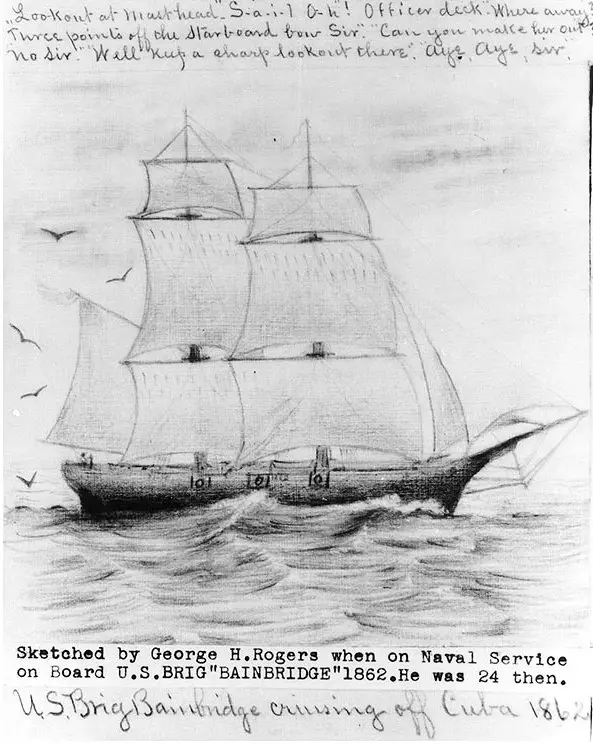
USS Bainbridge (1842-1863)USS Bainbridge , a 259-ton brig built at the Boston Navy Yard, was commissioned in December 1842. She operated with the Home Squadron until mid-1844 and then alternated in service with the Brazil and African Squadrons until 1860. In 1859-60 Bainbridge participated in the punitive expedition against Paraguay. In May 1861, soon after the Civil War began, Bainbridge was sent to the Gulf of Mexico to enforce the blockade of the Confederacy and to protect United States shipping. While in that area in May and June 1862, she participated in the capture of three blockade runners. Following a brief trip north, Bainbridge returned to the Gulf area in August 1862. She encountered a damaging storm at Aspinwall, Columbia (later Panama) in late November 1862 that forced her to jettison much of her equipment, armament and supplies. Repaired at New York in May-August 1863, USS Bainbridge was en route south on 21 August 1863 when she capsized off Cape Hatteras. Only one of her crewmen survived this disaster. USS Bainbridge was named in honor of Commodore William Bainbridge (1774-1833), one of the leading figures of the early 19th Century U.S. Navy. Sketch by George H. Rogers, depicting Bainbridge cruising off Cuba in 1862, when the artist served on board her. |
 War, Technology, and Experience aboard the USS Monitor The experience of the men aboard the Monitor and their reactions to the thrills and dangers that accompanied the new machine. The invention surrounded men with iron and threatened their heroism, their self-image as warriors, even their lives Kindle Available  Naval Strategies of the Civil War: Confederate Innovations and Federal Opportunism Compare and contrast the strategies of the Southern Secretary of the Navy, Mallory, against his rival in the North, Welles. Mallory used technological innovation and the skill of individuals to bolster the South's seapower against the Union Navy's superior numbers |


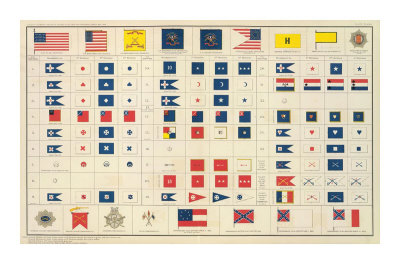 Civil War: Flags, Badges, c.1895 40 in. x 26 in. Buy at AllPosters.com Framed |
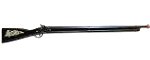 Civil War Musket Wood & Steel Frontier Rifle Designed After The Original Rifle 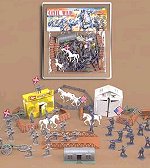 72 Piece Civil War Army Men Play Set 52mm Union and Confederate Figures, Bridge, Horses, Canon
| Civil War Ships and Battles Civil War Submarines RAM Ships Civil War Naval Timeline American Civil War Exhibits State Battle Maps Civil War Summary Civil War Timeline Women in the Civil War Battles by Campaign |
 History Channel Civil War Secret Missions There are about a half-dozen different small arms types, but the Henry is the best for rapid repeating fire and least reloading. The shotgun they give you is useless: you must aim spot-on to affect an enemy, so why not just use the rifle? Grenades are useful at times. 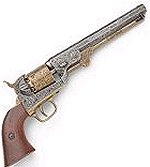 Civil War Model 1851 Naval Pistol |
Kindle Available The H. L. Hunley The Secret Hope of the Confederacy On the evening of February 17, 1864, the Confederacy H. L. Hunley sank the USS Housatonic and became the first submarine in world history to sink an enemy ship. Not until World War I "half a century later” would a submarine again accomplish such a feat. But also perishing that moonlit night, vanishing beneath the cold Atlantic waters off Charleston, South Carolina, was the Hunley and her entire crew of eight |
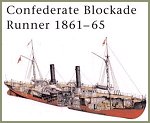 Confederate Blockade Runner 1861-65 The blockade runners of the Civil War usually began life as regular fast steam-powered merchant ships. They were adapted for the high-speed dashes through the Union blockade which closed off all the major Southern ports, and for much of the war they brought much-needed food, clothing and weaponry to the Confederacy |
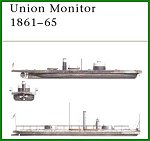 Union Monitor 1861-65 The first seagoing ironclad was the USS Monitor, and its profile has made it one of the most easily recognised warships of all time. Following her inconclusive battle with the Confederate ironclad Virginia on March 9, 1862, the production of Union monitors was accelerated. By the end of the year a powerful squadron of monitor vessels protected the blockading squadrons off the Southern coastline, and were able to challenge Confederate control of her ports and estuaries |
 Confederate Submarines and Torpedo Vessels 1861-65 Interesting information and many excellent illustrations. It addresses the CSA David class torpedo boats and the Hunley (and its predecessors), as well as Union examples such as the Alligator and the Spuyten Duyvil |
 Halls of Honor The U.S. Navy Museum takes you on an informed and entertaining romp through one of North America s oldest and finest military museums. The museum has been in continuous operation at the Washington Navy Yard since the American Civil War |
 Raise The Alabama She was known as "the ghost ship." During the Civil War, the CSS Alabama sailed over 75,000 miles and captured more than 60 Union vessels. But her career came to an end in June of 1864 when she was sunk by the USS Kearsarge off the coast of Northern France |
 The Civil War - A Film by Ken Burns Here is the saga of celebrated generals and ordinary soldiers, a heroic and transcendent president and a country that had to divide itself in two in order to become one |
 Civil War Journal The Conflict Begins These four programs from the History Channel series Civil War Journal cover critical aspects of the early days of the war. |
Sources:
U.S. National Park Service
U.S. Library of Congress
US Naval Archives
