
CSS Queen of the West
Civil War Confederate Naval Ship
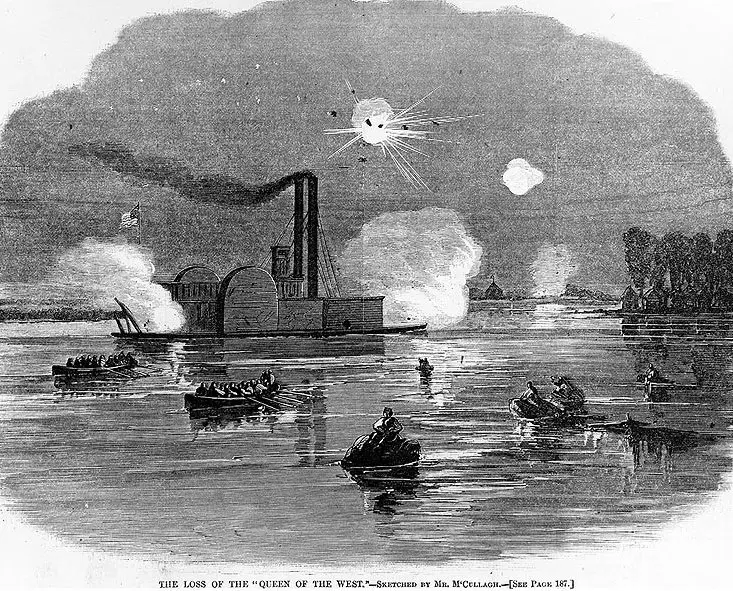
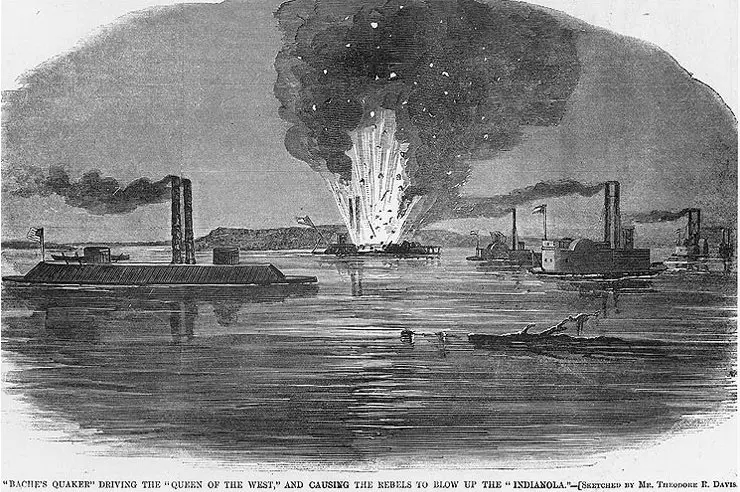
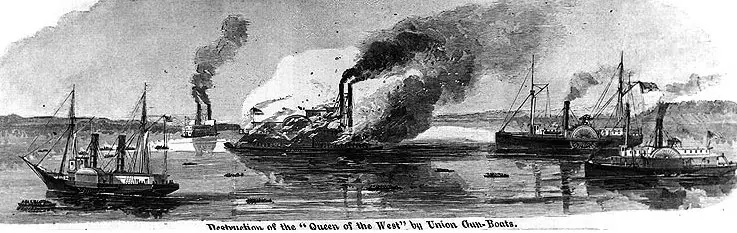
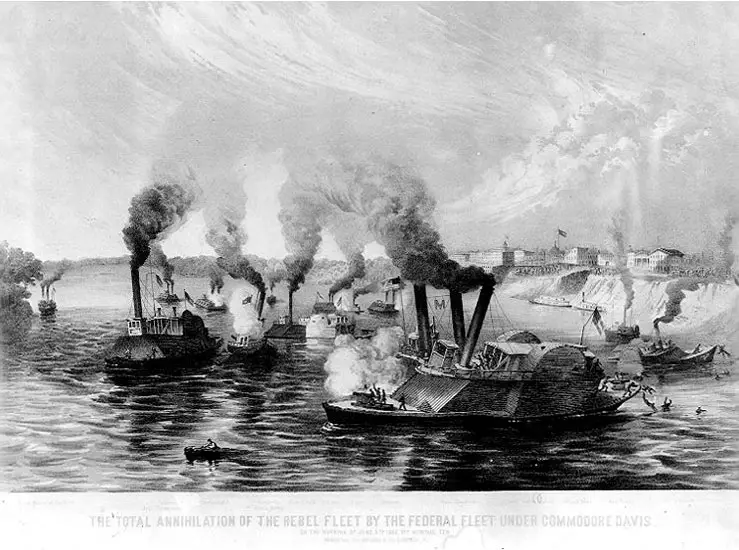
C.S. Ram Queen of the West (1863-1863)On 14 February 1863, the U.S. Ram Queen of the West was sunk off Fort de Russy, on the Red River, Louisiana. Raised and repaired, she was quickly placed in service by the Confederate Army under her old name. On 24 February 1862, she joined CSS Webb in forcing aground and capturing the Federal ironclad USS Indianola near the mouth of the Red River. Queen of the West was later sent to the Atchafalaya River area of Louisiana. On 14 April 1863, while in Grand Lake, she was attacked by three U.S. Navy gunboats. Hit by a shell fired at long range, Queen of the West was set afire and destroyed. U.S. Ram Queen of the West (1862-1863)Queen of the West , a 406-ton side-wheel towboat built at Cincinnati, Ohio, in 1854, was converted to a ram in 1862 for Colonel Charles Ellet's U.S. Ram Fleet. As Ellet's flagship, she played a prominent role in the 6 June 1862 Battle of Memphis, which largely cleared the Mississippi of Confederate naval forces. On 15 and 22 June, Queen of the West twice engaged the ironclad CSS Arkansas . During the rest of 1862 and into 1863, she was involved in operations around Vicksburg, Mississippi, including an expedition up the Yazoo river in November and December. On 2 February 1863, under the command of Colonel Charles Rivers Ellet , Queen of the West attacked the Confederate steamer City of Vicksburg under the guns of the Vicksburg fortress. Though damaged, she then moved down the river. For nearly two weeks, she operated independently on the Mississippi and its tributaries, where she captured four Confederate steamers. On 14 February, while seeking another prize on the Black River, Queen of the West ran aground near an enemy shore battery and was captured. Repaired, she became the Confederate warship Queen of the West . The Loss of the Queen of the West |
 Duel on the Roanoke - The True Story of the CSS Albemarle A 158-foot Confederate ironclad ship built in a cornfield 90 miles up North Carolina's Roanoke River, under the direction of an 18-year-old boy, and the deadly cat-and-mouse game between the two opposing captains. Kindle Available  Wolf of the Deep: Raphael Semmes and the Notorious Confederate Raider CSS Alabama In July 1862, the Confederate captain Raphael Semmes received orders to report to Liverpool, where he would take command of a secret new British-built steam warship.  Confederate Ironclad 1861-65 Every aspect of Confederate ironclads is covered: design, construction, armor, armament, life on board, strategy, tactics, and actual combat actions. |


|
|
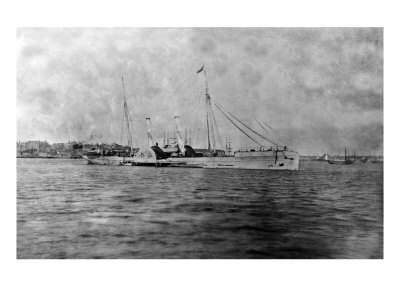 Fort Monroe, VA, Blockade Runner Teaser, Civil War 24 in. x 18 in. Buy at AllPosters.com Framed Mounted |
 Blockaders, Refugees, and Contrabands: Civil War on Florida'S Gulf Coast, 1861-1865 Coastal Florida had a refugee crisis as the war progressed. Escaped slaves ("contrabands") sought out the blockaders. Some joined the U.S. Navy. White men and their families sought to avoid conscription or vengeful neighbors/regulators and eventually sought refuge with the blockaders Kindle Available  Confederate Ironclad vs Union Ironclad: Hampton Roads 1862 The Ironclad was a revolutionary weapon of war. Although iron was used for protection in the Far East during the 16th century, it was the 19th century and the American Civil War that heralded the first modern armored self-propelled warships.  War, Technology, and Experience aboard the USS Monitor The experience of the men aboard the Monitor and their reactions to the thrills and dangers that accompanied the new machine. The invention surrounded men with iron and threatened their heroism, their self-image as warriors, even their lives |
Bache's Quaker' Driving the Queen of the West, and Causing the Rebels to Blow Up the 'Indianola Destruction of the Queen of the West by Union Gun-Boats "The Total Annihilation of the Rebel Fleet by the Federal Fleet under Commodore Davis." |
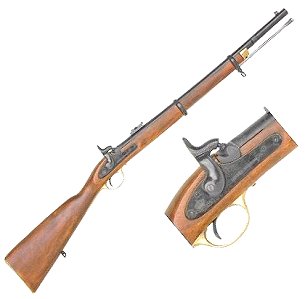 1860 Enfield Civil War Musketoon This piece is a full-size non-firing reproduction of the rifle used in the Civil War. The body is made of European hardwood 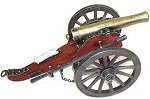 Civil War Cannon Collectible Models and childrens playsets Miniature Collectible Civil War Cannon12 pound Civil War field cannon replica weapon |
Civil War Ships and Battles Civil War Submarines RAM Ships Civil War Naval Timeline American Civil War Exhibits State Battle Maps Civil War Summary Civil War Timeline Women in the Civil War Battles by Campaign |
 Sid Meier's Civil War Collection Take command of either Confederate or Union troops and command them to attack from the trees, rally around the general, or do any number of other realistic military actions.  History Channel Civil War A Nation Divided Rally the troops and organize a counterattack -- Your strategic decision and talent as a commander will decide if the Union is preserved or if Dixie wins its independence |
Kindle Available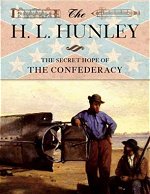 The H. L. Hunley The Secret Hope of the Confederacy On the evening of February 17, 1864, the Confederacy H. L. Hunley sank the USS Housatonic and became the first submarine in world history to sink an enemy ship. Not until World War I "half a century later” would a submarine again accomplish such a feat. But also perishing that moonlit night, vanishing beneath the cold Atlantic waters off Charleston, South Carolina, was the Hunley and her entire crew of eight |
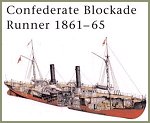 Confederate Blockade Runner 1861-65 The blockade runners of the Civil War usually began life as regular fast steam-powered merchant ships. They were adapted for the high-speed dashes through the Union blockade which closed off all the major Southern ports, and for much of the war they brought much-needed food, clothing and weaponry to the Confederacy |
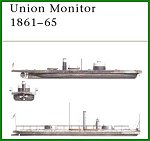 Union Monitor 1861-65 The first seagoing ironclad was the USS Monitor, and its profile has made it one of the most easily recognised warships of all time. Following her inconclusive battle with the Confederate ironclad Virginia on March 9, 1862, the production of Union monitors was accelerated. By the end of the year a powerful squadron of monitor vessels protected the blockading squadrons off the Southern coastline, and were able to challenge Confederate control of her ports and estuaries |
 Confederate Submarines and Torpedo Vessels 1861-65 Interesting information and many excellent illustrations. It addresses the CSA David class torpedo boats and the Hunley (and its predecessors), as well as Union examples such as the Alligator and the Spuyten Duyvil |
 Halls of Honor The U.S. Navy Museum takes you on an informed and entertaining romp through one of North America s oldest and finest military museums. The museum has been in continuous operation at the Washington Navy Yard since the American Civil War |
 Raise The Alabama She was known as "the ghost ship." During the Civil War, the CSS Alabama sailed over 75,000 miles and captured more than 60 Union vessels. But her career came to an end in June of 1864 when she was sunk by the USS Kearsarge off the coast of Northern France |
 The Civil War - A Film by Ken Burns Here is the saga of celebrated generals and ordinary soldiers, a heroic and transcendent president and a country that had to divide itself in two in order to become one |
 Civil War Journal The Conflict Begins These four programs from the History Channel series Civil War Journal cover critical aspects of the early days of the war. |
American Military Gear Recruiter and History
United States Marines gear history and support of Semper Fi Fund
Sources:
U.S. National Park Service
U.S. Library of Congress
US Naval Archives
