
CSS Florida
Civil War Confederate Naval Ship
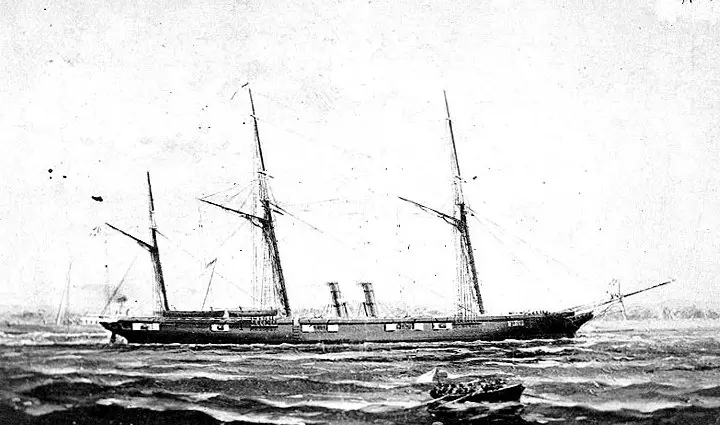
CSS Florida (1862-1864)CSS Florida , a steam screw cruiser of about 700 tons, was built in England in 1862 under the name Oreto . Secretly purchased by the Confederate States Navy, she sailed in March 1862 for the Bahamas in the guise of a merchant ship. After her arrival, she was fitted as a naval vessel and commissioned in August 1862, commanded by First Lieutenant John Newland Maffitt . With her crew largely disabled by yellow fever, Florida went to Cuba and, on 4 September 1862, ran the Federal blockade into Mobile, Alabama. After completing her outfitting, Maffitt took his ship back out through the blockade on 16 January 1863. Operating in the Atlantic and West Indies over the next eight months, Florida captured twenty-two prizes, striking terror in the United States' merchant marine and frustrating the U.S. Navy's efforts to catch her. In August 1863, she went to Brest, France, remaining there until the following February, when she again got to sea past watching Federal forces. Under the command of First Lieutenant Charles M. Morris , Florida took another eleven prizes between then and October 1864, when she arrived at Bahia, Brazil. While anchored in that port on 7 October, Florida was attacked, captured and towed to sea by USS Wachusett , in violation of Brazilian neutrality. After being taken to the U.S., her return to Brazil was ordered by the courts. However, before this could be done, on 28 November 1864 Florida was accidently sunk off Newport News, Virginia. Report of Commander Napoleon Collins, U.S. Navy, commanding U.S.S. Wachusett , of the seizure by that vessel of C.S.S. Florida
SIR: At 3 o'clock on the morning of the 7th day of October instant we slipped our cable and steered for the Florida , about five-eighths of a mile distant. An unforseen circumstance prevented us from striking her as intended. We, however, struck her on the starboard quarter, cutting down her bulwarks and carrying away her mizzenmast and main yard. This ship was not injured. Immediately upon striking we backed off, believing she would sink from the effects of the blow. In the absence of Captain Morris, who was on shore, Lieutenant Thomas K. Porter, formerly of the U.S. Navy, came on board and surrendered the Florida with fifty-eight men and twelve officers, making at the same time an oral protest against the capture. Five of the Florida 's officers, including her commander and the remainder of her crew, were on shore. In contemplating the attack on the Florida in the bay I thought it probable the Brazilian authorities would forbear to interfere, as they had done at Fernando de Noronha when the rebel steamer Alabama was permitted to take into the anchorage three American ships, and to take coal from the Cora [ Louisa ] Hatch within musket shot of the fort, and afterwards, within easy range of their guns, to set on fire those unarmed vessels. I regret, however, to state that they fired three shotted guns at us while we were towing the Florida out. Fortunately, we received no damage. After daylight a Brazilian sloop of war, in tow of a paddle gunboat, was discovered following us. With the aid of sail on both vessels we gradually increased our distance from them. I enclose the list of the prisoners. Those who have a star opposite their names were formerly in the U.S. Navy. I am, sir, very respectfully, your obedient servant,
Hon. GIDEON WELLES, 19th Century photograph of an artwork depicting the ship at St. George's, Bermuda, 1863. |
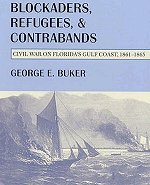 Blockaders, Refugees, and Contrabands: Civil War on Florida'S Gulf Coast, 1861-1865 Coastal Florida had a refugee crisis as the war progressed. Escaped slaves ("contrabands") sought out the blockaders. Some joined the U.S. Navy. White men and their families sought to avoid conscription or vengeful neighbors/regulators and eventually sought refuge with the blockaders 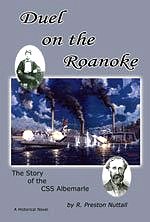 Duel on the Roanoke - The True Story of the CSS Albemarle A 158-foot Confederate ironclad ship built in a cornfield 90 miles up North Carolina's Roanoke River, under the direction of an 18-year-old boy, and the deadly cat-and-mouse game between the two opposing captains.. Kindle Available  Wolf of the Deep: Raphael Semmes and the Notorious Confederate Raider CSS Alabama In July 1862, the Confederate captain Raphael Semmes received orders to report to Liverpool, where he would take command of a secret new British-built steam warship. 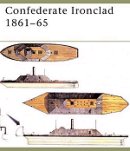 Confederate Ironclad 1861-65 Every aspect of Confederate ironclads is covered: design, construction, armor, armament, life on board, strategy, tactics, and actual combat actions. |


|
|
 Civil War: Flags, Badges, c.1895 40 in. x 26 in. Buy at AllPosters.com Framed |
 Monitor 21" Civil War Ship Wood Model Fully Assembled
|
 1860 Enfield Civil War Musketoon This piece is a full-size non-firing reproduction of the rifle used in the Civil War. The body is made of European hardwood 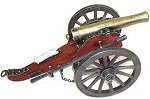 Civil War Cannon Collectible Models and childrens playsets Miniature Collectible Civil War Cannon12 pound Civil War field cannon replica weapon |
Civil War Ships and Battles Civil War Submarines RAM Ships Civil War Naval Timeline American Civil War Exhibits State Battle Maps Civil War Summary Civil War Timeline Women in the Civil War Battles by Campaign |
 Sid Meier's Civil War Collection Take command of either Confederate or Union troops and command them to attack from the trees, rally around the general, or do any number of other realistic military actions.  History Channel Civil War A Nation Divided Rally the troops and organize a counterattack -- Your strategic decision and talent as a commander will decide if the Union is preserved or if Dixie wins its independence |
 Life in Mr. Lincoln's Navy A tantalizing glimpse into the hardships endured by the naval leadership to build and recruit a fighting force. The seaman endured periods of boredom, punctuated by happy social times and terrifying bouts of battle horror |
Kindle Available Glory in the Name: A Novel of the Confederate Navy From Norfolk to Hampton Roads, from Roanoke Island to the nighttime battle on the river below New Orleans, Glory in the Name tells the story of the Confederate States Navy, and the brave men who carried forward against overwhelming odds |
 Ironclad Down: USS Merrimack-CSS Virginia from Design to Destruction A treasure trove of detailed information about one of history s most famous vessels. Describing Stephen Russell Mallory, John Mercer Brooke, John Luke Porter, et al.--who conceived, designed and built one of the world's first ironclads |
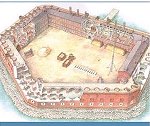 American Civil War Fortifications Coastal Brick and Stone Forts The design, construction and operational history of fortifications, such as Fort Sumter, Fort Morgan and Fort Pulaski. Stone and brick forts stretched from New England to the Florida Keys, and as far as the Mississippi River. A handful of key sites remained in Union hands throughout the war, the remainder had to be won back through bombardment or assault. |
American Military Gear Recruiter and History
United States Marines gear history and support of Semper Fi Fund
Sources:
U.S. National Park Service
U.S. Library of Congress
US Naval Archives
