Tainted Breeze: The Great Hanging at Gainesville, Texas, 1862
October 1, 1862, state militia arrested more than two hundred Unionists from five northern counties . At least forty-four prisoners were hanged, others were lynched in neighboring communities

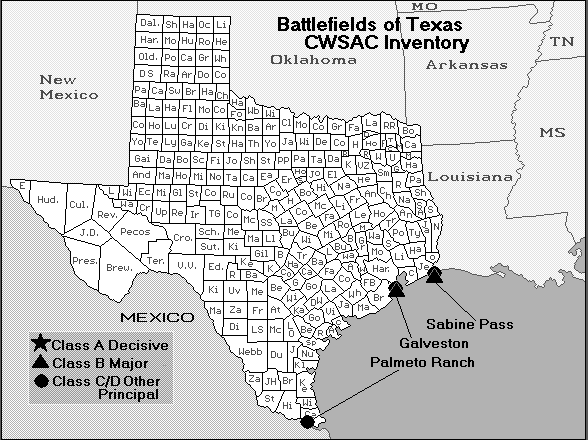
Texas Civil War Map of Battles

Texas American Civil War Map of Battles

The Finishing Stroke:
Texans in the 1864 Tennessee Campaign

Luckily for the North, there weren't more Texans or else the contest would have ended differently.

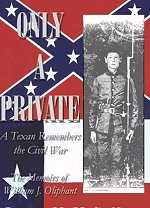
Only a Private: A Texan Remembers the Civil War : The Memoirs of William J. Oliphant
A first-hand account of the common soldier's point of view. No colonel or general, William Oliphant was, "only a private." His perspective provides a window into Texas during the first days of the Civil War, and first-hand descriptions of battles
September 24-25, 1862 Sabine Pass

October 4, 1862 Galveston

January 1, 1863 Galveston

September 8, 1863 Sabine Pass II

May 12-13, 1865 Palmito Ranch / Palmito Hill

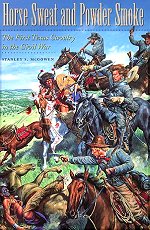
Horse Sweat and Powder Smoke: The First Texas Cavalry in the Civil War
Regimental history from the time the regiment was raised by Colonel McCulloch to defend against indian warriors tor the time the regiment was part of the Confederate Army under the Colonels Buchel and Yager until the end of the Civil War

Selected Texas History Book Club Reading Books

Texans in the Confederate Cavalry
Often outnumbered Texas Cavalry, through Bravado or sheer madness, frequently helped turn the tide of battle. From Colonel Parsons' assault on the Federal Navy during the Red River Campaign of 1864 to Terry's Texas Rangers with General Wheeler's horsemen badgering Sherman on his "March to the Sea,"

Sabine Pass: The Confederacy's Thermopylae
Confederate president Jefferson Davis made the claim: "That battle at Sabine Pass was more remarkable than the battle at Thermopylae." Sabine Pass was the site of one of the most decisive Civil War battles

Horse Sweat and Powder Smoke: The First Texas Cavalry in the Civil War
Regimental history from the time the regiment was raised by Colonel McCulloch to defend against indian warriors tor the time the regiment was part of the Confederate Army under the Colonels Buchel and Yager until the end of the Civil War

A Rebel Wife in Texas: The Diary and Letters of Elizabeth Scott Neblett, 1852-1864
Elizabeth Neblett's observations on slave and class relations, regional politics, lynching, farm management, medical practices, mental illness, and the Civil War in Texas.

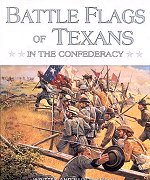
Battle Flags of Texans in the Confederacy
Excellent Confederate Flag information resource

Jefferson Davis: Unconquerable Heart
Shades of Blue and Gray

No scholar can fail to appreciate Allen's exhaustive research,, nor any layman fail to be amazed at her mass of fact and significant detail

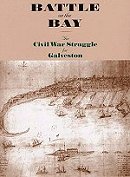
Battle on the Bay:
The Civil War Struggle for Galveston

Civil War history of Galveston is one of the last untold stories from America's bloodiest war, despite the fact that Galveston was a focal point of hostilities throughout the conflict. Galveston emerged as one of the Confederacy's only lifelines to the outside world.

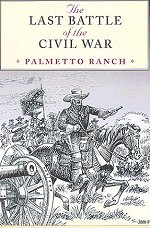
The Last Battle of the Civil War: Palmetto Ranch
May 12-13, the last battle of the Civil War had been fought at the southernmost tip of Texas—resulting in a Confederate victory. Although Palmetto Ranch did nothing to change the war's outcome, it added the final irony to a conflict replete with ironies


Books
Civil War
Womens Subjects
Young Readers
Gettysburg
Colored Troops
Native Americans
Military History


Confederate Store
Civil War DVDs
Civil War VHS
Civil War Games
Civil War Music
Civil War Posters

Military Toys
Military Video Games
Military History DVDs
Military Magazines
US Military Gear

Civil War State Battle Maps
Campaigns of the Civil War
American Civil War Exhibits
American Civil War Timeline
Civil War Summary
Confederate President Jefferson Davis
Civil War Submarines
Top Civil War DVD Titles


Galveston Texas current weather city history and chamber of commerce hotel Bed and Breakfast camping


History Channel Presents The Civil War
From Harper's Ferry, Fort Sumter, and First Bull Run to Shiloh, Antietam, and Gettysburg. The most legendary Civil War battles in brilliant detail. A selection of the soldiers and legendary leaders.

The Last Days of the Civil War - April 1865: The Month That Saved America, Civil War Combat:
The Tragedy At Cold Harbor
The remarkable succession of events leading from the fall of Richmond to Appomattox.

The Last Days of the Civil War - Biography: Abraham Lincoln & Robert E. Lee, Civil War Journal: Jefferson Davis
In-depth profiles that series--illuminate the personalities at the heart of the conflict: Abraham Lincoln, Jefferson Davis, and Robert E. Lee

Civil War: A Concise History
The best collection of Civil War visuals ever assembled in one 75-minute program. A breathtaking and first-hand account of the war. Great DVD Bonuses

History Channel Presents Sherman's March
In November 1864, Sherman and an army of 60,000 troops began their month-long march from Atlanta to Savannah. Burning crops, destroying bridges and railroads, and laying waste to virtually everything in his path

Civil War Terror
Tales of hidden conspiracies of terror that specifically targeted the civilian populations. Engineers of chemical weapons, new-fangled explosives and biological warfare competed

The Civil War:
To the Finish: Sherman and the March to the Sea

After 3 years of battles, a Union general captured Atlanta and decided to change the course of the war for good. That general was William Tecumseh Sherman

Civil War Journal, West Point Classmates - Civil War Enemies, Robert E. Lee
Beyond the pages of history and into the personal stories behind the Great Conflict

In Search Of History - Quantrill's Raiders

Long Road Back to Kentucky:
The 1862 Confederate Invasion

The often-overlooked Western campaign of the war with a specific emphasis on Kentucky's involvement in the American Civil War.

History's Mysteries: Family Feud:
The Hatfields And McCoys

Millions of dollars worth of timber and coal rich land were at stake, the courts were involved and once the national press got wind of what was happening, the backwoods folk found that their fight was being followed nationwide

Conquest of America
After Columbus came conquest--from all corners of the world, explorers reached the shores of the New World to reap untold riches, seek new routes to the Far East, and gain the most elusive glory of all--a place in history


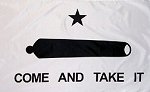
Texas State Flag
Texas Republic Flag 1836-1845
During nearly ten years of independence, the Texas republic endured epidemics, financial crises and still-volatile clashes with Mexico. But it was during this period that unique accents of the Texas heritage germinated. Texas became the birthplace of the American cowboy; Texas Rangers were the first to use Sam Colt's remarkable six-shooters; Sam Houston became an American ideal of rugged individualism. Texas joined the United States on December 29, 1845. The red, white and blue Texas state flag with its lone star (the same flag adopted by the republic in 1839) today flies virtually everywhere: on government buildings, schools, banks, shopping malls, and even on oil derricks.
In 1846, one star was added, representing Texas, bringing the total number of stars to 28. There were thirteen stripes representing the thirteen original colonies.
Texas in the Confederacy. 1861-1865 Sixteen years after Texas joined the union, the American Civil War erupted. Gov. Sam Houston, urging Texans to stay aloof or re-establish a neutral republic, was driven from office. Texas cast its lot with the doomed southerners, reaping devastation and economic collapse as did all Confederate states. But two events fixed Texas and Texans as somehow different in the nation's eyes. First, Texas troops on Texas soil won the final battle of the Civil War, not knowing the south had capitulated a month earlier. Second, returning Texans found a population explosion of wild Longhorns, sparking the great cattle-trail drives that became American legends. The first Confederate flag flown in Texas was the South's national emblem, "The Stars and Bars" of the Confederate States of America, although the later-crossed Confederate battle flag is better known today.
The first recorded use of the lone star flag dates to 1810. On September 11, 1810 a troop of West Florida dragoons set out for the provincial capitol at Baton Rouge under this flag. They were joined by other republican forces and captured Baton Rouge, imprisoned the Governor and on September 23, 1810 raised their Bonnie Blue flag over the Fort of Baton Rouge. Three days later the president of the West Florida Convention, signed a Declaration of Independence and the flag became the emblem of a new republic. By December 10, the flag of the United States replaced the Bonnie Blue after President Madison issued a proclamation declaring West Florida under the jurisdiction of the Governor of the Louisiana Territory. With this rebellion in mind, this flag was used by the Republic of Texas from 1836 to 1839. On January 9, 1861 the convention of the People of Mississippi adopted an Ordinance of Secession. With this announcement the Bonnie Blue flag was raised over the capitol building in Jackson. Harry Macarthy was so inspired that he wrote a song entitled "The Bonnie Blue Flag" which became the second most popular patriotic song of the Confederacy. The Confederate government did not adopt this flag but the people did and the lone star flags were adopted in some form in five of the southern States that adopted new flags in 1861.

Bonnie Blue
 

Used as a navy jack at sea from 1863 onward. This flag has become the generally recognized symbol of the South.


On May 1st,1863, a second design was adopted, placing the Battle Flag (also known as the "Southern Cross") as the canton on a white field. This flag was easily mistaken for a white flag of surrender especially when the air was calm and the flag hung limply.
More on the History of  Confederate Flags


Background Music "Yellow Rose of Texas" source http://home.att.net/~dmercado/music.htm

 
Web AmericanCivilWar.com
Volcano-Pictures.INFO

Sources:
U.S. National Park Service
U.S. Library of Congress.