|
|
|
|
 Mississippi's Civil War: A Narrative History A great treatment of wartime Mississippi that includes a lot of social and political material in addition to information on battles. It also includes a lot of great stories, from the dramatic resignation of Jefferson Davis from the U.S. Senate in 1861 to Ulysses S. Grant's drinking habits during the siege of Vicksburg |
Kindle Available Standard Catalog of Civil War Firearms Over 700 photographs and a rarity scale for each gun, this comprehensive guide to the thousands of weapons used by Billy Yank and Johnny Reb will be indispensable for historians and collectors. |
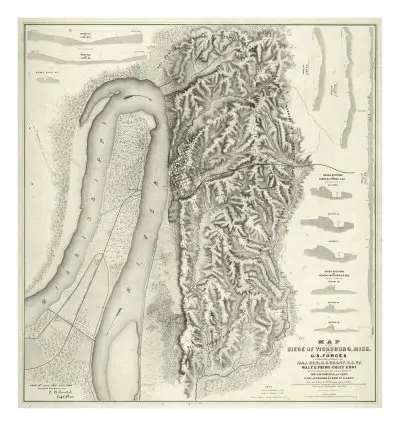 Civil War Map of The Siege of Vicksburg, Miss, c.1863 Giclee Print 45 in. x 48 in. $169.99 Buy at AllPosters.com Framed |
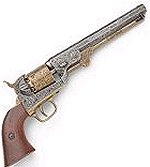 Civil War Model 1851 Naval Pistol 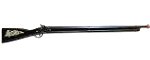 Civil War Musket Wood & Steel Frontier Rifle Designed After The Original Rifle |
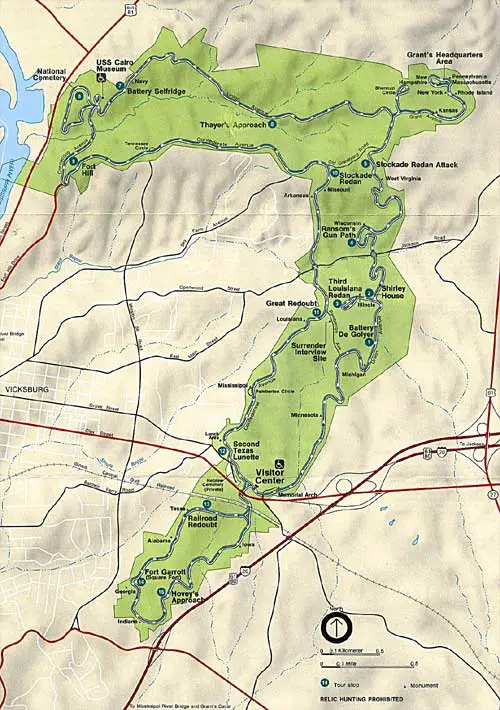
Vicksburg Mississippi Campaign Vicksburg Battle Map Mississippi State Battle Map State Battle Maps American Civil War Exhibits Civil War Timeline Women in the War Kids Zone Causes of the Civil War General Stonewall Jackson Civil War Submarine |
 Civil War Nurse Barbie Part of the American Stories Collection. |
 Vicksburg: 47 Days of Siege First-hand accounts of life during the 47 days Vicksburg was under siege. Ranging from housewives to soliders on both sides, a good idea of what life was like, from ways to pass the time to what to eat, in and around Vicksburg. A large photo album and a glossary |
 The Beleaguered City: The Vicksburg Campaign, December 1862-July 1863 Shelby Foote explains all engagements in and around Vicksburg. Every event is descriptively written covering naval strategies along the Mississippi, Yazoo and other rivers which were of importance to naval affairs of each opposing side |
Kindle Available Grant Wins the War Decision at Vicksburg A brilliantly constructed new account,A penetrating analysis of Grant's strategies and actions leading to the Union victory at Vicksburg. Approaching these epic events from a unique and well-rounded perspective, and based on careful research |
 Sherman's Mississippi Campaign Sherman set out from Vicksburg on February 3, 1864, with an army of some 25,000 infantry and a battalion of cavalry. An opportunity to observe how this large-scale raid presaged Shermans Atlanta and Carolina campaigns, revealing the transformation of Shermans strategic thinking |
Kindle Available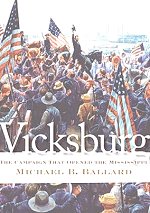 Vicksburg: The Campaign That Opened the Mississippi Confederate troops surrendered Vicksburg on July 4, 1863 a crucial port and rail depot for the South was lost |
Kindle Available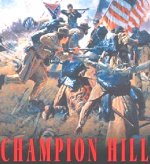 Champion Hill Decisive Battle for Vicksburg The Battle of Champion Hill was the decisive land engagement of the Vicksburg Campaign. The May 16, 1863, fighting took place just 20 miles east of the river city, where the advance of Gen. Ulysses S. Grant's Federal army attacked Gen. John C. Pemberton's hastily gathered Confederates |
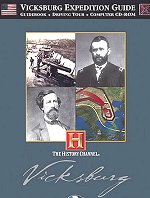 Vicksburg Expedition Guide Annimated movie that details Grants Mississippi campaign which concluded with the seige of Vicksburg. A great background on the importance of this site in the entire war, as well as battles leading up to the Vicksburgh seige. |
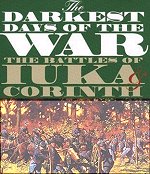 The Darkest Days of the War The Battles of Iuka and Corinth The strategic implications of the battles of Iuka and Corinth, exploring their impact on the fate of the Northern Mississippi Campaign, the fall of Vicksburg and by extension, the fate of the Confederacy. |
Kindle Available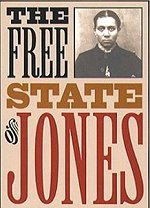 The Free State of Jones Mississippi's Longest Civil War The southeastern Mississippi county that was home to a Unionist stronghold during the Civil War and home to a large and complex mixed-race community in the late nineteenth and twentieth centuries |
|
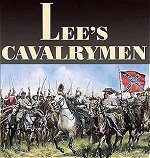 Lee's Cavalrymen: A History of the Mounted Forces of the Army of Northern Virginia, 1861-1865 The cavalry of the Army of Northern Virginia its leadership, the military life of its officers and men as revealed in their diaries and letters, the development of its tactics as the war evolved, and the influence of government policies on its operational abilities. All the major players and battles are involved |
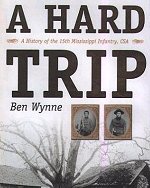 A Hard Trip A History of the 15th Mississippi Infantry The reality of the moment in 1860-61 Mississippi. The thoughts of the men who formed the 15th Mississippi are front and center with good background about the communities the men came from and the reasons they joined the army. |
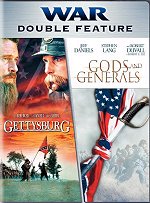 Gettysburg / Gods and Generals The tide of the war changes during three fierce days of combat at Gettysburg [Disc 1] the gripping saga of the tactics command errors and sacrifices behind the bloodiest battle ever fought on U.S. soil. Gods and Generals [Disc 2] reveals the spirited allegiances and fierce combat of earlier Civil War struggles |
 Brother Against Brother The American Civil War Fort Sumter, to the Confederate surrender at Appomattox, Features battle reconstructions and depictions of army life, eyewitness accounts, period photographs and engravings, plus commentary and analyses. |
 Abraham Lincoln: His Life & Legacy Comprehensive four-DVD set presents a complex portrait of a man who many consider to be our greatest commander-in-chief, but who considered himself "the loneliest man in the world." Bringing to life the tumultuous times in which Lincoln led his country, some of his finest Civil War moments, and his final hours |
 Unsolved History ~ Plots to Kill Lincoln Discovery Channel Before John Wilkes Booth fired that fatal shot in the balcony of Ford's Theater, President Lincoln was the target of at least five other assassination conspiracies. |
 Halls of Honor The U.S. Navy Museum takes you on an informed and entertaining romp through one of North America s oldest and finest military museums. The museum has been in continuous operation at the Washington Navy Yard since the American Civil War |
 Raise The Alabama She was known as "the ghost ship." During the Civil War, the CSS Alabama sailed over 75,000 miles and captured more than 60 Union vessels. But her career came to an end in June of 1864 when she was sunk by the USS Kearsarge off the coast of Northern France |
 Brother Against Brother The American Civil War It was the most tragic episode in American history. During four years of bitter and bloody fighting between the states, more than 600,000 troops from the Union and Confederate sides lost their lives. The bloody events at places such as Antietam, Gettysburg, Shiloh, Cold Harbor, Vicksburg and Fredericksburg are still burned deep into the American psyche, never to be forgotten |
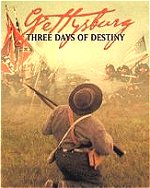 Gettysburg: Three Days of Destiny Presented by the Gettysburg Anniversary Committee and filmed at the massive 140th Gettysburg Battle Reenactment. The dramatic story unfolds through both Union and Confederate commanders dispatches, diaries and after-battle reports, with some of the biggest and most exciting Civil War battle sequences ever filmed |
|
Books Civil War Womens Subjects Young Readers Military History DVDs Confederate Store Civil War Games Music CDs Reenactors |