|
|
|
|
 The Night the War Was Lost With the fall of the critical city of New Orleans in spring 1862 the South lost the Civil War, although fighting would continue for three more years. On the Mississippi River, below New Orleans, in the predawn of April 24, 1862, David Farragut with fourteen gunboats ran past two forts to capture the South's principal seaport. |
Kindle Available Standard Catalog of Civil War Firearms Over 700 photographs and a rarity scale for each gun, this comprehensive guide to the thousands of weapons used by Billy Yank and Johnny Reb will be indispensable for historians and collectors. |
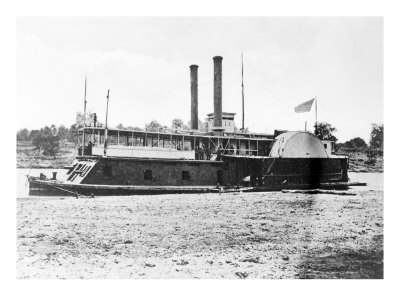 Mississippi River, U.S. Gunboat Fort Hindman, Civil War 24 in. x 18 in. Buy at AllPosters.com Framed Mounted |
 Civil War Soldier 102 Piece Playset
|
Louisiana State Battle Map State Battle Maps Confederate President Jefferson Davis Civil War Summary Civil War Submarines Civil War Cooking Kids Zone Gettysburg Campaigns of the Civil War American Civil War Exhibits Civil War Timeline Women in the War |
 History Channel Civil War A Nation Divided Rally the troops and organize a counterattack -- Your strategic decision and talent as a commander will decide if the Union is preserved or if Dixie wins its independence |
Kindle Available Wolf of the Deep: Raphael Semmes and the Notorious Confederate Raider CSS Alabama In July 1862, the Confederate captain Raphael Semmes received orders to report to Liverpool, where he would take command of a secret new British-built steam warship. His mission: to prey on Union commercial vessels and undermine the North's ability to continue the war |
 Ironclads and Big Guns of the Confederacy : The Journal and Letters of John M. Brooke Information about the Confederate Navy's effort to supply its fledgling forces, the wartime diaries and letters of John M. Brooke tell the neglected story of the Confederate naval ordnance office, its innovations, and its strategic vision. |
 Confederate Phoenix The CSS Virginia The CSS Virginia of the Confederate States Navy destroyed two of the most formidable warships in the U.S. Navy. Suddenly, with this event, every wooden warship in every navy in the world became totally obsolete |
 The Capture of New Orleans, 1862 On April 24, 1862, Federal gunboats made their way past two Confederate forts to ascend the Mississippi River, and the Union navy captured New Orleans. A hard look at the selection of military and naval leaders, the use of natural and financial resources, and the performances of all personnel involved. . |
Kindle Available When the Devil Came Down to Dixie: Ben Butler in New Orleans Butler headed the federal occupation of New Orleans, where he quickly imposed order on a rebellious city. He also made out like a bandit, diverting an enormous amount of money into his personal coffers. High society scorned him for his infamous "Woman Order," |
 Louisianians in the Civil War The suffering endured by Louisianians during and after the war�hardships more severe than those suffered by the majority of residents in the Confederacy. The wealthiest southern state before the Civil War, Louisiana was the poorest by 1880 |
 Tirailleurs: A History of The 4th Louisiana and The Acadians of Company H Soldiers from West Baton Rouge Parish, Louisiana. This book follows them through the Civil War and uses diaries, letters, and memoirs to allow the soldiers to tell their own story. From a bloodbath at Shiloh's Hornet's, Nest, to the Battle of Nashville. |
 Red River Campaign Politics and Cotton in the Civil War Fought on the Red River throughout Central and Northwestern Louisiana, this campaign is a study in how partisan politics, economic need and personal profit determined military policy and operations in Louisiana and Arkansas during the spring of 1864. |
Civil War History Documentary DVD Movie Titles
|