
Kindle Available What They Didn't Teach You About the Civil War | These Titles have been the most often selected by the visitors to AmericanCivilWar.com |
 Maps of the Civil War : Pivotal Battles and Campaigns Featuring 32 Removable Maps |
 Black Southerners in Confederate Armies Official records, newspaper articles, and veterans' accounts to tell the stories of the Black Confederates. This well researched collection is a contribution to the discussion about the numbers of black Southerners involved and their significant history. |
 Memoirs of a Soldier, Nurse and Spy: A Woman's Adventures in the Union Army On April 25, 1861, Sarah Emma Edmonds alias Frank Thompson became a male nurse in Company F, of the 2nd Michigan Volunteer Infantry Regiment. This is 'his' story |
 The Civil War Day By Day An Almanac, 1861-1865 The most exhaustively detailed and fascinating book on the American Civil War of its kind. Not only does it provide a day-by-day look at the major events of the war, but lists so many of the small skirmishes and actions as well. Accurate and enjoyable |
Kindle Available The Politically Incorrect Guide to the Civil War As a graduate history instructor, I found this book to be a refreshing view of history. It's nice to read some critical reasoning that goes against the popular biases by presenting facts that are conveniently over-looked by many others. I highly recommend this book to high school seniors and college undergraduates as an excellent basis to their understanding of the war. Amazon Reviewer | |
 Lincoln and Freedom: Slavery, Emancipation, and the Thirteenth Amendment The history of slavery in North America, the Dred Scott decision, the evolution of Lincoln's view of presidential powers, the influence of religion on Lincoln, and the effects of the Emancipation Proclamation | Kindle Available Civil War Curiosities: Strange Stories, Oddities, Events, and Coincidences |
Great Maps of the Civil War: Pivotal Battles and Campaigns Featuring 32 Removable Maps Fifteen chapters in Great Maps of the Civil War each contain two or three maps that can be pulled out of a pocket. Ten of the maps are 18" x 24"; others are smaller. In addition to a discussion of the battles and the roles of the maps, the book tells about Civil War mapmakers and the methods they used. |
Kindle Available The Gettysburg Gospel: The Lincoln Speech That Nobody Knows Reconstructs what really happened in Gettysburg, Pennsylvania, on November 19, 1863. | |
Kindle Available On Gunnery: The Art and Science of Field Artillery from the American Civil War to the Dawn of the 21st Century The fascinating evolution of artillery from the battlefields of the American Civil War to the desert sands of the middle east at the dawn of the 21st Century. Chronicling the evolution of fire direction and control from the muzzle loaded cannons of the Union and Confederacy |
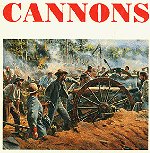 Cannons: An Introduction to Civil War Artillery The concise guide to the weapons, ammunition and equipment of Civil War artillery. More than 150 photos and drawings. |
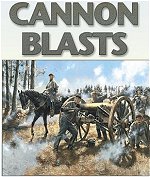 Cannon Blasts: Civil War Artillery in the Eastern Armies Field artillery has had a great tradition in American military history. Based on the records, artillery did not inflict the casualties that one might expect; however, all serious Civil War buffs can recall instances when the field guns played a major role in the action. |
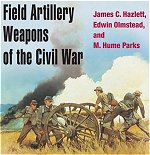 Field Artillery Weapons of the Civil War A detailed survey, replete with photographs and diagrams, of the field artillery used by both sides in the Civil War. In paperback for the first time, the book provides technical descriptions of the artillery (bore, weight, range, etc.), ordnance purchases, and inspection reports. | |
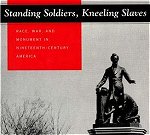 Standing Soldiers, Kneeling Slaves The United States of America originated as a slave society, holding millions of Africans and their descendants in bondage, and remained so until a civil war took the lives of a half million soldiers, some once slaves themselves. |
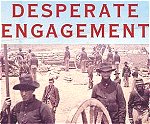 Desperate Engagement: How a Little-Known Civil War Battle Saved Washington, D.C., and Changed American History A full-field engagement between 12,000 battle-hardened Confederate troops led by Early, and some 5,800 Union troops, many of them untested in battle |
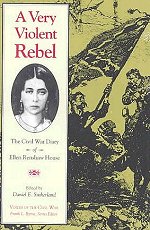 A Very Violent Rebel: The Civil War Diary of Ellen Renshaw House The Siege of Knoxville (November 1863) is covered and Sutherland's footnotes make for good history |
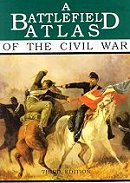 A Battlefield Atlas of the Civil War Informative text enhanced 24 three-color maps and 30 black/white historical photographs. Compact, comprehensive, "user friendly", and providing a narrative history along with a complete cartographic display of the famed American Civil War battle of Gettysburg | |
 The Conspiracy Trial For The Murder Of The President V2: And The Attempt To Overthrow The Government By The Assassination Of Its Principal Officers | ||||
Kindle Available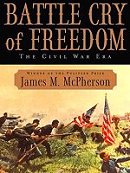 The Illustrated Battle Cry of Freedom The Civil War Era Published in 1988 to universal acclaim, this single-volume treatment of the Civil War quickly became recognized as the new standard in its field. James M. McPherson, who won the Pulitzer Prize for this book, impressively combines a brisk writing style with an admirable thoroughness. He covers the military aspects of the war in all of the necessary detail, and also provides a helpful framework describing the complex economic, political, and social forces behind the conflict. Perhaps more than any other book, this one belongs on the bookshelf of every Civil War buff. |
Kindle Available The Civil War a Narrative This beautifully written trilogy of books on the American Civil War is not only a piece of first-rate history, but also a marvelous work of literature. Shelby Foote brings a skilled novelist's narrative power to this great epic. Many know Foote for his prominent role as a commentator on Ken Burns's PBS series about the Civil War. These three books, however, are his legacy. His southern sympathies are apparent: the first volume opens by introducing Confederate President Jefferson Davis, rather than Abraham Lincoln. But they hardly get in the way of the great story Foote tells. This hefty three volume set should be on the bookshelf of any Civil War buff. |
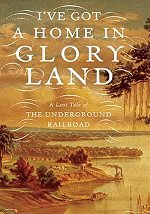 I've Got a Home in Glory Land A Lost Tale of the Underground Railroad The Blackburn case was the first serious legal dispute between Canada and the United States regarding the Underground Railroad. The impassioned defense of the Blackburns by Canada's lieutenant governor set precedents for all future fugitive-slave cases |
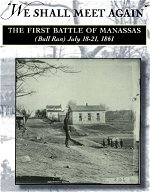 "We Shall Meet Again": The First Battle of Manassas (Bull Run), July 18-21, 1861 The First Battle of Manassas claimed the lives of approximately 878 soldiers and wounded another 2,489. With a battlefield stretching nearly five miles, 15,000 Union and 14,000 Confederate soldiers clashed for four fateful days, many of them young and terrified and receiving their first taste of a long and bitter war | |
 Shades of Blue and Gray: An Introductory Military History of the Civil War The Civil War with an emphasis on contemporary advances in military technology and their effects on behavior in the field. Ulysses Grant was speaking nearly literally when he wrote, "the iron gauntlet must be used more than the silken glove to destroy the Confederacy" |
 The Battle of the Wilderness May 5-6, 1864 Fought in a tangled forest fringing the south bank of the Rapidan River, the Battle of the Wilderness marked the initial engagement in the climactic months of the Civil War in Virginia, and the first encounter between Ulysses S. Grant and Robert E. Lee |
 Black Confederates and Afro-Yankees in Civil War Virginia African American life in Virginia, both slave and free, during the civil war, from soldiers who fought in the Confederate and Union armies to those who acted as spies |
 Black Masters: A Free Family of Color in the Old South This book focuses on biracial persons of white/black ancestry. Persons who tend to be dark complected often consider themselves to be black and because the laws of antebellum South Carolina clearly differentiated between whites and free persons who did not fall into the white category | |
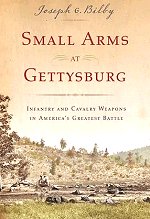 Small Arms at Gettysburg: Infantry and Cavalry Weapons in America's Greatest Battle Here we learn that the smoothbore musket, although beloved by some who carried it, sang its swan song, the rifle-musket began to come into its own, and the repeating rifle, although tactically mishandled, gave a glimpse of future promise. This is the story of the weapons and men who carried them into battle during three days in July 1863 |
Kindle Available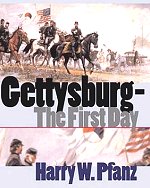 Gettysburg--The First Day A detailed tactical description of the first day's fighting. The engagements in McPherson Woods, at the Railroad Cuts, on Oak Ridge, on Seminary Ridge, and at Blocher's Knoll, and the retreat of Union forces through Gettysburg |
Kindle Available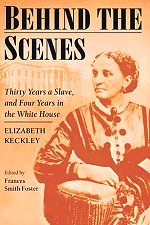 Behind the Scenes: Thirty Years a Slave, and Four Years in the White House This is a memior written by a woman who started life as a slave, then managed to buy her freedom, and later set up a successful living as a seamstress, eventually going to work for Mary Todd Lincoln in the White House |
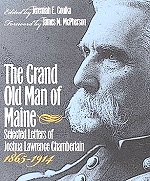 Selected Letters of Joshua Lawrence Chamberlain, 1865-1914 Known as the hero of Little Round Top and the commanding officer who accepted the Confederates' surrender at Appomattox. | |
|
 To 'Joy My Freedom: Southern Black Women's Lives and Labors after the Civil War Thousands of former slaves flocked to southern cities in search of work, they found the demands placed on them as wage-earners disturbingly similar to those they had faced as slaves: seven-day workweeks, endless labor, and poor treatment |
Kindle Available Mothers of Invention: Women of the Slaveholding South in the American Civil War When Confederate men marched off to battle, southern women struggled with the new responsibilities of directing farms and plantations, providing for families, and supervising increasingly restive slaves |
 I'll Pass For Your Comrade: Women Soldiers in the Civil War Many people know about Clara Barton, the nurse who did so much to save soldiers' lives. But few have heard of Sarah Emma Edmonds, Rosetta Wakeman, or Mary Galloway. They were among the hundreds of women who assumed male identities, put on uniforms, enlisted in the Union or Confederate Army, and went into battle alongside their male comrades | |
Kindle Available Shiloh and the Western Campaign of 1862 The Battle of Shiloh was one of the most critical battles in American History. Some of the biggest figures of the Civil War - Grant, Sherman, Johnston, Bragg, Beauregard, Buell - they all fought there. As Grant would write in his memoirs, before Shiloh, Americans on both sides of the Mason Dixon line believed that the war could still be a short limited affair. |
Kindle Available Shiloh: A Novel by Shelby Foote One of the best novels of the American Civil War. Foote is able to capture not only the sense of the battle, but the spirit of the soldiers who fought there. A study of the human condition and how it deals with the horrors of war |
Kindle Available Rose O'Neale Greenhow, Civil War Spy Fearless spy for the Confederacy, glittering Washington hostess, legendary beauty and lover, Rose Greenhow risked everything for the cause she valued more than life itself |
Kindle Available Perryville: This Grand Havoc of Battle On October 8, 1862, Union and Confederate forces clashed near Perryville, Kentucky, in what would be the largest battle ever fought on Kentucky soil. | |
 Tainted Breeze: The Great Hanging at Gainesville, Texas, 1862 October 1, 1862, state militia arrested more than two hundred Unionists from five northern counties . At least forty-four prisoners were hanged, others were lynched in neighboring communities |
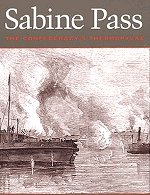 Sabine Pass The Confederacy's Thermopylae Confederate president Jefferson Davis made the claim: "That battle at Sabine Pass was more remarkable than the battle at Thermopylae." Sabine Pass was the site of one of the most decisive Civil War battles |
Kindle Available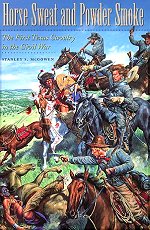 Horse Sweat and Powder Smoke The First Texas Cavalry in the Civil War Regimental history from the time the regiment was raised by Colonel McCulloch to defend against indian warriors tor the time the regiment was part of the Confederate Army under the Colonels Buchel and Yager until the end of the Civil War |
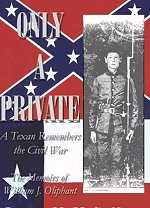 Only a Private: A Texan Remembers the Civil War : The Memoirs of William J. Oliphant A first-hand account of the common soldier's point of view. No colonel or general, William Oliphant was, "only a private." His perspective provides a window into Texas during the first days of the Civil War, and first-hand descriptions of battles |
Civil War Book Titles
Civil War Exhibits
State Battle Maps
Ships and Naval Battles
Women in the War
Young Reader Selections
Top DVD Picks
